




The cryogenic tank boil-off rate describes the rate at which a stored cryogenic liquid evaporates because heat enters the storage vessel from the surrounding environment. Even highly insulated cryogenic tanks cannot completely eliminate heat transfer, so a certain amount of vapor generation is normally unavoidable.
Boil-off is a normal characteristic of cryogenic storage and transportation systems used for liquid nitrogen (LIN), liquid oxygen (LOX), liquid argon (LAR), LNG, and other liquefied gases. Understanding and controlling the boil-off rate is important for reducing product losses, maintaining stable tank pressure, extending holding time, and improving overall system efficiency.
The boil-off performance of a cryogenic tank depends on its insulation system, vacuum quality, tank size and geometry, ambient conditions, piping configuration, operating conditions, and storage duration. This guide explains the main factors affecting cryogenic tank boil-off rate and the engineering methods used to minimize evaporation losses.
For a broader introduction to cryogenic vessel construction and design requirements, see our complete cryogenic tanks guide.
What Is Cryogenic Tank Boil-Off Rate?
The cryogenic tank boil-off rate is a measure of how quickly cryogenic liquid is converted into vapor during storage or transportation as a result of heat entering the tank.
Cryogenic liquids are maintained at temperatures far below normal ambient conditions. Because the surrounding environment is warmer than the stored liquid, heat naturally flows toward the cryogenic fluid. Part of this incoming heat is absorbed by the liquid, causing a portion of it to evaporate.
The resulting vapor is commonly referred to as Boil-Off Gas (BOG).
The boil-off rate is therefore an important indicator of the thermal performance of a cryogenic storage system. A lower boil-off rate generally indicates better insulation performance and lower heat ingress under comparable operating conditions.
Boiling Points of Common Cryogenic Liquids
| Cryogenic Liquid | Approximate Normal Boiling Point |
|---|---|
| Liquid Nitrogen (LIN) | -196°C |
| Liquid Oxygen (LOX) | -183°C |
| Liquid Argon (LAR) | -186°C |
| LNG | Approximately -162°C |
| Liquid Carbon Dioxide (LCO₂) | Approximately -78.5°C at atmospheric pressure |
Because these liquids are stored at very low temperatures, even relatively small amounts of heat ingress can contribute to vapor generation. The actual boil-off behavior varies according to the liquid properties, tank pressure, insulation performance, operating conditions, and tank design.
Why Does Boil-Off Occur in Cryogenic Tanks?
Cryogenic liquids are stored at temperatures significantly below the surrounding ambient temperature. As a result, heat naturally attempts to enter the vessel.
Modern cryogenic tanks use technologies such as double-wall construction, vacuum insulation, and multi-layer insulation (MLI) to reduce heat transfer. However, heat leakage cannot be reduced to zero.
Heat can enter a cryogenic tank through several paths, including:
- Ambient temperature exposure
- Tank supports and structural connections
- Pipelines and valves
- Instrumentation systems
- Fittings and penetrations
- Loading and unloading operations
- Heat conduction through mechanical components
When heat enters the vessel, the cryogenic liquid absorbs part of that energy and changes from liquid into vapor. This vapor is known as Boil-Off Gas (BOG).
The resulting pressure increase and product loss must be considered during cryogenic tank design and operation. Selecting an experienced cryogenic tank manufacturer can help ensure appropriate insulation, vessel construction, testing, and pressure-control design.
How Is Cryogenic Tank Boil-Off Rate Determined?
Boil-off rate can be expressed in several ways depending on the application and test method. Common approaches include measuring the percentage of stored liquid lost per unit of time or determining the mass or volume of liquid converted into vapor over a defined period.
A simplified percentage-based representation is:
Boil-Off Rate (%/day) = Daily Liquid Loss ÷ Reference Liquid Inventory × 100
For example, if a tank loses a measured amount of liquid over a defined 24-hour period under specified test conditions, that loss can be related to the initial or reference inventory to express an approximate daily evaporation rate.
However, boil-off rate should not be treated as a universal fixed value. The measured result depends on the tank size, liquid level, ambient temperature, insulation system, vacuum condition, pressure, piping heat leak, and operating history.
For engineering comparisons, the testing conditions and calculation method should therefore be clearly defined.
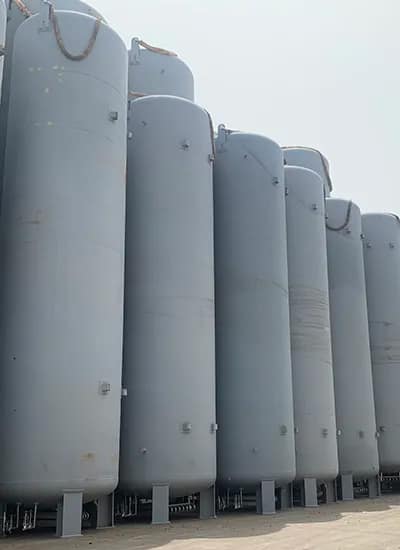
Factors Affecting Cryogenic Tank Boil-Off Rate
The boil-off rate of a cryogenic tank is influenced by multiple thermal and mechanical factors. The most important factors include the following.
1. Insulation Performance
Insulation is one of the most important factors controlling heat ingress. Better insulation reduces heat transfer from the environment into the cryogenic liquid and therefore helps reduce evaporation.
Common cryogenic insulation technologies include vacuum insulation, perlite-filled insulation, and multi-layer insulation.
2. Vacuum Quality
For vacuum-insulated cryogenic vessels, the quality and stability of the vacuum space have a major influence on thermal performance. A properly maintained vacuum reduces conductive and convective heat transfer across the annular space.
Loss of vacuum can significantly increase heat transfer and may result in higher evaporation losses and shorter holding times.
3. Tank Size and Geometry
Tank dimensions influence the relationship between surface area and stored liquid volume. Larger tanks can have a lower heat-leak ratio per unit of stored liquid when compared with smaller vessels of similar design.
Tank geometry, internal configuration, supports, and connection design also affect the total thermal load.
4. Ambient Temperature
Higher ambient temperatures generally increase the temperature difference between the environment and the cryogenic liquid. This can increase heat ingress and consequently increase the boil-off rate.
5. Storage Duration
Longer storage periods provide more time for heat to enter the tank and for cryogenic liquid to evaporate. This is particularly important for systems that experience long holding periods with limited liquid withdrawal.
6. Liquid Level
The liquid level can influence the thermal behavior of the vessel. The relationship between liquid inventory, vapor space, and heat-transfer surfaces should therefore be considered when evaluating boil-off performance.
7. Piping and Structural Heat Leaks
Tank supports, piping, valves, instrumentation connections, and other penetrations can provide additional heat-transfer paths. Proper thermal isolation of these components helps reduce unwanted heat ingress.
8. Filling and Withdrawal Operations
Frequent filling, unloading, pressure changes, and product withdrawal can temporarily alter the thermal and pressure conditions inside a cryogenic tank. Actual operating losses may therefore differ from static holding performance.
How Does Insulation Affect Cryogenic Tank Boil-Off Rate?
The primary purpose of cryogenic tank insulation is to reduce heat transfer between the external environment and the stored cryogenic liquid.
Modern cryogenic vessels may combine several thermal-control technologies, including:
- Vacuum-jacketed insulation
- Multi-layer insulation (MLI)
- Perlite-filled vacuum insulation
- Low-conductivity structural supports
- Thermally optimized piping and connections
High-performance insulation can reduce heat ingress, resulting in lower evaporation losses and longer holding times.
For a detailed comparison of insulation technologies, see our guide to cryogenic tank insulation.
Vacuum Insulation
Vacuum insulation reduces conduction and convection through the annular space between the inner vessel and outer jacket. It is widely used in cryogenic storage and transportation equipment.
High-quality vacuum insulation can provide:
- Lower heat transfer
- Reduced evaporation losses
- Longer holding time
- Improved transportation efficiency
These technologies are widely applied in industrial cryogenic storage tanks designed for liquid nitrogen, oxygen, argon, LNG, and other liquefied gases.
Learn more about vacuum insulation technology for cryogenic equipment.
Multi-Layer Insulation (MLI)
Multi-layer insulation consists of multiple reflective layers installed inside a vacuum jacket. It is designed primarily to reduce radiant heat transfer and improve the thermal performance of cryogenic storage and transportation equipment.
MLI is widely used in:
- Cryogenic ISO tank containers
- Cryogenic tanker trailers
- Liquid nitrogen storage tanks
- LNG transportation systems
Boil-Off Rate During Cryogenic Storage vs. Transportation
Cryogenic tank boil-off behavior can differ significantly between stationary storage and transportation applications.
Stationary Cryogenic Storage Tanks
Stationary tanks are often designed for relatively long holding periods. Their boil-off performance depends strongly on insulation, vacuum quality, tank geometry, ambient conditions, liquid level, and connected piping.
For industrial gas facilities, minimizing heat ingress helps extend storage time and reduce product losses.
Cryogenic ISO Tank Containers
Cryogenic ISO tank containers are designed for transporting liquefied gases between locations. Their thermal performance must remain stable during transportation while the equipment is exposed to changing ambient conditions and handling operations.
Proper insulation and pressure-control systems are therefore important for maintaining product quality and controlling BOG during transportation.
See our cryogenic ISO tank containers for transportation applications.
Cryogenic Tanker Trailers
Cryogenic tanker trailers are used for road transportation of liquefied gases. Their design must consider thermal insulation, structural loads, piping, pressure control, and transportation conditions.
For long-distance movement of liquefied gases, specialized cryogenic transportation systems are required to maintain temperature stability and minimize product losses.
Explore Custom Cryogenic Storage Equipment
From stationary storage tanks to transportation vessels, DSW provides customized cryogenic storage solutions engineered for safe operation, controlled evaporation, and long-term reliability.
How to Reduce Cryogenic Tank Boil-Off Rate
Reducing boil-off requires controlling the major sources of heat ingress and managing vapor pressure appropriately. Important engineering measures include:
1. Use High-Performance Vacuum Insulation
A properly designed and maintained vacuum-insulated annular space can significantly reduce conductive and convective heat transfer.
2. Optimize Multi-Layer Insulation
MLI can reduce radiant heat transfer within a vacuum environment when properly designed and installed.
3. Minimize Thermal Bridges
Supports, piping, brackets, and mechanical connections can create thermal bridges. Low-conductivity materials and optimized structural designs can reduce these additional heat paths.
4. Maintain Vacuum Performance
Regular monitoring and appropriate vacuum maintenance are important for preserving the intended thermal performance of vacuum-insulated cryogenic equipment.
5. Optimize Piping and Connections
Piping, valves, instrumentation, and other penetrations should be designed to limit unnecessary heat transfer into the vessel.
6. Control Tank Pressure
Pressure build-up systems and other pressure-management technologies can help maintain appropriate operating pressure and support controlled liquid withdrawal.
7. Manage Boil-Off Gas
In larger facilities, BOG can sometimes be recovered, compressed, re-liquefied, returned to the process, or used as fuel depending on the application and gas involved.
Boil-Off Gas Management Systems
Boil-off gas management is closely related to cryogenic tank boil-off rate. While insulation reduces the amount of vapor generated, pressure-control and gas-management systems are used to safely handle vapor that does form.
Pressure Build-Up System (PBU)
A pressure build-up system intentionally vaporizes a controlled amount of cryogenic liquid to maintain tank pressure during gas supply or liquid withdrawal operations.
A PBU system can help:
- Maintain outlet pressure
- Improve liquid discharge performance
- Support stable gas supply
- Reduce uncontrolled pressure fluctuations
Boil-Off Gas Recovery
In large-scale cryogenic facilities, generated BOG may be recovered rather than vented, depending on the process and gas application.
Recovered BOG can potentially be:
- Returned to the process system
- Compressed for industrial use
- Re-liquefied
- Used as fuel in suitable LNG applications
Pressure Relief Systems
Cryogenic vessels require appropriately designed pressure relief systems to protect against excessive pressure. Pressure relief devices are an essential part of safe cryogenic vessel design and must be selected and configured according to the applicable design code and operating conditions.
Boil-Off Rate in Different Cryogenic Liquids
LNG
LNG is stored at approximately -162°C and can generate boil-off gas during storage and transportation because of unavoidable heat ingress. LNG facilities commonly use insulation, pressure control, and BOG management systems to minimize product loss.
Liquid Nitrogen
Liquid nitrogen naturally produces nitrogen vapor during storage. Since nitrogen is non-flammable and inert under normal conditions, the primary objectives are generally to reduce product loss, maintain stable pressure, and maximize storage efficiency.
For larger-volume applications, appropriately designed cryogenic storage tanks can provide improved storage efficiency.
Liquid Oxygen
Liquid oxygen systems require careful engineering because oxygen-enriched environments can increase fire risk. Appropriate materials, cleanliness, ventilation, pressure control, and equipment design are important considerations.
Liquid Argon
Liquid argon is widely used in industrial applications. Effective insulation and pressure management help reduce evaporation losses and maintain reliable storage performance.
Key Factors at a Glance
| Factor | Effect on Boil-Off Rate |
|---|---|
| Insulation Performance | Better insulation generally reduces heat transfer and evaporation. |
| Vacuum Quality | A stable, high-quality vacuum reduces conductive and convective heat transfer. |
| Tank Size | Larger tanks can have lower heat ingress per unit of stored liquid, depending on design. |
| Tank Geometry | Surface area, configuration, supports, and connections influence total heat leak. |
| Ambient Temperature | Higher ambient temperatures can increase heat ingress. |
| Liquid Level | Liquid inventory and vapor-space conditions can affect thermal behavior. |
| Storage Duration | Longer holding periods generally result in greater cumulative vapor generation. |
| Piping & Connections | Thermal bridges and penetrations can increase heat leakage. |
| Operating Conditions | Filling, unloading, pressure changes, and product withdrawal can affect actual losses. |
How Cryogenic Tank Manufacturers Reduce Boil-Off
Modern cryogenic storage and transportation equipment uses several engineering methods to minimize heat ingress and evaporation losses.
- Double-wall vacuum-insulated vessels
- High-performance multi-layer insulation systems
- Low-thermal-conductivity supports
- Optimized piping design
- Reduced thermal bridging
- Vacuum monitoring systems
- Pressure control systems
- Appropriate pressure relief systems
- Controlled manufacturing and welding processes
- Vacuum and leak testing
These technologies are widely applied in cryogenic ISO tank containers, cryogenic tanker trailers, and industrial cryogenic storage systems.
DSW provides integrated cryogenic storage solutions combining vacuum-insulated vessels, pressure-control systems, and customized equipment for industrial gas applications.
TECHNICAL FAQs
FAQs About Cryogenic Tank Boil-Off Rate
The cryogenic tank boil-off rate is the rate at which stored cryogenic liquid evaporates into vapor because of heat entering the tank from the surrounding environment. It is an important indicator of cryogenic tank thermal performance.
Boil-off occurs because some heat transfer into a cryogenic vessel is unavoidable. Even with vacuum insulation and multi-layer insulation, heat can enter through the insulation system, supports, piping, valves, and other connections, causing part of the liquid to evaporate.
No. Complete elimination of heat transfer is not practical. However, high-performance insulation, stable vacuum conditions, optimized supports and piping, and appropriate operating practices can significantly reduce evaporation losses.
A simplified percentage-based calculation is daily liquid loss divided by the reference liquid inventory and multiplied by 100. Actual testing should define the measurement period, liquid inventory, operating conditions, temperature, pressure, and applicable test method.
Important factors include insulation performance, vacuum quality, tank size and geometry, ambient temperature, liquid level, storage duration, piping heat leaks, filling and unloading operations, and other operating conditions.
A larger tank can have lower heat ingress per unit of stored liquid because the surface-area-to-volume relationship can become more favorable. However, actual boil-off performance depends on the complete tank design, insulation system, geometry, operating conditions, and liquid inventory.
Vacuum insulation reduces conductive and convective heat transfer across the annular space between the inner vessel and outer jacket. This helps reduce heat ingress and therefore limits evaporation of the stored cryogenic liquid.
Yes. Higher ambient temperatures generally increase the temperature difference between the environment and the cryogenic liquid, which can increase heat ingress and evaporation losses.
Boil-off gas can be managed through high-performance insulation, pressure build-up systems, pressure control, pressure relief devices, and, in suitable large-scale facilities, BOG recovery, compression, re-liquefaction, or process utilization.
Conclusion
Cryogenic tank boil-off rate is an important indicator of the thermal performance and operating efficiency of cryogenic storage and transportation equipment. Although some vapor generation is unavoidable, effective engineering can significantly reduce heat ingress and minimize product losses.
The most important factors include insulation performance, vacuum quality, tank size and geometry, ambient temperature, liquid level, storage duration, piping heat leaks, and operating conditions.
For industrial cryogenic applications, a well-designed combination of vacuum insulation, multi-layer insulation, thermally optimized supports and piping, pressure control, and appropriate BOG management can improve holding time, reduce evaporation losses, and support safe and reliable operation.




No comment