


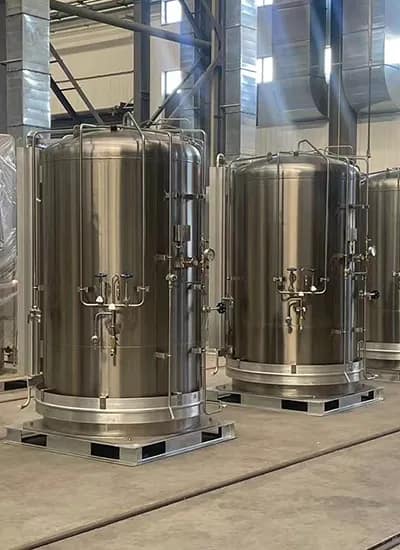
Safe and Efficient Compact Liquefied Gas Storage
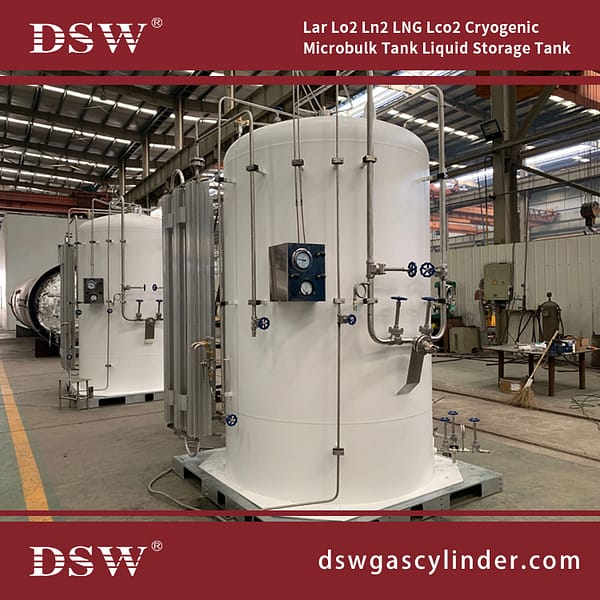
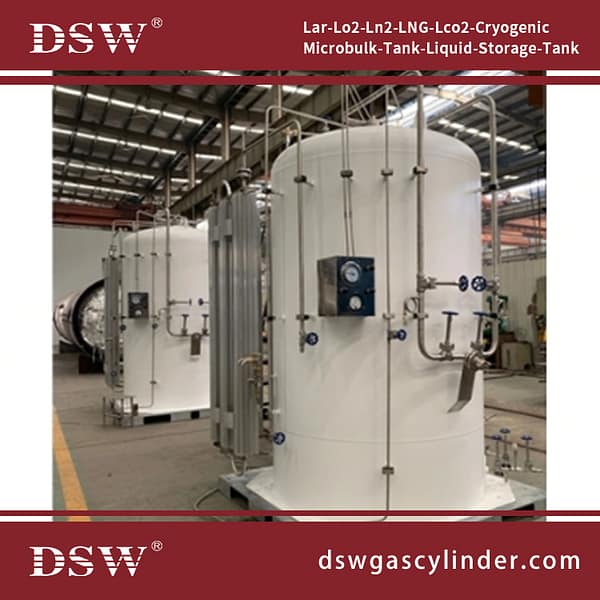
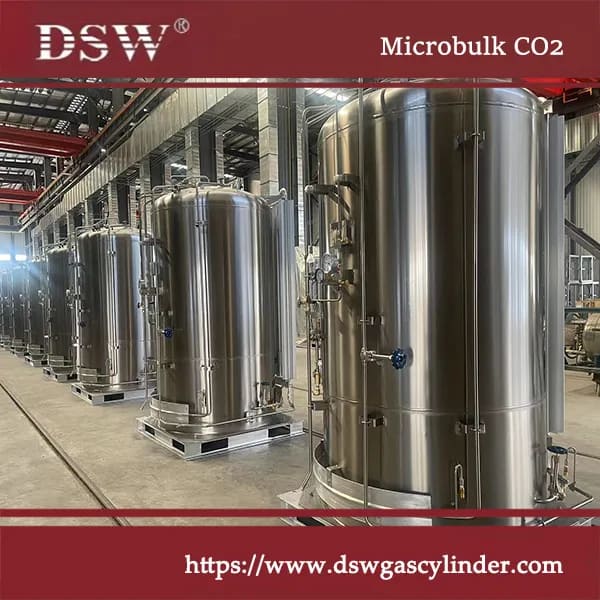
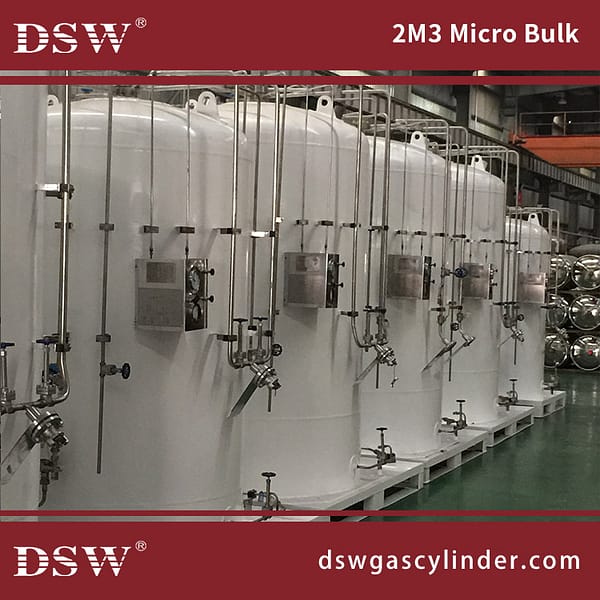
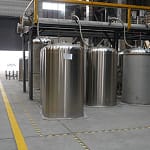
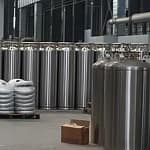
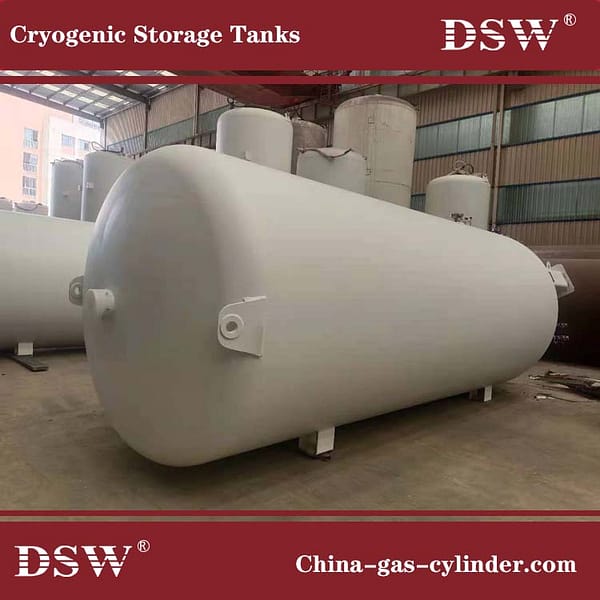
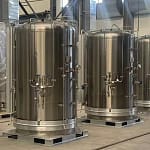
DSW is a cryogenic microbulk tank manufacturer, offering compact, vacuum-insulated storage systems for the safe, efficient, and reliable supply of liquefied gases, including oxygen, nitrogen, argon, and carbon dioxide. Cryogenic microbulk tanks provide a continuous gas supply with minimal product loss, making them a practical alternative to traditional gas cylinders for industrial, medical, laboratory, and food processing applications. These tanks are engineered to maintain stable pressure, reduce boil-off, and ensure consistent delivery of cryogenic gases.
Types of Cryogenic Microbulk Tanks
Cryogenic microbulk tanks are specialized cryogenic storage vessels classified by operating pressure, capacity, gas type, and system configuration. For a broader overview of cryogenic tank design, types, components, and applications, see our cryogenic tanks guide.
| Microbulk Tank Type | Typical Range | Typical Applications | Key Features |
|---|---|---|---|
| Low-Pressure Microbulk Tanks (CO₂ microbulk tank, low-pressure gas system) |
≤ 1.6 MPa | Food processing, beverage CO₂ systems, laboratories | Stable low-pressure supply, efficient phase control |
| Medium-Pressure Microbulk Tanks (industrial gas microbulk tank) |
≈ 2.0–2.5 MPa | General industrial gas supply, fabrication, manufacturing | Balanced pressure and flow, reduced need for boosters |
| High-Pressure Microbulk Tanks (high-pressure cryogenic tank) |
Up to 3.4 MPa | High-demand industrial processes, laser cutting | High outlet pressure, minimizes external compression |
| Liquid Nitrogen Microbulk Tanks (LN₂ microbulk tank, liquid nitrogen storage) |
1–5 m³ | Food freezing, electronics, cryogenic cooling | Low boil-off, stable nitrogen supply, high efficiency |
| Liquid Oxygen Microbulk Tanks (LOX microbulk tank) |
1–5 m³ | Medical oxygen systems, steelmaking | Oxygen-clean design, high safety standards |
| Liquid Argon Microbulk Tanks (argon microbulk tank) |
1–5 m³ | Welding, metal fabrication, shielding gas supply | High purity retention, stable delivery |
| Integrated Microbulk Systems (microbulk gas supply system) |
Custom | Automated industrial gas supply | Built-in vaporizers, pressure-building, control systems |
Microbulk Tank Design and Features
Cryogenic microbulk tanks use vacuum-insulated construction to reduce heat transfer and maintain efficient storage of liquefied gases. Depending on the application, systems can be configured with pressure-building, vaporization, pressure regulation, monitoring, and safety components.
- Vacuum Insulation – Helps reduce heat transfer and product loss.
- Pressure Control – Supports stable and reliable gas delivery.
- Integrated Components – Vaporizers, valves, regulators, and monitoring equipment can be configured to suit the application.
- Application-Specific Design – Tank capacity, pressure, gas type, and configuration can be selected according to site requirements.
Applications / Use Cases
- Industrial – Welding, metal fabrication, and inert gas purging
- Medical & Healthcare – Continuous supply of oxygen and other medical gases
- Laboratories & Research – Reliable gas delivery for experiments and analytical instruments
- Food & Beverage – Cryogenic freezing, carbonation, and modified atmosphere packaging
- Electronics & Semiconductor – Controlled gas supply for sensitive manufacturing processes
Typical gas volumes handled range from 500 m³ to 100,000 m³ per month, offering flexibility for both small and large operations.
Advantages
- Safe & Certified – Built to international ASME and ISO standards
- Efficient Gas Delivery – Low boil-off and continuous supply
- Compact & Space-Saving – Smaller footprint than traditional cylinder banks
- Operational Flexibility – Supports a wide range of gases and volumes
- Global Reach – Available for delivery worldwide with trusted reliability
Quality and Manufacturing
DSW manufactures cryogenic microbulk tanks with attention to vessel fabrication, vacuum insulation, component selection, pressure control, and inspection requirements. Tank configuration and applicable standards depend on the stored gas, design pressure, capacity, destination market, and applicable regulations. Product documentation and technical specifications can be provided according to project requirements.
Explore More Cryogenic Storage Solutions
Explore our cryogenic storage systems guide, complete cryogenic equipment solutions, and industrial gas storage and supply systems for bulk liquid gas storage and distribution applications.
Showing all 5 results







-

Cryogenic Microbulk Tank
Read more -
MicroBulk CO2
Read more -
MicroBulk Cylinders
Read more -
MicroBulk Gas Supply
Read more -
Microbulk Nitrogen Tanks
Read more