




Liquid Nitrogen Storage: Systems, Safety, and Industry Applications
Liquid nitrogen (LN₂) is one of the most widely used cryogenic liquids, with applications ranging from fertility clinics and vaccine preservation to semiconductor fabrication and clean energy projects. At –196°C (–320°F), LN₂ enables long-term biological preservation and high-precision industrial processes, but its extreme properties demand specialized storage infrastructure. In this guide, we’ll explore the science, technology, safety, and future of liquid nitrogen storage systems—equipping you with the knowledge to make informed decisions for your laboratory, clinic, or industrial facility.
What Makes Cryogenic Storage Different?
Unlike conventional refrigeration, which cools to −20°C or −80°C, cryogenic storage operates below −150°C. At these extreme temperatures,
cellular metabolism and chemical reactions are effectively halted, allowing sensitive biological materials and high-purity substances to remain
stable for years or even decades.
Key advantages include:
- Long-term preservation of cells, tissues, vaccines and genetic material.
- Stable supply of inert nitrogen gas for laboratories and manufacturing.
- Industrial versatility, from quick-freezing (IQF) food processes to aerospace and advanced engineering applications.
The principal challenges are controlling evaporation (boil-off), preventing oxygen or moisture condensation, and ensuring safe handling in
environments where accidental exposure can cause asphyxiation or cold burns. Proper vessel design, ventilation and monitoring are essential.
Types of Liquid Nitrogen Storage
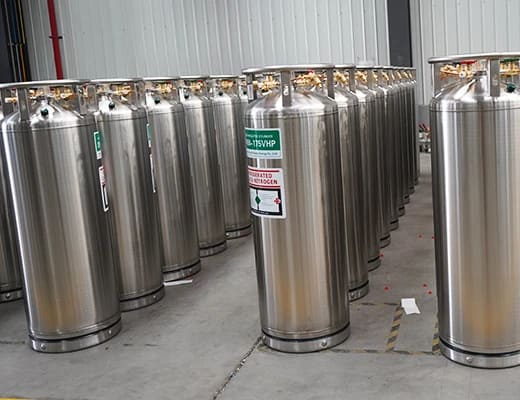
1. Portable Dewars (2–50 L)
Lightweight and manually handled, portable Dewars are widely used in research laboratories, fertility clinics, and small-scale cryogenic operations.
- Applications: Short-term LN₂ supply, sample immersion, biological material transport.
- Advantages: Portable, low cost, easy to use.
- Limitations: Small capacity, requires frequent refilling.
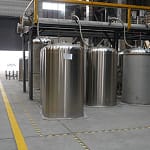
2. Laboratory Storage Vessels
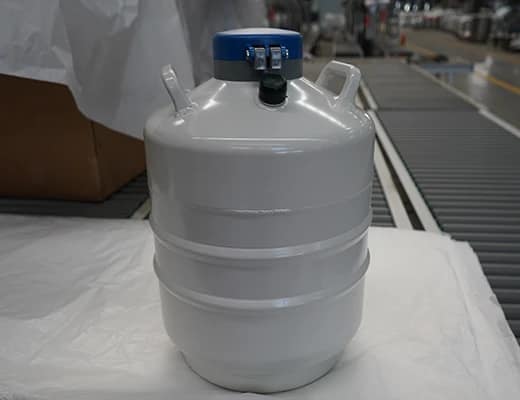
Designed with racks, canisters, or straws, these vessels are optimised for biological research and medical use.
- Applications: IVF, tissue banking, stem cell and genetic material preservation.
- Advantages: Organised sample storage, extended hold times.
- Limitations: Not suited for large-volume industrial supply.
3. Microbulk Tanks (200–2,000 L)
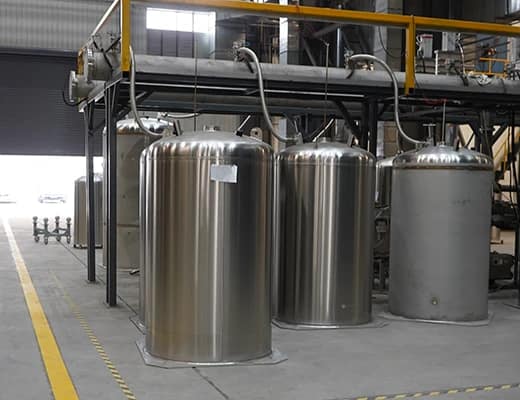
Microbulk tanks are ideal for mid-size facilities, reducing the need for frequent LN₂ deliveries and improving efficiency.
- Applications: Hospitals, medium research centres, pilot plants.
- Advantages: Integrated safety valves, level sensors, automated filling.
- Limitations: Higher initial cost, requires professional installation.
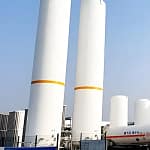
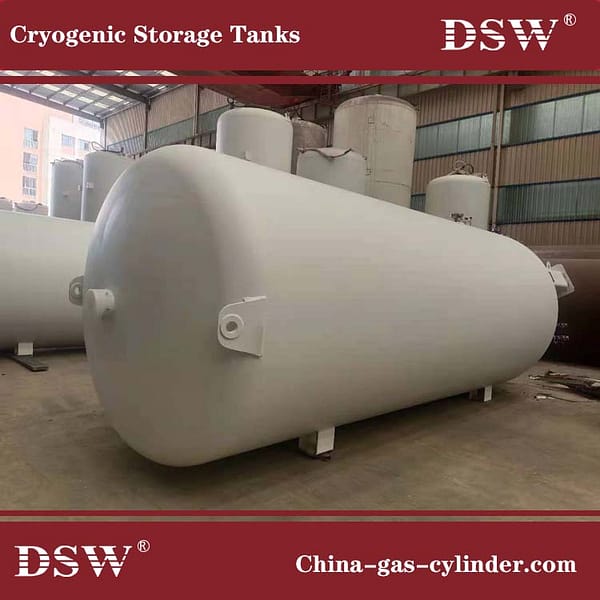
4. Bulk Cryogenic Tanks (1,000–50,000 L)
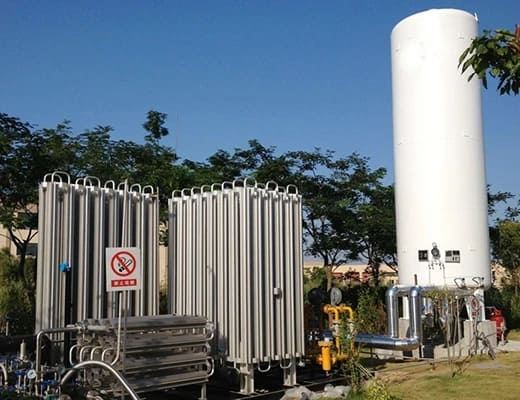
LN2 Bulk tanks serve high-volume users with vertical or horizontal configurations to suit site requirements.
- Applications: Hospitals, semiconductor fabs, aerospace, energy plants.
- Advantages: Continuous supply, robust insulation, reduced boil-off.
- Limitations: Large footprint, dedicated infrastructure needed.
Components of an LN₂ Storage System
Every cryogenic storage solution—whether a 20 L Dewar or a 50,000 L bulk tank—relies on engineered components to ensure efficiency,
reliability and safety. Key components commonly found across systems include:
- Inner vessel: Stainless steel or aluminium chamber that directly contains liquid nitrogen.
- Vacuum jacket & multi-layer insulation (MLI): Minimises heat transfer and extends holding time.
- Pressure relief valves & rupture disks: Safety devices that prevent over-pressurisation.
- Level & temperature sensors: Continuous monitoring for inventory management and safety control.
- Transfer lines & pumps: Components for safe, efficient LN₂ transfer between vessels or to point-of-use equipment.
- Telemetry & smart alarms (optional): IoT-enabled systems provide remote monitoring and O₂-deficiency alerts.
Integrating the right combination of these components—matched to capacity and application—optimises hold time, reduces boil-off and
improves operational safety.
Challenges in Cryogenic Storage
Despite its widespread use, LN₂ storage faces several technical and operational challenges:
- Boil-off gas management: Even the best-insulated tanks experience some evaporation. Capturing or venting gas safely is critical to avoid pressure build-up and waste.
- Oxygen condensation: Air contact can lead to liquid oxygen accumulation, creating a serious flammability hazard.
- Frost formation: Ice buildup around valves and fittings may cause equipment damage or disrupt pressure control.
- Space & logistics: Large-scale cryogenic storage requires dedicated infrastructure and strict safety distances.
Safety Best Practices
Storing and handling liquid nitrogen (LN₂) requires strict adherence to established safety protocols to protect personnel and equipment:
- Never seal LN₂ in a closed container to prevent pressure build-up and explosion hazards.
- Always use personal protective equipment (PPE), including cryogenic gloves, aprons, and face visors.
- Maintain oxygen monitoring systems to detect low-oxygen conditions and prevent asphyxiation risks.
- Train all staff in emergency response procedures and LN₂ spill management.
- Follow applicable standards and guidelines, such as CGA recommendations, ISO 21013, ASME Section VIII, and CE certifications when purchasing or operating cryogenic tanks.
Maintenance Protocols
Routine maintenance is essential for ensuring reliable LN₂ storage and extending the service life of cryogenic tanks:
- Weekly: Inspect for frost buildup, leaks, and proper vent performance.
- Monthly: Calibrate level and temperature sensors.
- Quarterly: Verify pressure relief valve function.
- Annually: Conduct hydrostatic or pressure testing and replace safety valves if necessary.
Maintain documented maintenance logs and staff training programs to ensure regulatory compliance and safe operational practices.
Industrial Applications of LN₂ Storage
Cryogenic infrastructure supports a wide variety of sectors where ultra-low temperatures are critical for processes and product stability:
- Healthcare & Life Sciences: Preservation of vaccines, stem cells, blood, and reproductive material. LN₂ played a key role in mRNA vaccine distribution during the COVID-19 pandemic.
- Semiconductor & Electronics: Cooling of wafers, superconducting experiments, and precision manufacturing processes.
- Aerospace & Defense: Storage of cryogenic oxidizers and propellants for rockets and advanced propulsion systems.
- Food Industry: Individual Quick Freezing (IQF) extends shelf life while maintaining product quality.
- Energy Sector: Critical for LNG and hydrogen storage, supporting the transition to clean energy solutions.
Future Innovations in Cryogenic Storage
As global demand for cryogenic infrastructure grows, several trends are shaping the future of LN₂ storage:
- Hydrogen economy integration: Cryogenic hydrogen storage will be crucial for fuel cell vehicles and renewable energy systems.
- Smart cryogenic tanks: IoT-enabled telemetry allows real-time monitoring of pressure, level, and oxygen deficiency risks.
- Eco-friendly insulation: New materials aim to reduce environmental impact compared to traditional foams and multi-layer insulation (MLI).
- Automation & robotics: Automated sample handling systems improve efficiency and safety in biobanks and research laboratories.


No comment