
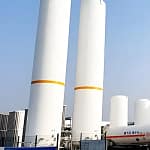
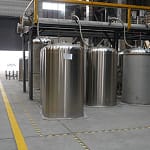
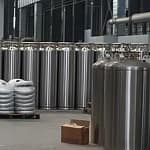
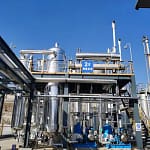


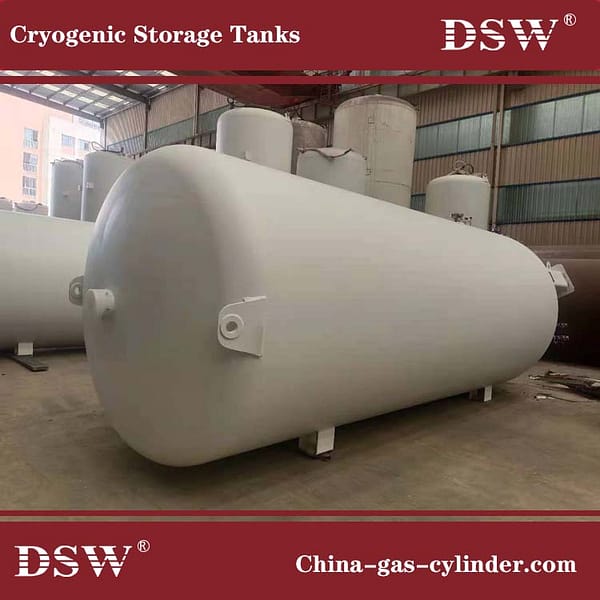

DSW provides engineered cryogenic storage solutions for industrial, medical, energy, food, research, and other applications that require the safe storage and reliable supply of liquefied gases at extremely low temperatures.
Our solutions can combine vacuum-insulated cryogenic storage tanks, microbulk systems, Dewars, pressure build-up equipment, vaporizers, valves, instrumentation, monitoring, and safety equipment according to the gas, storage capacity, consumption profile, operating pressure, installation conditions, and destination-market requirements.
DSW supports projects involving liquid nitrogen (LIN), liquid oxygen (LOX), liquid argon (LAr), liquid carbon dioxide (LCO₂), helium, LNG, and other cryogenic media.
From individual storage equipment to integrated cryogenic gas supply systems, DSW can configure the equipment around your actual application and operating requirements.
Cryogenic Storage Solutions We Provide
Different gas consumption profiles require different storage configurations. DSW provides several cryogenic storage approaches, from portable Dewars to large stationary bulk storage systems.
| Solution | Typical Application | Main Equipment |
|---|---|---|
| Bulk Cryogenic Storage | Medium and high-volume industrial gas consumption | Vacuum-insulated storage tank, pressure build-up system, vaporizer, valves and instrumentation |
| Microbulk Gas Storage | Small to medium continuous gas consumption | Microbulk tank, pressure control, level monitoring and filling equipment |
| Dewar Storage | Laboratories, medical facilities, research and smaller-scale applications | Vacuum-insulated Dewar, liquid withdrawal and gas withdrawal equipment |
| LNG Storage | Energy, industrial fuel supply and LNG infrastructure | LNG storage tank, pressure control, vaporizer and transfer equipment |
| Integrated Storage & Gas Supply | Facilities requiring continuous gaseous supply | Storage tank, vaporization, pressure regulation, monitoring and distribution equipment |
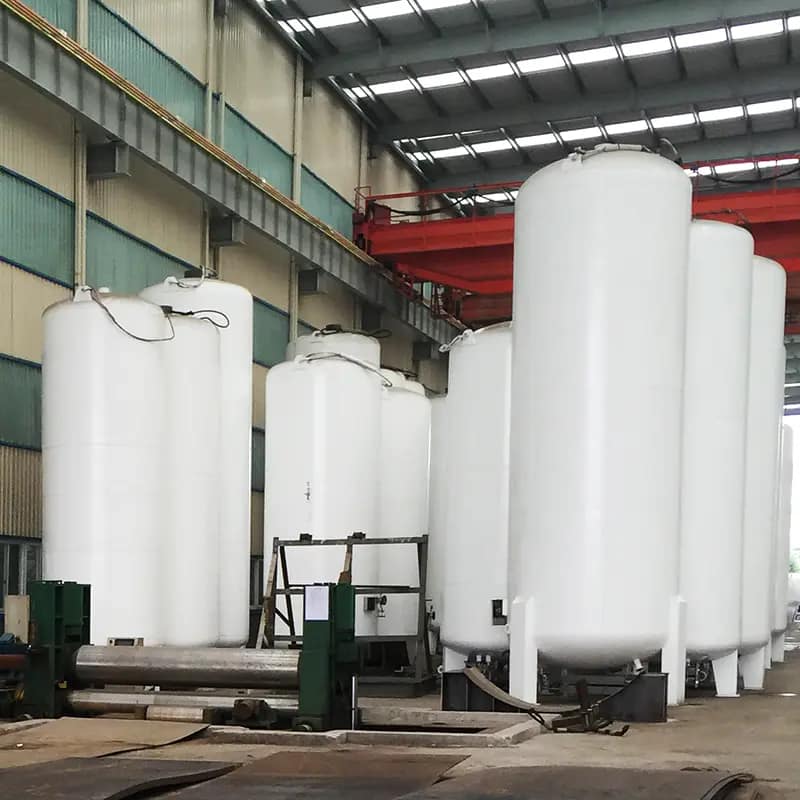
Bulk Cryogenic Storage Systems
Bulk cryogenic storage systems are designed for facilities with relatively high or continuous consumption of liquefied industrial gases. A typical system uses a vacuum-insulated cryogenic storage tank together with pressure control and vaporization equipment.
Depending on the application, the system can be configured for liquid nitrogen, liquid oxygen, liquid argon, liquid carbon dioxide, LNG, and other suitable cryogenic gases.
- Large stationary storage capacity
- Reduced delivery and cylinder-handling requirements
- Continuous or scheduled gas supply
- Vacuum insulation for reduced heat ingress
- Pressure build-up and pressure regulation
- Integration with downstream vaporizers and gas distribution
Typical applications: industrial gas supply, steel production, manufacturing, healthcare, food processing, chemical processing, electronics, research facilities, and energy infrastructure.
Microbulk Gas Storage Systems
Microbulk systems provide an intermediate solution between conventional high-pressure gas cylinders and large bulk cryogenic installations.
They are suitable for facilities with regular cryogenic gas consumption that require a continuous on-site supply but do not need the capacity of a large bulk storage tank.
A typical microbulk installation may include a vacuum-insulated tank, pressure control equipment, filling connections, level monitoring, valves, and gas supply equipment.
- Reduced cylinder handling
- Compact on-site storage
- Continuous liquid gas availability
- Scheduled or automated replenishment
- Suitable for small and medium consumption profiles
Cryogenic Dewar Storage
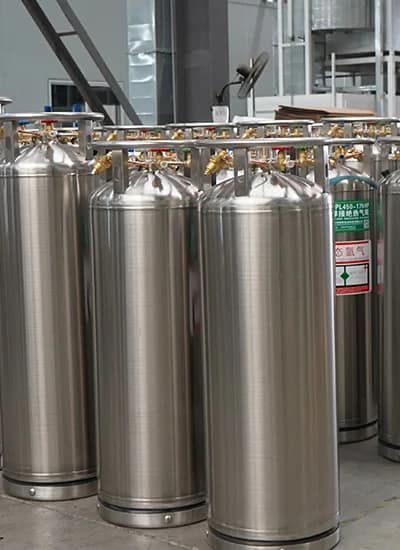
Cryogenic Dewars are vacuum-insulated containers designed for smaller-volume storage and flexible handling of liquefied gases.
They are commonly used for laboratories, medical applications, research facilities, food processing, biological applications, and other environments requiring relatively small quantities of cryogenic liquid.
Dewar configurations vary according to gas type, capacity, pressure requirements, withdrawal method, transportation requirements, and applicable standards.
- Portable and compact storage
- Vacuum-insulated construction
- Liquid withdrawal options
- Gas withdrawal options
- Pressure-building configurations
- Different capacities and operating configurations
For capacity selection, see our Liquid Nitrogen Dewar Sizes Guide.
LNG Storage Systems
LNG storage systems are designed for the controlled storage and supply of liquefied natural gas at cryogenic temperatures.
Depending on the project, an LNG storage solution may combine LNG storage tanks, pressure control equipment, vaporizers, valves, monitoring systems, transfer equipment, and associated safety devices.
System configuration depends on LNG capacity, operating pressure, consumption profile, installation conditions, transfer requirements, and applicable destination-market standards.
- Stationary LNG storage tanks
- LNG pressure build-up systems
- LNG vaporizers
- LNG transfer equipment
- Pressure and level monitoring
- Safety and relief systems
For LNG transportation requirements, see our LNG Transport Solutions.
Cryogenic Storage Equipment
A complete cryogenic storage solution is more than a storage vessel. The major components must be selected and configured to work together according to the required gas supply conditions.
Vacuum-Insulated Cryogenic Storage Tanks
The storage tank is the primary component of a bulk cryogenic system. DSW supplies cryogenic tanks in different capacities, configurations, and pressure ratings for applications involving liquid nitrogen, oxygen, argon, carbon dioxide, LNG, and other cryogenic media.
View Cryogenic Storage Tanks →
Pressure Build-Up Systems
A pressure build-up system can vaporize a controlled quantity of stored liquid to maintain the required tank pressure. This supports stable downstream gas delivery and helps maintain operating pressure as liquid is withdrawn.
Cryogenic Vaporizers
Vaporizers convert cryogenic liquid into gaseous product before delivery to downstream equipment. Vaporizer selection depends on gas type, required flow rate, inlet conditions, outlet pressure, ambient conditions, and operating requirements.
DSW supplies cryogenic vaporizer systems for industrial gas supply and other cryogenic applications.
Explore Cryogenic Vaporizers →
Pressure Regulation & Control
Pressure regulation equipment controls the gas pressure supplied to downstream users. Depending on the system, this can include regulators, valves, pressure gauges, transmitters, and related instrumentation.
Monitoring & Safety Equipment
Cryogenic storage systems require appropriate monitoring and safety equipment according to the gas service and system design. Typical equipment may include pressure relief devices, rupture protection, level measurement, pressure monitoring, isolation valves, and other protective devices.

How Cryogenic Storage Systems Work
A cryogenic storage system maintains the liquefied gas at a controlled low temperature while managing heat transfer, pressure, liquid withdrawal, and downstream gas supply.
- Filling: Liquefied gas enters the insulated storage vessel during delivery or transfer.
- Insulation: Vacuum insulation reduces heat transfer from the surrounding environment.
- Pressure Control: Pressure build-up equipment maintains the required operating pressure when necessary.
- Vaporization: A vaporizer converts liquid into gaseous product when gas is required.
- Pressure Regulation: Downstream pressure is controlled according to the application.
- Distribution: Gas is delivered through the facility’s piping and distribution system.
- Monitoring: Pressure, liquid level, temperature, and other operating parameters are monitored according to the system design.
The exact configuration depends on the gas, storage capacity, consumption profile, operating pressure, installation conditions, and required supply method.
For detailed engineering information, see the Cryogenic Storage Systems Guide.
How to Select a Cryogenic Storage Solution
Choosing a cryogenic storage system should begin with the actual gas consumption and operating requirements rather than tank capacity alone.
| Requirement | Why It Matters |
|---|---|
| Gas Type | Determines operating temperature, material requirements, pressure range, equipment configuration, and applicable standards. |
| Storage Capacity | Determines inventory level, delivery frequency, installation requirements, and reserve capacity. |
| Gas Consumption Rate | Determines required storage autonomy and vaporizer capacity. |
| Peak Flow Rate | Helps determine vaporizer capacity and downstream supply configuration. |
| Operating Pressure | Affects tank configuration, pressure control equipment, safety devices, and downstream supply. |
| Installation Conditions | Influence tank orientation, footprint, piping arrangement, access, maintenance, and safety clearances. |
| Destination Market | Determines applicable design codes, certification, testing, documentation, and regulatory requirements. |
Request a Cryogenic Storage Solution
Tell us your gas type, capacity, pressure, and application. DSW will recommend the right cryogenic storage solution for your project.
Cryogenic Storage Applications
DSW cryogenic storage equipment can be configured for a wide range of applications requiring reliable storage or continuous supply of liquefied gases.
- Industrial Gas Supply – Bulk nitrogen, oxygen, argon and carbon dioxide supply for manufacturing facilities.
- Healthcare – Cryogenic oxygen and other gas storage applications for medical facilities.
- Food Processing – Liquid nitrogen and carbon dioxide storage for freezing, chilling and food processing.
- Electronics & Semiconductor Manufacturing – High-purity gas storage and supply infrastructure.
- Research & Laboratories – Dewar and small-scale cryogenic storage systems.
- Chemical & Process Industries – Continuous cryogenic gas supply for industrial processes.
- Energy & LNG – LNG storage and controlled gas supply systems.
Bulk vs. Microbulk vs. Dewar Storage
Bulk, microbulk, and Dewar storage systems serve different gas consumption and installation requirements. The right choice depends mainly on gas demand, required storage capacity, supply continuity, and available installation space.
| Feature | Bulk Storage | Microbulk | Dewar |
|---|---|---|---|
| Typical Demand | Medium to high | Small to medium | Small-scale |
| Installation | Permanent | Compact permanent installation | Portable or flexible |
| Storage Capacity | Large | Medium | Small to medium |
| Gas Supply | Continuous bulk supply | Continuous or scheduled supply | Manual or small-scale supply |
| Main Advantage | High capacity and supply continuity | Reduced cylinder handling | Portability and flexibility |
Cryogenic Storage vs. Cryogenic Transportation
Cryogenic storage and cryogenic transportation are related but serve different functions.
Cryogenic storage solutions focus primarily on on-site or stationary storage and controlled gas supply. They include bulk storage tanks, microbulk systems, Dewars, LNG storage systems, vaporizers, pressure control, and associated equipment.
Cryogenic transportation solutions focus on moving liquefied gases between production facilities, terminals, filling stations, and customer sites. Typical equipment includes cryogenic tank trailers and ISO tank containers.
For transportation requirements, visit our Gas Transport Solutions page.
Engineering Standards & Compliance
Cryogenic storage equipment is pressure equipment and must be designed, manufactured, inspected, tested, and certified according to the requirements applicable to the equipment, gas service, and destination market.
Depending on the product and project, applicable requirements may include:
- ASME pressure vessel requirements
- PED / EN requirements for applicable European markets
- ISO standards applicable to cryogenic equipment
- GB / GB/T standards for applicable Chinese-market equipment
- Other destination-market regulations and certification requirements
The applicable code and certification should be confirmed according to the actual vessel design, gas service, installation location, and destination-market requirements.
Why Choose an Engineered Cryogenic Storage Solution?
A cryogenic storage tank should not be treated as an isolated piece of equipment when the application requires continuous gas supply. Storage, pressure control, vaporization, monitoring, and safety equipment need to be considered as a coordinated system.
- Application-based configuration – Equipment is selected according to actual gas demand and operating conditions.
- Integrated equipment selection – Tanks, vaporizers, pressure control, valves and monitoring can be configured as one system.
- Reduced cylinder handling – Bulk and microbulk systems can reduce manual cylinder handling where appropriate.
- Reliable supply – Storage capacity and vaporization can be configured around the required consumption profile.
- Flexible project configuration – Capacity, pressure, orientation, connections and standards can be adapted to project requirements.
- Global project support – Equipment can be prepared according to applicable destination-market requirements.
Solutions for Industrial Gas Storage
Gas Storage Equipment
DSW provides cryogenic storage equipment that can be supplied individually
or configured as part of a complete storage and gas supply system.

Liquid Nitrogen Cryogenic Tank
DSW liquid nitrogen cryogenic tank solution for reliable LN₂ storage and distribution.
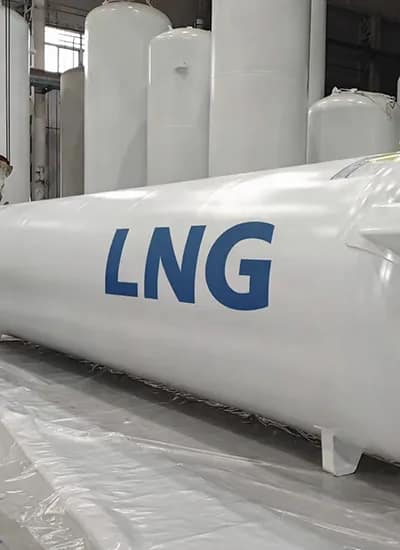
Vacuum-insulated LNG Cryogenic Tanks
DSW supplies LNG cryogenic tank solutions for reliable LNG storage, handling, and distribution.
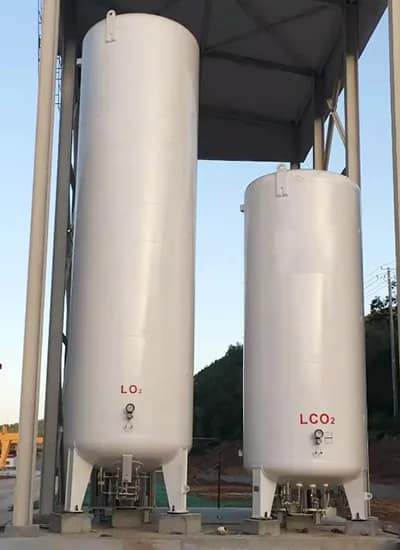
LCO2 Cryogenic Bulk Tank
DSW offers an LCO₂ cryogenic tank solution for reliable liquid CO₂ storage and distribution.
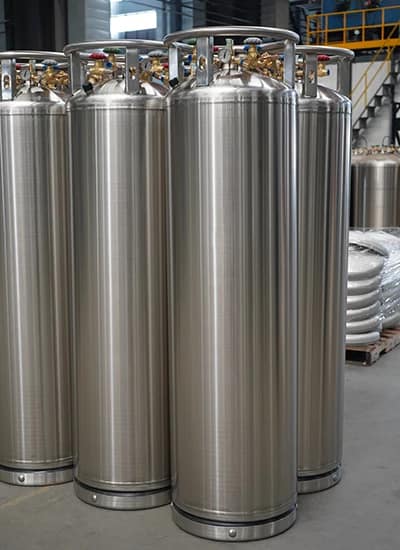
Vacuum-insulated Microbulk Tanks
BluNet Microbulk system for reliable on-site industrial gas storage and supply.

TECHNICAL FAQs
About Cryogenic Storage Solutions
Cryogenic storage solutions are engineered systems for storing and supplying liquefied gases at very low temperatures. Depending on the application, they may include vacuum-insulated storage tanks, microbulk tanks, Dewars, vaporizers, pressure control equipment, monitoring systems, and safety devices.
Cryogenic storage systems can be configured for gases such as liquid nitrogen (LIN), liquid oxygen (LOX), liquid argon (LAr), liquid carbon dioxide (LCO2), LNG, helium, and other suitable cryogenic media, subject to the applicable equipment design and operating requirements.
Selection depends on the gas type, required storage capacity, daily and peak consumption, operating pressure, supply method, installation conditions, applicable standards, and destination-market requirements. DSW can configure the equipment based on these project parameters.
Bulk storage is generally suited to medium- and high-volume users requiring larger on-site inventories. Microbulk systems provide a compact continuous supply for small- to medium-volume users, while Dewars are commonly used for smaller-scale, laboratory, medical, and flexible applications.
Vacuum insulation reduces heat transfer between the cryogenic liquid and the surrounding environment. This helps maintain the required low temperature and reduces evaporation or boil-off losses.
Yes. DSW can supply and configure cryogenic storage equipment including storage tanks, microbulk systems, Dewars, vaporizers, pressure-control equipment, valves, instrumentation, and related safety equipment according to the project requirements.
Related Cryogenic Resources
EExplore DSW’s technical resources for more detailed information about cryogenic storage equipment, engineering, and applications.
Cryogenic Tanks & Vessels
Need a Cryogenic Storage Solution for Your Application?
Choosing the right cryogenic storage system depends on the gas, capacity, consumption rate, operating pressure, installation conditions, and required supply configuration. DSW can help configure the appropriate combination of storage, vaporization, pressure control, monitoring, and safety equipment for your project.
Tell us your gas type, required capacity, operating pressure, application, and destination market, and our engineering team can evaluate the appropriate cryogenic storage configuration.
