
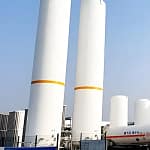
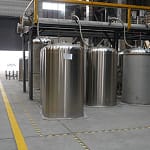

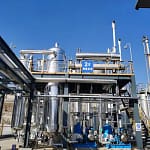



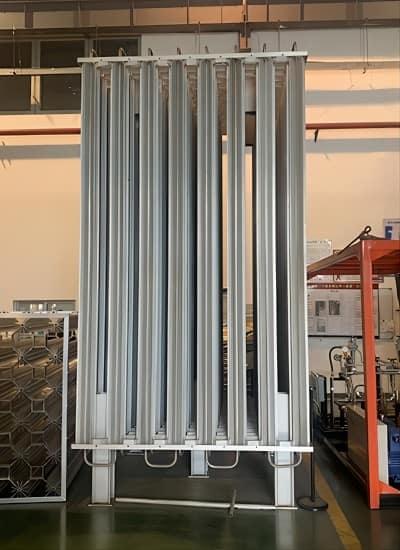
In-Depth Guide to Cryogenic Vaporizers
Cryogenic vaporizers are essential components in cryogenic storage, industrial gas supply systems, and LNG regasification plants. Their primary function is to convert liquefied gases stored at extremely low temperatures into usable gaseous form for downstream applications.
Common cryogenic liquids include liquid nitrogen (LN₂), liquid oxygen (LOX), liquid argon (LAR), liquid carbon dioxide (LCO₂), liquefied natural gas (LNG), and liquid hydrogen (LH₂).
A cryogenic vaporizer works by transferring heat from an external or internal heat source to the cryogenic liquid. This controlled heat input causes the liquid to boil and convert into gas while maintaining system safety, flow stability, and product purity.
This guide explains the structure, operating principles, major vaporizer types, LNG-specific technologies, selection methods, applications, and safety considerations.
Components and functions
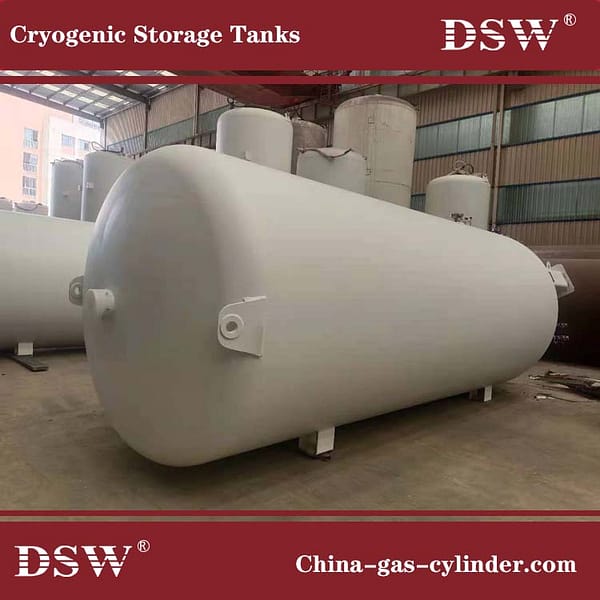
- Cryogenic Tank/Dewar
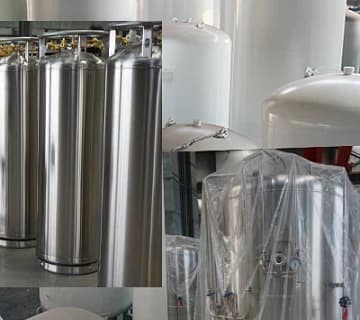
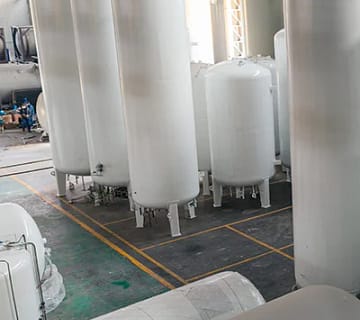
- Description: Insulated containers designed to store cryogenic liquids at extremely low temperatures, typically below -150°C (-238°F).
- Vaporizer
- Heat Exchanger: The primary component transfers heat from the surrounding environment (air, water, steam, etc.) to the cryogenic liquid, causing it to boil and turn into gas.
- Materials: Typically made from high thermal conductivity materials such as aluminium or stainless steel to efficiently transfer heat.
- Piping and Valves
- Supply Line: Connects the cryogenic tank to the vaporizer.
- Outlet Line: Delivers the gas to the point of use.
- Safety Valves: Ensure safe operation by relieving excess pressure.
- Control Systems
- Thermostats and Sensors: Monitor temperature and pressure to maintain optimal vaporization conditions.
- Control Valves: Regulate the flow of cryogenic liquid into the vaporizer.
How Cryogenic Vaporizers Work
Cryogenic liquids must be vaporized before use in industrial, medical, or energy systems. The vaporization process occurs when heat is transferred into a cryogenic liquid through a heat exchanger.
The liquid absorbs thermal energy and changes phase into gas. The heat source varies depending on system design:
– Ambient air (natural convection)
– Forced air (fans/blowers)
– Electric heating elements
– Hot water or steam
– Seawater (LNG terminals)
– Combustion systems
– Intermediate heat-transfer fluids
The resulting gas is delivered at controlled pressure and flow to downstream applications.
Types of Cryogenic Vaporizers
There are several types of vaporizers used for cryogenic applications.
-
- Ambient Air Vaporizers
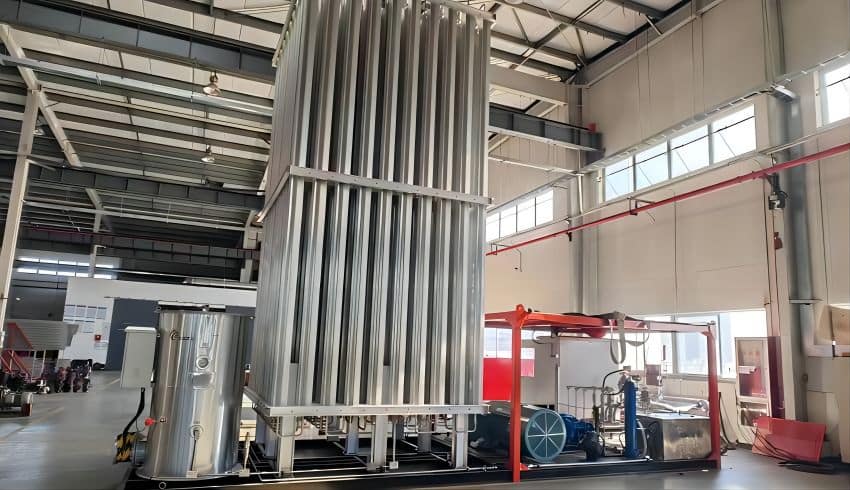
- Finned Tube Vaporizers: Feature fins to increase the heat exchange surface area, absorbing heat from the ambient air to vaporize the cryogenic liquid.
- Principle: Natural convection transfers heat from ambient air to the cryogenic liquid.
- Design: Typically consists of vertical or horizontal finned tubes with high surface area fins for efficient heat transfer.
- Advantages: Low operating cost and maintenance.
- Limitations: Performance can be affected by weather conditions and ambient temperature.
- Finned Tube Vaporizers: Feature fins to increase the heat exchange surface area, absorbing heat from the ambient air to vaporize the cryogenic liquid.
- Electric Vaporizers
- Principle: Electric heaters are employed to provide the heat necessary for vaporization.
- Design: Contains electric heating elements immersed in or surrounding the heat exchanger.
- Advantages: Consistent performance regardless of ambient conditions.
- Limitations: Higher operating costs due to electricity consumption.
- Principle: Electric heaters are employed to provide the heat necessary for vaporization.
- Steam/Water Bath Vaporizers
- Principle: Transfers heat to the cryogenic liquid using hot water or steam.
- Design: The cryogenic liquid flows through coils immersed in a water bath or steam chamber.
- Advantages: High efficiency and reliable performance.
- Limitations: Requires a hot water or steam source, increasing complexity and cost.
- Application: Suitable for atmospheric gases, LNG, ammonia, and CO2. It is commonly used in pipeline backup, steel plants, ceramic plants, breweries, petrochemical industries, and purging applications.
- Principle: Transfers heat to the cryogenic liquid using hot water or steam.
- Ambient Air Vaporizers
- Forced Draft Vaporizers
- Principle: Uses fans or blowers to enhance airflow over the heat exchanger, improving heat transfer.
- Design: Similar to ambient air vaporizers but with added mechanical airflow.
- Advantages: Better performance in environments with low natural convection.
- Limitations: Additional mechanical components increase maintenance needs.
- Principle: Uses fans or blowers to enhance airflow over the heat exchanger, improving heat transfer.
- Shell and Tube Vaporizers
- Cryogenic fluid flows inside tubes while warm fluid circulates outside.
- Advantages: high pressure capability, durable design.
- Limitations: requires external heat source.
- Applications: chemical plants, LNG systems, refineries.
- Submerged Combustion Vaporizers (SCV)
- Fuel combustion generates hot gases that heat a water bath system.
- Advantages: extremely high capacity, stable operation.
- Limitations: fuel cost, emissions.
- Applications: LNG terminals, peak shaving plants.
- Open Rack Vaporizers (ORV)
- Seawater flows over aluminum panels to vaporize LNG.
- Advantages: zero fuel cost, large-scale capacity.
- Limitations: coastal requirement.
- Applications: LNG import terminals.
- Intermediate Fluid Vaporizers (IFV)
- Uses glycol or propane loop as intermediate heat transfer medium.
- Advantages: excellent thermal control, high efficiency.
- Limitations: system complexity.
- Applications: LNG regasification plants.
- Direct Fired Vaporizers
- Direct flame heating of heat exchanger system.
- Advantages: fast startup, compact design.
- Limitations: emissions and fuel requirement.
- Applications: emergency LNG supply systems.
- Pressure Build Vaporizers (PBU)
- Vaporizes small amount of liquid to maintain storage tank pressure.
- Advantages: stable pressure control, simple system.
- Limitations: not for main gas supply.
- Applications: LOX, LIN, LAR storage tanks, LNG cylinders.
Each type of vaporizer offers distinct advantages and is chosen based on the application’s specific requirements, such as the type of cryogenic liquid, desired vaporization rate, and available heat sources.
Comparison of Cryogenic Vaporizer Types
| Type | Heat Source | Cost Level | Capacity | Best Application | Main Advantage |
|---|---|---|---|---|---|
| Ambient Air Vaporizer | Natural air convection | Low | Low–Medium | Industrial gases (LOX, LIN, LAr) | No energy required |
| Electric Vaporizer | Electric heating | High | Low–Medium | Medical and laboratory systems | Stable output control |
| Water Bath Vaporizer | Steam or hot water | Medium | High | Steel plants, LNG backup | High thermal stability |
| Forced Draft Vaporizer | Air and fans | Medium | Medium | LNG fueling stations | Improved air heat transfer |
| Shell-and-Tube Vaporizer | Hot fluid (steam, water, or oil) | Medium | High | Chemical and refinery plants | High-pressure capability |
| Submerged Combustion Vaporizer (SCV) | Fuel combustion | High | Very High | LNG peak-shaving plants | Maximum capacity and reliability |
| Open Rack Vaporizer (ORV) | Seawater | Low | Very High | LNG import terminals | No fuel consumption |
| Intermediate Fluid Vaporizer (IFV) | Thermal fluid loop | Medium | Very High | LNG regasification plants | Excellent temperature control |
| Direct-Fired Vaporizer | Direct flame | High | High | Emergency LNG systems | Fast startup |
| Pressure-Build Vaporizer (PBU) | Ambient air or electric heating | Low | Low | Cryogenic storage tanks | Maintains tank pressure |
In practice, vaporizer selection depends on capacity requirements, energy availability, and installation environment.
Cryogenic Vaporizer Selection Guide
| Application | Recommended Vaporizer |
|---|---|
| General Industrial Gas Supply | Ambient Air Vaporizer |
| Tank Pressure Control | Pressure-Build Vaporizer (PBU) |
| Steel Plants | Water Bath Vaporizer |
| LNG Fueling Stations | Forced Draft Vaporizer |
| LNG Import Terminals | Open Rack Vaporizer (ORV) |
| Peak-Shaving LNG Systems | Submerged Combustion Vaporizer (SCV) |
| Large LNG Regasification Plants | Intermediate Fluid Vaporizer (IFV) / ORV Combination |
Applications
- Industrial – Gaseous nitrogen or oxygen is used in welding and cutting, while argon is supplied for metal fabrication and other inert gas applications.
- Medical – Oxygen is provided for respiratory therapy, and nitrogen for cryosurgery and medical preservation.
- Scientific Research – Argon and nitrogen create controlled environments; helium is used for cooling superconducting magnets.
- Energy – Vaporized LNG is used for power generation and as a fuel source.
Safety Considerations
- Pressure Relief Systems: Prevent over-pressurization and potential explosions.
- Regular Maintenance: Ensures efficient and safe operation of the vaporizer system.
- Proper Training: Personnel should be trained in handling cryogenic liquids and operating vaporizer systems.
By effectively converting cryogenic liquids to gas, vaporizer systems enable the practical use of cryogenic substances across various industries and applications.
Cryogenic Vaporizer FAQs
Frequently asked questions about cryogenic vaporizer types
A cryogenic vaporizer converts liquefied gases such as LNG, nitrogen, oxygen, and argon into gaseous form for industrial, medical, and energy applications.
The main types include Ambient Air, Electric, Water Bath, Forced Draft, Shell & Tube, Submerged Combustion (SCV), Open Rack (ORV), Intermediate Fluid (IFV), Direct Fired, and Pressure Build Vaporizers (PBU).
For LNG systems, Open Rack Vaporizers (ORV), Submerged Combustion Vaporizers (SCV), and Intermediate Fluid Vaporizers (IFV) are most commonly used depending on capacity and location.
A Pressure Build Vaporizer (PBU) is used to maintain tank pressure by vaporizing a small portion of cryogenic liquid and returning it to the storage tank as gas.
SCV uses fuel combustion for heat while ORV uses seawater as the heat source. ORV has lower operating cost but requires coastal access.




No comment