


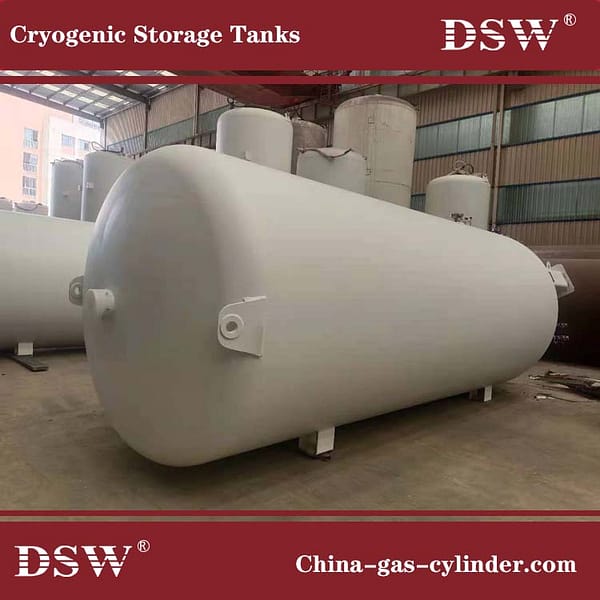

Choosing the right CO2 storage solution is critical for safety, efficiency, and cost-effectiveness. High-pressure CO2 cylinders and cryogenic carbon dioxide dewars both store liquid CO2, but their design principles, pressure handling, temperature requirements, and ideal applications differ significantly.
1. CO2 Gas Cylinders (High-Pressure)
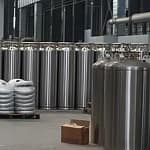
CO2 cylinders store carbon dioxide as a liquefied gas under pressure at ambient temperature. Pressure is the primary factor that keeps CO2 in liquid form.
- Storage principle: Pressure liquefaction at room temperature
- Operating pressure: 50–60 bar (temperature dependent)
- Construction: Single-wall steel or aluminum cylinder
- Temperature: Ambient (~20–25°C)
- Phase inside: Liquid + vapor equilibrium
Applications: Beverage carbonation, fire extinguishers, welding gas supply
Advantages: Portable, low-cost, easy to handle
2. Carbon Dioxide Dewars (Cryogenic Storage)
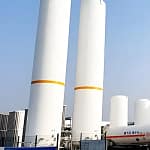
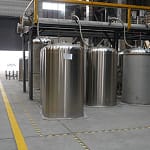
Carbon dioxide dewars store CO2 as a cryogenic liquid using low temperature and vacuum insulation. Temperature control and insulation are the main factors for keeping the carbon dioxide liquid.
- Storage principle: Cryogenic cooling (temperature-based)
- Operating pressure: 10–25 bar (controlled by heat ingress)
- Construction: Double-wall vessel with high-vacuum insulation and multilayer insulation (MLI)
- Temperature: Low (cryogenic, typically below −78°C)
- Phase inside: Saturated liquid with controlled boil-off gas
Applications: Dry ice production, industrial carbon dioxide supply, food freezing, laboratory use
Advantages: High storage efficiency, continuous supply, reduced cylinder change frequency
3. CO2 Cylinder vs Carbon Dioxide Dewar: Key Differences
| Aspect | CO2 Cylinder | Carbon Dioxide Dewar |
|---|---|---|
| Storage method | Pressure-based | Temperature-based (cryogenic) |
| Temperature | Ambient (~20–25°C) | Low (cryogenic, −78°C or below) |
| Pressure | High (≈50–60 bar) | Lower (≈10–25 bar) |
| Structure | Single-wall | Double-wall vacuum insulated |
| Insulation | Not required | Critical |
| Supply mode | Intermittent / small scale | Continuous / bulk supply |
| Efficiency | Lower (less liquid per volume) | Higher storage density |
| Density factor explanation | Moderate because the CO2 liquid density is limited by the maximum pressure the cylinder can safely hold. | High because cryogenic cooling allows CO2 to remain liquid at low pressure, packing more mass per volume. |
4. CO2 Storage Capacity: Compressed vs Liquid
- Compressed CO2 Cylinder: A 50-liter cylinder contains ~20–25 kg of CO2 depending on temperature and fill pressure.
- Liquid CO2 Dewar: A 50-liter dewar can store ~35–40 kg of carbon dioxide due to cryogenic density advantages.
Summary: If storage space and efficiency are critical, liquid CO2 in dewars offers higher capacity and density. For portable, intermittent applications, high-pressure CO2 cylinders remain practical and cost-effective.
5. How to Choose the Right CO2 Storage Option
- CO2 Cylinder: Best for portable, low-cost, and intermittent applications
- Carbon Dioxide Dewar: Ideal for high-consumption, continuous supply, and maximum storage efficiency
Rule of Thumb: If CO2 stays liquid due to pressure → use a cylinder. If carbon dioxide stays liquid due to low temperature → use a dewar.
Explore our full range of CO2 cylinders and carbon dioxide dewars for industrial and commercial applications, optimized for safety, efficiency, and reliability.
TECHNICAL QUESTIONS
FAQs About CO₂ Gas Cylinders vs. Liquid CO₂ Dewars
A standard high-pressure carbon dioxide cylinder (50 litres) typically holds around 20–25 kg of carbon dioxide, depending on temperature and fill pressure.
A 50-liter carbon dioxide dewar can store approximately 35–40 kg of CO2 due to cryogenic cooling, which allows higher density compared to compressed gas.
CO2 cylinders store carbon dioxide under high pressure at ambient temperature, while dewars store CO2 as a cryogenic liquid using low temperature and vacuum insulation. Cylinders are suitable for portable and intermittent use, whereas dewars are ideal for continuous bulk supply.
Cryogenic cooling allows CO2 to remain liquid at lower pressures, packing more mass per volume. In high-pressure cylinders, storage density is limited by the maximum safe operating pressure.
Liquid CO2 dewars offer higher storage efficiency and continuous supply, making them better for large-scale industrial or commercial applications. High-pressure CO2 cylinders are more practical for small-scale, portable, or intermittent use.




No comment