
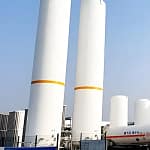
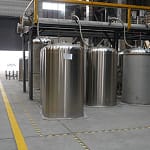
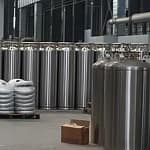



Liquid nitrogen dewars are vacuum-insulated cryogenic storage vessels designed to store and transport liquid nitrogen (LN₂) at approximately -196°C. They are used in laboratories, IVF clinics, biobanks, semiconductor manufacturing, and industrial gas systems. Choosing the correct dewar size affects holding time, evaporation loss, safety, and operating cost.
Liquid Nitrogen Dewar Sizes and Capacity Chart
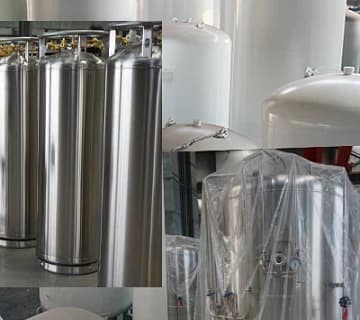
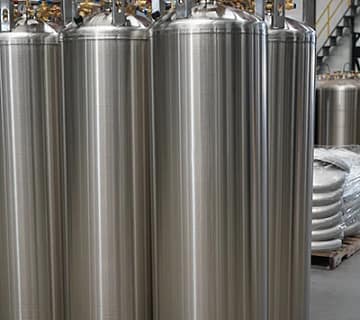
Liquid nitrogen dewars are available in a wide range of capacities. The appropriate size depends on daily nitrogen consumption, required holding time, available space, handling requirements, and the required storage or dispensing configuration. DSW’s liquid nitrogen dewar range includes compact vessels as well as larger cryogenic containers. Current DSW product information lists standard liquid nitrogen dewar capacities from approximately 6 L to 425 L, while larger horizontal cryogenic cylinders are available in models around 175 L to 499 L.
| Approximate Capacity | Typical Configuration | Typical Applications | Main Selection Factors |
|---|---|---|---|
| 2–10 L | Small portable dewar | Laboratories, sampling, veterinary and small-volume applications | Portability, low inventory, easy handling |
| 20–50 L | Laboratory or transport dewar | Research laboratories, medical facilities, sample handling | Capacity, mobility, evaporation performance |
| 100–210 L | Large storage or transport vessel | IVF, biobanks, research and higher-volume applications | Effective volume, evaporation rate, handling and dimensions |
| 175–499 L | Large cryogenic cylinder or horizontal vessel | Industrial gas handling, transport and higher-volume storage | Effective capacity, working pressure, evaporation and mobility |
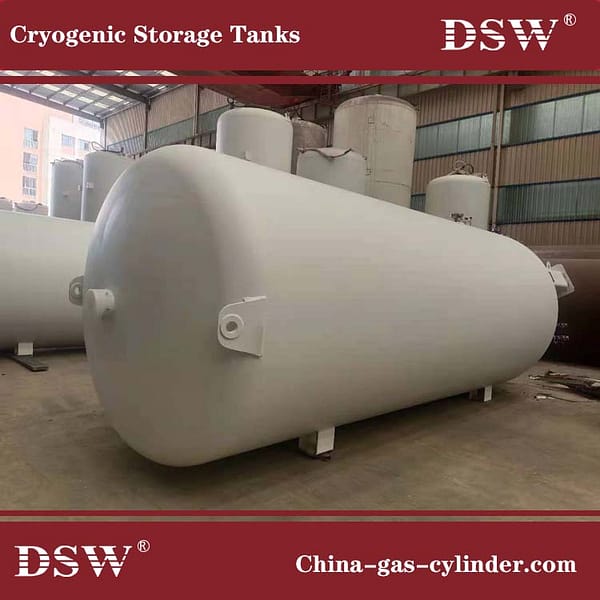
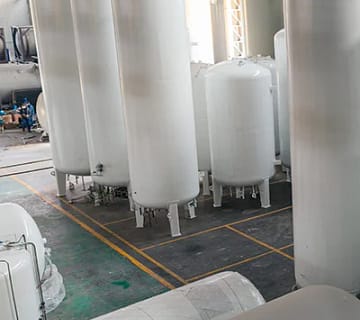
Important: Capacity ranges describe general vessel categories and should not be interpreted as universal standard sizes. Actual capacities, dimensions, evaporation rates and configurations vary by manufacturer and model. For larger fixed-site bulk storage requirements, see DSW’s cryogenic storage tanks rather than treating bulk tanks as large dewars.
What Is a Liquid Nitrogen Dewar?
A liquid nitrogen dewar is a vacuum-insulated container designed for storing and transporting liquid nitrogen. It uses advanced thermal insulation to minimize heat transfer and maintain ultra-low temperatures.
- Stainless steel inner vessel
- Vacuum insulation layer
- Multi-layer reflective insulation (MLI)
- Cryogenic neck tube
- Safety pressure relief system
DSW supplies liquid nitrogen dewars in different capacities and configurations for laboratory, medical, research and industrial applications.
Liquid Nitrogen Dewar Capacity vs Effective Capacity
When comparing liquid nitrogen dewar sizes, it is important to distinguish between geometric volume and effective or usable volume. A vessel described as a 200 L dewar does not necessarily provide 200 L of usable liquid nitrogen under every operating condition. Manufacturers may specify geometric volume, effective volume, maximum filling level and other operating parameters separately. When comparing dewar models, review:
- Geometric volume
- Effective or usable volume
- Maximum recommended filling level
- Static evaporation rate
- Working pressure, where applicable
- Overall dimensions
- Empty and operating weight
This provides a more meaningful comparison than nominal capacity alone. For example, two vessels with similar nominal capacities may have different effective capacities, evaporation rates, dimensions and handling requirements.
How Much Liquid Nitrogen Do You Need?
A simple starting point for estimating required storage capacity is:
Basic Required Capacity = Daily LN₂ Consumption × Required Storage Days
For example, if a facility uses approximately 10 liters of liquid nitrogen per day and needs seven days of supply between deliveries:
10 L/day × 7 days = 70 L
This 70 L figure is only a starting point. The final dewar size should also account for evaporation, maximum filling level, reserve requirements, peak consumption and delivery conditions.
Consider the following when estimating capacity:
- Daily or weekly LN₂ consumption
- Peak or seasonal consumption
- Normal delivery interval
- Required emergency reserve
- Static evaporation rate
- Maximum recommended filling level
- Available installation space
- Portability and handling requirements
- Liquid dispensing or gas withdrawal requirements
For critical applications, it is generally better to select the vessel using actual manufacturer performance data rather than relying only on nominal capacity.
How Liquid Nitrogen Dewars Work
Vacuum Insulation
A vacuum space between the inner and outer vessels reduces heat transfer through conduction and convection. Maintaining vacuum integrity is therefore important for thermal performance.
Multi-Layer Insulation
Reflective insulation may be installed within the vacuum space to reduce radiant heat transfer. Vacuum insulation and multi-layer insulation work together to reduce heat ingress and LN₂ evaporation.
Cryogenic Neck Design
The neck provides access to the inner vessel while limiting the thermal path between the stored liquid and the surrounding environment. Neck dimensions and design can therefore influence both accessibility and evaporation performance.
Pressure Control and Dispensing
Some cryogenic vessels are designed for static storage, while others are configured for liquid dispensing or gas withdrawal. Self-pressurized vessels may incorporate pressure-building or vaporization components depending on the specific design.
How Long Does Liquid Nitrogen Last?
Holding time depends on size, insulation quality, ambient temperature, and usage frequency.
| Capacity | Holding Time |
|---|---|
| 10 L | 8–15 days |
| 30 L | 25–45 days |
| 50 L | 40–70 days |
| 180 L | 60–120 days |
Types of Liquid Nitrogen Dewars
1. Storage Dewars
Designed for long-term static storage, these dewars feature:
- Low evaporation rates
- High thermal efficiency
- Ideal for biological samples, embryos, and vaccines
Best for: Laboratories, IVF clinics, biobanks
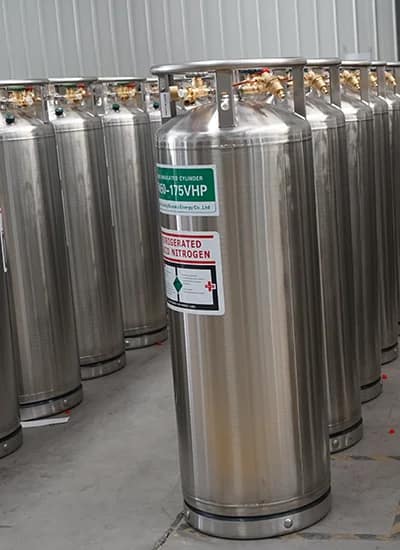
3. Self-Pressurized Dewars
Engineered for controlled liquid dispensing:
- Built-in vaporizer system
- Continuous liquid output
- Higher operational efficiency
Best for: Industrial processes, frequent LN₂ usage
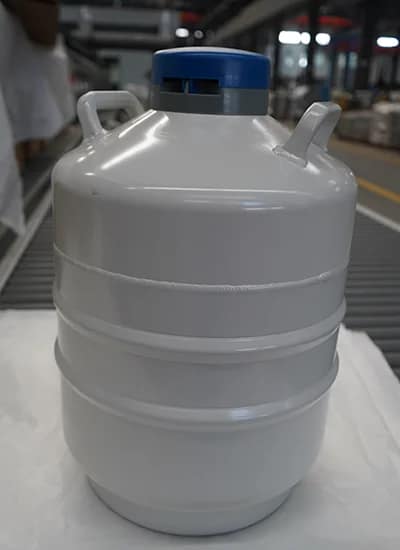
2. Transport Dewars
Built for mobility and durability:
- Reinforced structure
- Shock-resistant design
- Suitable for short-distance transport
Best for: Sample transport, field applications.
Vapor Phase vs Liquid Phase Storage
For biological applications, liquid nitrogen storage may use either vapor-phase or liquid-phase conditions. The appropriate configuration depends on sample requirements, storage equipment, contamination considerations and required operating conditions.
| Storage Method | General Condition | Main Consideration | Typical Applications |
|---|---|---|---|
| Vapor Phase | Samples are stored above the liquid surface in a cold nitrogen vapor environment | Can reduce direct contact between samples and liquid nitrogen | Biobanks, IVF and biological research |
| Liquid Phase | Samples or materials are maintained in liquid nitrogen | Provides direct cryogenic cooling | Cryogenic storage and processing |
The appropriate storage method should be selected according to the sample, equipment design, operating procedure and applicable safety requirements.
Liquid Nitrogen Dewar vs Cryogenic Tank
Liquid nitrogen dewars and cryogenic storage tanks both use thermal insulation to reduce heat transfer, but they are designed for different capacity, mobility and operating requirements.
| Feature | Liquid Nitrogen Dewar | Cryogenic Storage Tank |
|---|---|---|
| Typical use | Laboratory, medical, research and smaller-volume applications | Bulk storage and industrial gas supply |
| Capacity | Small to medium capacity | Typically much larger |
| Mobility | Portable or semi-portable depending on design | Usually fixed installation |
| Supply mode | Storage, transport or smaller-volume dispensing | Continuous or higher-volume gas supply systems |
| Installation | Generally simpler, depending on configuration | Requires engineered installation and supporting equipment |
For larger industrial storage requirements, DSW supplies cryogenic storage tanks for liquid nitrogen, oxygen, argon and other cryogenic liquids. For a broader overview of tanks, vaporizers, pressure regulation and gas distribution, see the cryogenic storage systems guide.
Applications
Liquid nitrogen dewars are widely used across medical, industrial, and research sectors for safe storage, transport, and application of ultra-low temperature cryogenic fluids.
1. Biomedical and Healthcare
- Cryopreservation of cells, tissues, embryos
- IVF and fertility clinics
- Vaccine storage and transport
2. Industrial Applications
- Semiconductor manufacturing cooling
- Cryogenic metal treatment
- LNG and gas processing support
3. Food Processing
- Rapid freezing (IQF technology)
- Preservation of texture and nutrients
4. Research and Laboratories
- Long-term biological storage
- Material testing at ultra-low temperatures
How to Choose the Right Liquid Nitrogen Dewar Size
1. Calculate Your Usage
Estimate:
- Daily liquid nitrogen consumption
- Required storage duration
Basic rule:
Required capacity = daily usage × storage days
2. Consider Holding Time
- Longer holding time = lower refill frequency
- Important for remote or critical applications
3. Evaluate Evaporation Rate
- Reduces operating costs
- Minimizes nitrogen loss
4. Check Neck Diameter
- Wider neck → easier access but higher evaporation
- Narrow neck → better insulation
5. Mobility Requirements
- Small dewars (2–50L) → portable
- Large dewars (100L+) → stationary
Common Mistakes
- Choosing oversized dewars unnecessarily
- Ignoring evaporation rate
- Using transport dewars for storage
- Poor ventilation planning
Safety Guidelines
- Never seal the container completely (risk of explosion)
- Always store in well-ventilated areas
- Secure during transport to prevent tipping
- Monitor for frost buildup, which may indicate vacuum failure
- Maintain minimum liquid levels to protect stored samples
Maintenance Best Practices
- Regularly inspect vacuum integrity
- Avoid mechanical shocks
- Keep neck opening clean and dry
- Monitor liquid levels consistently
TECHNICAL QUESTIONS
FAQs About Liquid Nitrogen Dewar Sizes
Depending on size and insulation, it can last from 1 day to over 180 days.
It depends on your daily consumption and required storage duration. Most labs use 30–210L, while large facilities require 350L+.
A dewar is typically smaller and portable, while cryogenic tanks are larger, often stationary, and used for bulk storage.
Vapor phase reduces contamination risk, making it ideal for sensitive biological samples.
Conclusion
Liquid nitrogen dewars are essential for safe and efficient cryogenic storage across medical, industrial, and research applications. With sizes ranging from 2L to 1800L, choosing the right dewar depends on usage volume, holding time, and application requirements.
As cryogenic technology advances, modern dewars are becoming more efficient, safer, and increasingly equipped with smart monitoring systems—making them a critical asset in precision-driven industries.




No comment