
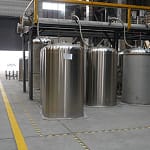

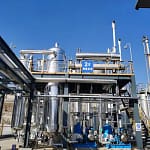



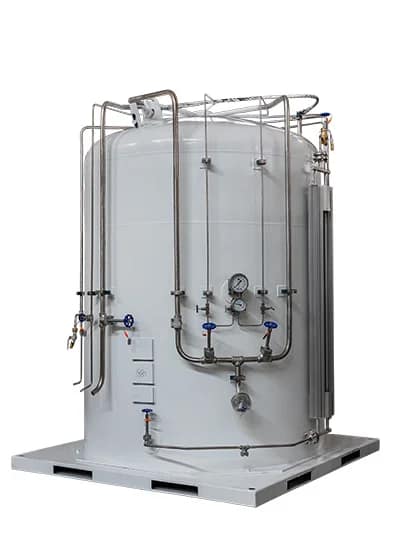
Cryogenic storage tanks are specially engineered vessels designed to store liquefied gases at extremely low temperatures. Depending on the application, these tanks may store liquid nitrogen (LN₂), liquid oxygen (LOX), liquid argon (LAR), liquefied natural gas (LNG), carbon dioxide (CO₂), and other liquefied gases.
Effective cryogenic storage tank design must address several engineering challenges, including extremely low operating temperatures, thermal contraction, heat ingress, pressure control, material selection, structural integrity, insulation performance, and applicable pressure vessel standards.
Most industrial cryogenic storage tanks use a double-wall construction consisting of an inner pressure vessel and an outer protective shell. The space between the two vessels is evacuated and insulated to minimise heat transfer and reduce liquid evaporation.
This guide explains the main design principles, components, materials, insulation systems, vessel types, manufacturing processes, testing requirements, and international standards used for modern cryogenic storage tanks.
What Is a Cryogenic Storage Tank?
A cryogenic storage tank, also known as a cryogenic storage vessel or vacuum-insulated pressure vessel, is designed to safely contain liquefied gases at temperatures typically below approximately -150°C.
Unlike conventional storage tanks, cryogenic tanks must minimise heat transfer from the surrounding environment. Even a small amount of heat entering the vessel can cause cryogenic liquid to vaporise, increasing internal pressure and resulting in product losses.
For this reason, cryogenic tanks commonly combine:
- A pressure-resistant inner vessel
- A protective outer shell
- A vacuum-insulated annular space
- Perlite or multilayer insulation
- Thermally designed support structures
- Pressure relief and safety devices
- Instrumentation and level monitoring systems
- Piping for filling, withdrawal, venting, and pressure control
Cryogenic storage tanks are widely used in industrial gas production, manufacturing, medical gas supply, laboratories, food processing, LNG infrastructure, energy projects, and cryogenic transportation systems.
Key Design Requirements for Cryogenic Storage Tanks
Cryogenic tank design requires a balance between safety, thermal efficiency, storage capacity, operational performance, and compliance with applicable engineering standards.
Design Pressure
The inner vessel must be designed to withstand its maximum allowable working pressure. Internal pressure may increase as cryogenic liquid absorbs heat and vaporises, making pressure design and pressure-relief protection critical.
Design Temperature
The design temperature determines the materials used for the inner vessel, piping, valves, and other pressure-containing components. Materials must maintain suitable mechanical properties under low-temperature operating conditions.
Storage Capacity
The required storage volume affects tank diameter, length or height, support configuration, transportation requirements, and installation footprint.
Heat Ingress
Heat transfer into the vessel directly affects liquid evaporation and pressure build-up. Vacuum insulation, perlite, multilayer insulation, and thermal support design are therefore important parts of the overall tank design.
Thermal Contraction
Materials contract as their temperature decreases. Cryogenic storage tank supports, piping connections, and structural components must accommodate thermal movement without creating excessive stress.
Boil-Off Management
The expected evaporation or boil-off performance depends on tank size, insulation design, stored liquid, ambient conditions, operating pressure, storage duration, and withdrawal patterns.
Site and Operating Conditions
Design requirements may also consider installation location, wind loading, seismic conditions, ambient temperature, corrosion protection, access for maintenance, and customer-specific engineering requirements.
| Design Parameter | Engineering Importance |
|---|---|
| Design Pressure | Determines pressure vessel strength and wall thickness requirements |
| Design Temperature | Determines suitable materials and low-temperature performance requirements |
| Storage Capacity | Influences tank dimensions and overall configuration |
| Insulation System | Reduces heat ingress and product evaporation |
| Vacuum Performance | Improves thermal insulation by reducing conductive and convective heat transfer |
| Thermal Contraction | Affects support, piping, and structural design |
| Operating Environment | Influences external protection and installation requirements |
| Safety Devices | Protect against excessive pressure and abnormal operating conditions |
Main Components of a Cryogenic Storage Tank
1. Inner Vessel
The inner vessel is the primary pressure-containing chamber that stores the cryogenic liquid. Depending on the application and design requirements, suitable materials may include stainless steel, aluminium alloys, or other low-temperature materials selected according to the applicable design code.
2. Outer Shell
The outer shell surrounds and protects the insulation system and vacuum space. It also provides mechanical protection against environmental and operational conditions.
3. Vacuum Annular Space
The annular space between the inner vessel and outer shell is evacuated to reduce heat transfer caused by gas conduction and convection.
4. Thermal Insulation
Additional insulation, such as expanded perlite or multilayer insulation (MLI), may be used inside the annular space to further reduce radiative heat transfer.
5. Support System
The support system holds the inner vessel in position while minimising thermal bridging between the inner vessel and outer shell. Supports must also accommodate thermal contraction during operation.
6. Pressure Relief Devices
Pressure relief valves and other required safety devices protect the tank against excessive pressure caused by liquid vaporisation or abnormal operating conditions.
7. Instrumentation
Typical instrumentation may include:
- Pressure gauges
- Pressure transmitters
- Liquid level indicators
- Temperature sensors
- Vacuum monitoring equipment
8. Piping System
The piping system manages filling, liquid withdrawal, gas withdrawal, venting, pressure building, and pressure regulation. For applications requiring gas-phase supply, the tank can be integrated with an cryogenic vaporizer or other vaporization equipment.
| Component | Primary Function |
|---|---|
| Inner Vessel | Stores cryogenic liquid under pressure |
| Outer Shell | Protects insulation and maintains vacuum space |
| Vacuum Annular Space | Reduces conductive and convective heat transfer |
| Perlite / MLI Insulation | Minimises radiative heat transfer |
| Support System | Supports inner vessel and accommodates thermal contraction |
| Pressure Relief Valves | Protects against overpressure conditions |
| Instrumentation | Monitors pressure, temperature, and liquid level |
| Piping System | Controls filling, withdrawal, and venting operations |
Materials Used in Cryogenic Storage Tank Design
Materials used for cryogenic storage tanks must be selected according to the stored liquid, design temperature, design pressure, mechanical requirements, welding requirements, and applicable engineering code.
Stainless Steel
Austenitic stainless steels are widely used in cryogenic applications because they can provide favourable toughness and ductility at low temperatures. Specific grades must be selected according to the design temperature and applicable material specifications.
9% Nickel Steel
9% nickel steel is widely associated with certain low-temperature and LNG storage applications because of its combination of strength and low-temperature toughness.
Aluminium Alloys
Selected aluminium alloys are used in cryogenic equipment, air separation systems, heat exchangers, and other low-temperature applications where appropriate material properties and weight reduction are required.
Other Materials
Material selection may also include specialised alloys and engineered materials depending on the specific cryogenic application, design temperature, process medium, and applicable pressure vessel requirements.
| Material | Typical Application | Key Consideration |
|---|---|---|
| Austenitic Stainless Steel | LN₂ tanks, LOX systems, cryogenic piping | Low-temperature toughness and corrosion resistance |
| 9% Nickel Steel | LNG storage applications | Strength and low-temperature performance |
| Aluminium Alloys | Cryogenic equipment and process systems | Low weight and suitable cryogenic properties for selected applications |
Final material selection should always follow the applicable design code, material specification, design temperature, pressure requirements, and project conditions.
Thermal Insulation and Vacuum Design
Thermal insulation is one of the most important elements of cryogenic storage tank design. The objective is to minimise heat transfer from the environment and reduce the evaporation of the stored cryogenic liquid.
Vacuum Insulation
A high-quality vacuum in the annular space reduces heat transfer caused by gas conduction and convection.
Perlite Insulation
Expanded perlite can be used as insulation within the annular space of vacuum-insulated tanks. It provides thermal resistance and is commonly used in industrial cryogenic storage applications.
Multilayer Insulation
Multilayer insulation uses multiple reflective layers separated by low-conductivity materials to reduce radiative heat transfer.
Thermal Bridge Reduction
Supports and structural connections must be designed to reduce unwanted heat paths between the outer shell and the inner vessel.
The final insulation system should be selected according to vessel size, stored liquid, required holding performance, operating environment, manufacturing requirements, and project specifications.
Types of Cryogenic Storage Tanks
Cryogenic storage systems are available in different configurations depending on capacity, installation conditions, transportation requirements, gas consumption, and application.
Vertical Cryogenic Storage Tanks
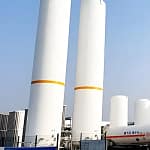
Vertical cryogenic storage tanks are commonly used for stationary bulk storage where a compact installation footprint is important. They are widely used for liquid nitrogen, liquid oxygen, liquid argon, and other liquefied gases.
Horizontal Cryogenic Storage Tanks
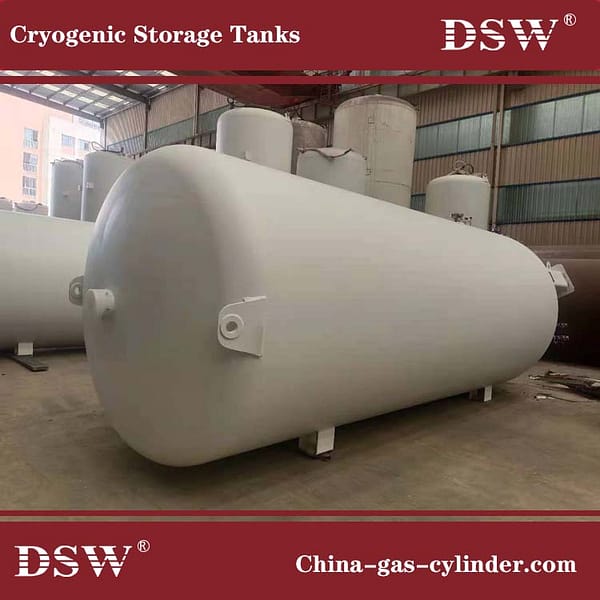
Horizontal tanks may be selected where installation height is limited or where transportation and site conditions favour a horizontal configuration.
Microbulk Tanks
Microbulk tanks provide an alternative between conventional gas cylinders and large bulk storage tanks. They are commonly used by facilities with moderate gas consumption requirements.
Dewar Cylinders
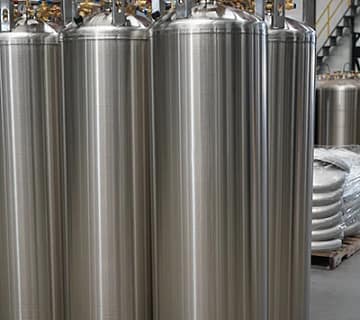
Dewar cylinders are smaller portable vacuum-insulated vessels used in laboratories, medical facilities, research environments, and industrial applications requiring flexible cryogenic supply.
Cryogenic ISO Tank Containers
Cryogenic ISO tank containers are designed for the intermodal transportation of liquefied gases by road, rail, and sea. They are an important part of modern gas transportation solutions for the bulk movement of liquefied gases.
Cryogenic Semi-Trailers
Cryogenic semi-trailers are designed for the bulk distribution of liquefied gases between production facilities, storage terminals, and end users.
Flat-Bottom LNG Storage Tanks
Large flat-bottom tanks are used for high-capacity LNG storage applications, including terminals, energy infrastructure, peak-shaving facilities, and large-scale LNG projects.
| Tank Type | Typical Use | Configuration |
|---|---|---|
| Vertical Cryogenic Tank | Industrial bulk storage | Stationary |
| Horizontal Cryogenic Tank | Industrial and process storage | Stationary |
| Microbulk Tank | Medium gas consumption | Stationary / Site supply |
| Dewar | Laboratory and portable applications | Portable |
| ISO Tank Container | International intermodal transport | Transportable |
| Cryogenic Semi-Trailer | Bulk liquid distribution | Road transport |
| Flat-Bottom LNG Tank | Large-scale LNG storage | Stationary |
Key Considerations in Cryogenic Vessel Design
Effective cryogenic vessel design balances safety, thermal efficiency, and material performance. Critical aspects include:
- Vessel Dimensions and Thickness: Proper calculation of the vessel and outer shell dimensions ensures resistance to internal pressures and thermal stresses.
- Stiffener Design: Provides structural integrity under extreme temperature variations and prevents deformation.
- Material Selection: Materials must maintain strength at cryogenic temperatures and be compatible with stored gases like nitrogen and oxygen.
- Thermal Insulation: Reduces heat ingress, minimising boil-off and improving storage efficiency. Vacuum insulation, perlite, multilayer insulation, and thermal support design are therefore important parts of cryogenic tank insulation and overall tank design.
- Filtration and Purity Control: Ensures that air or gas is free from impurities prior to liquefaction, maintaining high-purity liquid gases.
- Heat Exchangers and Expansion Turbines: Efficiently cool and liquefy gases while recovering energy.
- Collection and Storage: Tray and column arrangements separate nitrogen, oxygen, and other gases for safe and efficient storage in cold converters.
- Compliance with Design Codes: Fabrication must follow international standards such as ASME, EN, or CODE 2000.
Well-designed cryogenic vessels ensure safe, reliable, and efficient production and storage of liquid gases.
Design Codes and Standards for Cryogenic Storage Tanks
Cryogenic storage tanks must be designed and manufactured according to the standards and regulatory requirements applicable to the project location and intended service.
Commonly referenced standards and regulations may include:
- ASME Section VIII Division 1 – Pressure vessel design and construction
- ASME Section VIII Division 2 – Alternative pressure vessel design requirements
- EN 13458 – Static vacuum-insulated cryogenic vessels
- EN 13530 – Transportable vacuum-insulated cryogenic vessels
- PED 2014/68/EU – European pressure equipment requirements
- TPED – Requirements applicable to transportable pressure equipment
- GB 150 – Pressure vessel requirements in China
- GB/T 18442 – Vacuum-insulated cryogenic pressure vessels
- PD 5500 – Pressure vessel design guidance
- CRN – Registration requirements for applicable Canadian pressure equipment
The applicable code should be selected according to project location, customer requirements, stored medium, vessel configuration, and regulatory requirements.
| Standard / Code | Region | Typical Application |
|---|---|---|
| ASME VIII Div.1 | USA / International | Pressure Vessels & Cryogenic Tanks |
| ASME VIII Div.2 | USA / International | Advanced Pressure Vessel Design |
| EN 13458 | Europe | Static Vacuum-Insulated Cryogenic Vessels |
| EN 13530 | Europe | Transportable Cryogenic Vessels |
| PED 2014/68/EU | European Union | Pressure Equipment Compliance |
| TPED | European Union | Transportable Pressure Equipment |
| GB 150 | China | Pressure Vessel Design & Fabrication |
| GB/T 18442 | China | Vacuum-Insulated Cryogenic Tanks |
| CRN | Canada | Pressure Vessel Registration |
| PD 5500 | United Kingdom | Pressure Vessel Design |
How Cryogenic Storage Tanks Are Manufactured
Cryogenic tank manufacturing requires controlled material preparation, forming, welding, inspection, insulation installation, vacuum processing, pressure testing, and final quality inspection.
1. Material Inspection and Preparation
Certified materials are inspected and prepared according to engineering drawings, material specifications, and applicable manufacturing procedures.
2. Plate Cutting and Forming
Steel or other approved materials are cut and formed into cylindrical shells, heads, and other vessel components.
3. Shell Rolling and Assembly
Prepared plates are rolled into shell sections and assembled according to the required vessel dimensions.
4. Welding
Pressure-containing welds are completed using qualified welding procedures and qualified personnel. Depending on the design and manufacturing requirements, processes may include GTAW and SAW.
5. Non-Destructive Testing
Critical welds may be examined using applicable non-destructive testing methods, including radiographic testing, ultrasonic testing, and liquid penetrant testing.
6. Insulation Installation and Vacuum Processing
The annular space is prepared with the required insulation system and evacuated to achieve the required thermal performance.
7. Pressure and Leak Testing
The completed vessel undergoes the required pressure and leak testing procedures according to the applicable design code and project requirements.
8. Final Inspection
Final inspection verifies dimensions, weld quality, pressure safety devices, instrumentation, insulation performance, documentation, and other applicable requirements before delivery.
Testing and Quality Control
Quality control is essential because cryogenic tanks operate under demanding temperature and pressure conditions.
Depending on the applicable design and project requirements, testing may include:
- Material verification
- Dimensional inspection
- Visual weld inspection
- Radiographic testing (RT)
- Ultrasonic testing (UT)
- Liquid penetrant testing (PT)
- Pressure testing
- Leak testing
- Helium leak testing where specified
- Vacuum retention or vacuum performance testing
- Final documentation review
The specific testing programme should be determined by the applicable design code, tank specification, customer requirements, and intended service.
How to Select the Right Cryogenic Storage Tank
Selecting the right cryogenic storage tank requires more than simply choosing a capacity. The complete industrial gas supply system should be considered, including storage capacity, operating pressure, vaporization requirements, and downstream gas consumption.
1. Identify the Cryogenic Liquid
Different gases and liquids have different storage temperatures, material compatibility requirements, operating pressures, and safety considerations.
2. Determine Required Storage Capacity
Tank capacity should be selected based on consumption, delivery frequency, required reserve capacity, and available installation space.
3. Define the Required Pressure
The required operating pressure depends on the downstream process, vaporisation system, gas supply requirements, and pressure regulation system.
4. Consider Withdrawal Requirements
The system may require liquid withdrawal, gas withdrawal, or both. Required flow rates can influence tank sizing and associated vaporisation equipment.
5. Evaluate Installation Conditions
Available space, foundation requirements, site access, environmental conditions, and local regulations should be considered during equipment selection.
6. Confirm Applicable Standards
The required design code and certification requirements should be identified before manufacturing begins.
For larger projects, cryogenic tank selection is often part of a complete industrial gas storage and supply system that may include vaporizers, pressure-building equipment, control systems, piping, and distribution equipment.
| Application | Typical Storage Solution |
|---|---|
| Laboratory and Research | Dewar or small cryogenic vessel |
| Moderate Industrial Gas Consumption | Microbulk tank |
| Large Industrial Gas Storage | Vertical or horizontal cryogenic storage tank |
| International Cryogenic Transport | Cryogenic ISO tank container |
| Bulk Regional Distribution | Cryogenic semi-trailer |
| Large-Scale LNG Storage | Flat-bottom LNG storage tank |
TECHNICAL FAQs
About The design of Cryogenic Vessel
Cryogenic storage tank design depends on the stored gas, operating temperature, working and design pressure, storage capacity, insulation performance, material selection, allowable heat leak, applicable pressure-vessel standards, and required safety systems.
Vacuum insulation significantly reduces heat transfer from the surroundings to the cryogenic liquid. A typical vacuum-insulated tank uses an inner vessel, an outer jacket, and an evacuated annular space with multilayer insulation to minimize heat leak and product evaporation.
The inner vessel is commonly manufactured from cryogenic-compatible stainless steel or other approved low-temperature materials. The outer jacket is typically carbon steel or stainless steel depending on the tank design, environment, and applicable standards.
Common safety systems include pressure relief valves, rupture discs where required, pressure gauges, level instrumentation, vacuum monitoring, isolation valves, emergency shutoff provisions, and pressure-building or venting systems. The exact configuration depends on the gas, tank design, installation, and applicable regulations.
Applicable standards vary by tank type, gas, design pressure, country, and intended application. Depending on the project, requirements may involve ASME pressure vessel rules, EN standards, GB standards, TPED requirements, or other national and international codes.
Tank capacity is selected according to gas consumption, required storage duration, delivery frequency, operating pressure, available installation space, allowable reserve capacity, and future demand. The usable capacity should be evaluated together with the required liquid fill and operating limits.



No comment