
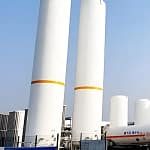
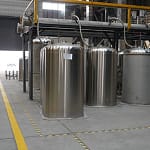

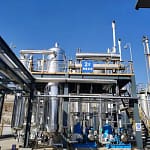


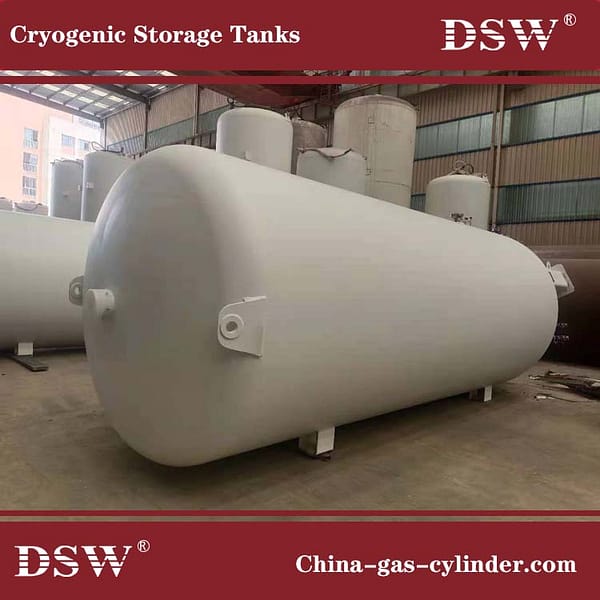


Cryogenic vessels are specialized containers designed to store or transport liquefied gases at extremely low temperatures. Common products include liquid nitrogen (LIN), liquid oxygen (LOX), liquid argon (LAr), and liquefied natural gas (LNG).
Different types of cryogenic vessels serve different storage and transportation requirements. Small Dewar vessels are suitable for laboratory applications, while stationary cryogenic tanks support industrial gas supply. Microbulk vessels provide an intermediate storage option, and cryogenic transport vessels are designed for bulk liquid distribution.
Understanding the differences between cryogenic vessel types helps industrial gas suppliers, manufacturers, and facility operators select equipment that matches their storage capacity, pressure, installation, and operational requirements.
What Are the Main Types of Cryogenic Vessels?
Cryogenic vessels can be classified according to their construction design, installation method, operating pressure, storage capacity, and intended application. Common configurations include:
- Dewar vessels: Small insulated containers for laboratory, medical, and research applications.
- Pressurized cryogenic vessels: Pressure-rated containers for storing and supplying liquefied gases.
- Stationary cryogenic storage tanks: Fixed installations for industrial gas storage and supply.
- Microbulk vessels: Compact storage systems for facilities with moderate or continuous gas consumption.
- Flat-bottom cryogenic tanks: Large-capacity vessels designed for bulk liquid storage.
- Cryogenic transport vessels: Specialized tanks for transporting liquefied gases by road or intermodal transport.
These categories can overlap. For example, a microbulk vessel may also be a stationary, vacuum-insulated pressure vessel. The classification depends on the vessel’s design and intended operating purpose.
1. Dewar Vessels
Dewar vessels are insulated containers used to store small quantities of cryogenic liquids. They are commonly found in laboratories, medical facilities, and research institutions where liquid nitrogen or other cryogenic products are needed in relatively small volumes.
Many Dewar vessels use double-wall construction with an evacuated space between the inner and outer walls. This vacuum insulation reduces heat transfer and helps maintain the temperature of the stored liquid.
Key Characteristics
- Designed for relatively small storage volumes.
- Vacuum insulation helps limit heat transfer.
- Available in different shapes, capacities, and materials.
- Suitable for laboratory, medical, and research environments.
- May be open-neck or closed and pressure-rated, depending on the design.
Typical Applications
Dewar vessels are commonly used for liquid nitrogen storage, biological sample preservation, laboratory experiments, and specialized medical applications. Their compact size makes them suitable for operations that do not require large-volume industrial storage.
2. Pressurized Cryogenic Vessels
Pressurized cryogenic vessels are designed to store liquefied gases under controlled pressure. They typically use a pressure-rated inner vessel, an outer protective jacket, and a thermal insulation system to reduce heat ingress.
Depending on the design, these vessels may incorporate pressure-building equipment to increase liquid pressure and support product withdrawal. Pressure-relief devices help protect the vessel against excessive internal pressure.
Key Characteristics
- Designed for specified working and design pressures.
- Commonly incorporate vacuum insulation.
- May include pressure-building and pressure-relief arrangements.
- Support controlled liquid withdrawal or gas supply.
- Available in vertical and horizontal configurations.
Typical Applications
Pressurized cryogenic vessels are widely used for industrial storage and supply of liquid nitrogen, liquid oxygen, and liquid argon. They can serve manufacturing plants, hospitals, laboratories, and other facilities that require a controlled supply of cryogenic products.
3. Stationary Cryogenic Storage Tanks
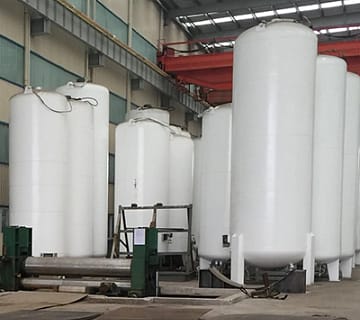
Stationary cryogenic storage tanks are fixed installations designed to store larger quantities of liquefied gases at industrial facilities, hospitals, gas distribution centers, and manufacturing plants.
They are available in different capacities, pressure ratings, and installation configurations. The appropriate design depends on the stored product, consumption requirements, available site space, and gas supply arrangement.
Vertical Cryogenic Storage Tanks
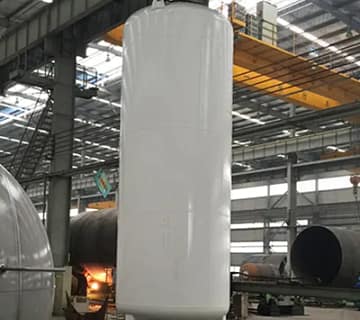
Vertical cryogenic tanks have an upright cylindrical configuration. They use the available ground area efficiently and are commonly selected where installation space is limited.
- Upright cylindrical design.
- Efficient use of ground space.
- Suitable for industrial liquid gas storage.
- Available in different capacities and pressure ratings.
Horizontal Cryogenic Storage Tanks
Horizontal cryogenic tanks have a cylindrical vessel installed parallel to the ground. This arrangement may be suitable for specific site layouts, foundation designs, and equipment integration requirements.
- Horizontal installation configuration.
- Suitable for selected industrial storage applications.
- Can be integrated with downstream gas supply equipment.
- Require appropriate foundation and installation planning.
Typical Applications
Stationary cryogenic tanks are used in industrial gas supply, chemical processing, metal fabrication, food processing, and healthcare. They provide storage capacity for facilities with regular or high-volume demand for liquefied gases.
Explore DSW’s cryogenic tanks for industrial liquid gas storage applications.
4. Microbulk Cryogenic Vessels
Microbulk vessels are compact cryogenic storage systems designed for facilities with moderate or continuous demand for liquefied gases. They provide an alternative to frequent gas cylinder replacement and can serve as an intermediate solution between cylinder supply and large bulk storage installations.
A microbulk system generally combines a storage vessel with the valves, pressure-control equipment, and supply connections required for operation. It is commonly installed at the customer’s facility and replenished by a delivery vehicle.
Key Characteristics
- Compact design for facilities with limited installation space.
- Suitable for moderate and continuous gas consumption.
- Can reduce the need for frequent cylinder replacement.
- May incorporate pressure-building and gas-supply equipment.
- Available in configurations for different gases and operating requirements.
Typical Applications
Microbulk vessels are used by laboratories, hospitals, food processing facilities, metal fabrication plants, and smaller industrial users that need a dependable supply of liquid nitrogen, oxygen, or argon.
5. Flat-Bottom Cryogenic Storage Tanks
Flat-bottom cryogenic tanks are large-capacity vessels designed for bulk storage of liquefied gases. They typically feature a vertical cylindrical structure with a flat bottom supported by a specially engineered foundation.
Unlike many smaller pressurized cryogenic vessels, flat-bottom tanks generally operate at relatively low pressure. Their design must account for the stored product, tank capacity, foundation conditions, insulation performance, and vapor-management requirements.
Key Characteristics
- Designed for large-volume cryogenic liquid storage.
- Flat-bottom construction with dedicated foundation requirements.
- Typically operate at relatively low pressure.
- Require engineered insulation and vapor-management systems.
- Designed according to the stored product and project conditions.
Typical Applications
Flat-bottom tanks are commonly used in large industrial gas installations, LNG terminals, and facilities requiring substantial cryogenic liquid inventories. Their selection requires careful consideration of storage capacity, operating conditions, site requirements, and applicable design standards.
6. Cryogenic Transport Vessels
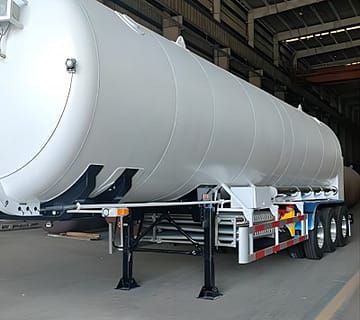
Cryogenic transport vessels are designed to store and transport liquefied gases between production facilities, distribution centers, and end users. Their design must account for transportation loads, thermal performance, pressure control, and safe loading and unloading.
Common configurations include road tanker trailers and ISO cryogenic tank containers.
Cryogenic Tanker Trailers
Cryogenic tanker trailers are road transport vessels designed to deliver liquefied gases in bulk. They typically consist of an insulated tank mounted on a trailer chassis, together with the valves, piping, and safety equipment required for loading, transportation, and unloading.
ISO Cryogenic Tank Containers
ISO cryogenic tank containers are designed for intermodal transportation using compatible container-handling and transport systems. They allow cryogenic liquids to move between different locations and transport modes, subject to the container’s design and applicable regulations.
Key Characteristics
- Designed to withstand transportation and handling loads.
- Incorporate thermal insulation to limit heat ingress.
- Include pressure-control and safety arrangements.
- Require suitable mounting, lifting, and connection systems.
- Must comply with applicable transportation and equipment regulations.
Typical Applications
Cryogenic transport vessels are used to distribute liquid nitrogen, liquid oxygen, liquid argon, LNG, and other compatible products from production or storage facilities to industrial customers and regional distribution points.
Explore DSW’s cryogenic transport trailers for bulk cryogenic liquid transportation applications.
Comparison of Different Cryogenic Vessel Types
The following table summarizes the main differences between common cryogenic vessel configurations.
| Vessel Type | Main Design | Typical Application | Storage Scale |
|---|---|---|---|
| Dewar Vessel | Small insulated container | Laboratory and medical use | Small |
| Pressurized Cryogenic Vessel | Pressure-rated insulated vessel | Liquid storage and gas supply | Varies by design |
| Stationary Cryogenic Tank | Fixed vertical or horizontal tank | Industrial gas storage | Medium to large |
| Microbulk Vessel | Compact site-installed storage system | Moderate industrial consumption | Small to medium |
| Flat-Bottom Tank | Large vertical tank with flat bottom | Bulk liquid storage | Large |
| Transport Vessel | Insulated vessel mounted for transportation | Bulk liquid distribution | Varies by design |
Actual capacity, working pressure, insulation design, and operating conditions vary according to the stored product, vessel design, manufacturer, and applicable standards. The categories above describe common configurations rather than fixed technical specifications.
How to Choose the Right Type of Cryogenic Vessel
Selecting a suitable cryogenic vessel requires matching the equipment to the stored gas, required capacity, supply conditions, and installation environment. Consider the following factors before making a selection.
1. Stored Cryogenic Liquid
Identify whether the vessel will store liquid nitrogen, liquid oxygen, liquid argon, LNG, or another cryogenic product. Material compatibility, operating temperature, cleanliness requirements, and safety considerations differ between products.
2. Storage Capacity and Consumption
Estimate daily and peak consumption, delivery frequency, required reserve capacity, and future demand. Small Dewars may suit laboratory use, while microbulk vessels or stationary tanks may be more appropriate for industrial consumption.
3. Working Pressure and Supply Requirements
Determine the required working pressure and downstream supply conditions. The vessel’s design pressure, pressure-building arrangement, pressure-relief devices, and liquid or gas withdrawal system must match the intended operation.
4. Installation and Transportation Conditions
Consider available space, foundation requirements, delivery access, lifting arrangements, and connection to downstream equipment. For transport vessels, also evaluate mounting, handling, transport routes, and applicable regulations.
5. Design Standards and Safety Requirements
Verify the design codes, inspection requirements, certification, and safety regulations applicable to the vessel and its intended location. Requirements vary by equipment category, stored product, and jurisdiction.
Related Cryogenic Vessel and Tank Guides
The type of vessel determines its storage configuration, while its construction and operating design determine how it performs in service. For more technical information, see our related guides:
- Cryogenic Vessels: Components, Construction, and Key Features – Understand vessel structure, insulation, and key components.
- Cryogenic Tanks Guide – Learn about cryogenic tank design and selection considerations.
- Cryogenic Storage Systems Guide – Explore integrated storage and supply system engineering.
Custom Cryogenic Vessel Design and Solutions
DSW specializes in designing, manufacturing, installing, and maintaining cryogenic pressure vessels for various industries. Our products include flat-bottom cryogenic tanks, pressurized cryogenic storage tanks, and other types of cryogenic vessels.
We offer complete turnkey solutions, handling every step of your cryogenic project. Our team of engineers and technicians, supported by two fully equipped production facilities, ensures top-quality design and manufacturing.
With over 20 years of experience in cryogenic engineering, we also provide maintenance services for various cryogenic vessel types, including laboratory jars, dewars, rangers, and cryogenic tanks.
For more information on our cryogenic solutions, contact us today.
TECHNICAL QUESTIONS
Frequently asked questions About Cryogenic Vessel Types
Common types include Dewar vessels, pressurized cryogenic vessels, stationary storage tanks, microbulk vessels, flat-bottom tanks, and cryogenic transport vessels. Each configuration serves different storage, supply, or transportation requirements.
A Dewar vessel is generally a small insulated container used for laboratory, medical, or limited-volume storage. A cryogenic storage tank is designed for larger storage capacities and may include pressure-control, liquid withdrawal, and gas-supply systems.
A stationary cryogenic tank is installed at a fixed location for storage and supply. A transport vessel is engineered for movement and must account for transportation loads, mounting, handling, and applicable transport regulations.
No. Some cryogenic vessels are designed for pressurized storage, while others operate at relatively low pressure. The pressure range depends on the vessel’s design, stored product, and intended application.
The appropriate vessel depends on the required capacity, consumption rate, operating pressure, and application. Small Dewars may suit laboratory use, while microbulk vessels or stationary cryogenic tanks are more suitable for many industrial supply requirements.
A microbulk vessel is generally a compact storage system designed for moderate gas consumption. A bulk cryogenic storage tank is intended for larger liquid inventories and higher-volume supply requirements. The suitable option depends on consumption, delivery frequency, and site conditions.
Request a Cryogenic Vessel Solution
Looking for a suitable cryogenic vessel for industrial gas storage or transportation? Contact DSW with your gas type, required capacity, working pressure, installation conditions, and project specifications. Our team can review your requirements and discuss suitable cryogenic equipment solutions.



No comment