



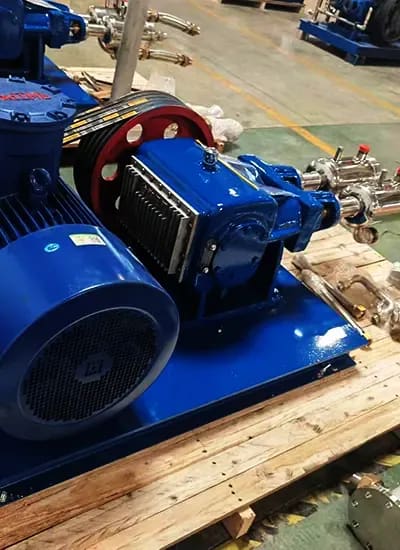
A cryogenic pump is a specialized pump designed to transfer and, when required, pressurize liquefied gases at extremely low temperatures. Cryogenic pumps are used with liquids such as liquid nitrogen (LN₂), liquid oxygen (LOX), liquid argon (LAr), liquid carbon dioxide (LCO₂), and liquefied natural gas (LNG).
Unlike conventional industrial pumps, cryogenic pumps must operate reliably at very low temperatures while minimizing heat transfer and unwanted vaporization of the pumped liquid.
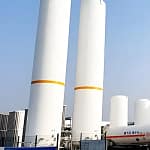
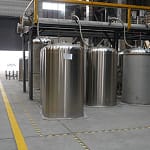
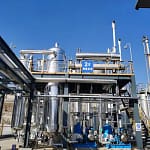
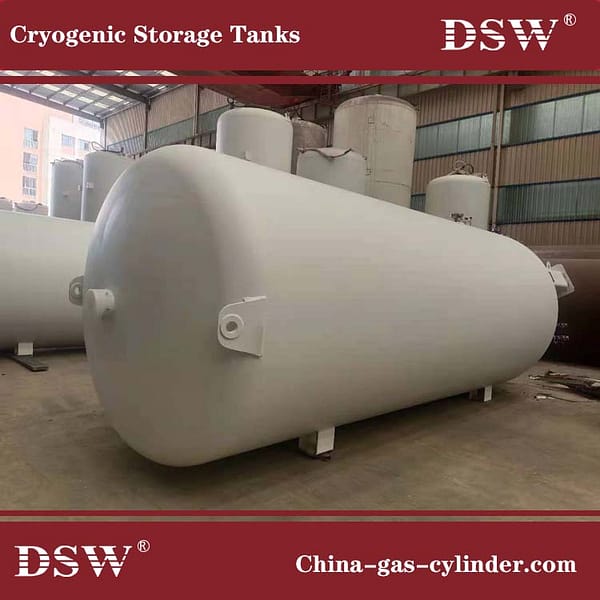
In industrial applications, cryogenic pumps are commonly integrated with cryogenic storage tanks, vaporizers, filling systems, pressure regulation equipment, and distribution piping to form a complete industrial gas supply system.
What Does a Cryogenic Pump Do?
The primary function of a cryogenic pump is to move liquefied gas from one location to another and provide the pressure required by the downstream system.
For example, a pump can transfer liquid nitrogen from a bulk storage tank to a vaporizer. The vaporizer then converts the liquid into nitrogen gas before the gas enters the distribution system.
Depending on the application, a cryogenic pump may be used to:
- Transfer liquid from a cryogenic storage tank
- Move cryogenic liquid between storage and transport equipment
- Increase liquid pressure
- Supply liquid to a vaporizer
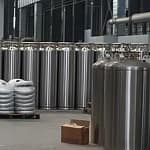
- Feed cryogenic liquid into cylinder filling systems
- Supply LNG to fueling or high-pressure systems
- Unload liquefied gas from transport tanks or ISO containers
How Does a Cryogenic Pump Work?
The operating principle depends on the pump design, but the basic process is straightforward.
1. Cryogenic Liquid Enters the Pump
Liquefied gas flows from a storage tank, transport tank, or other source into the pump suction side.
Because cryogenic liquids can vaporize when pressure or temperature conditions change, the suction system must be designed to provide suitable inlet conditions.
2. The Pump Transfers Energy to the Liquid
The pump uses a mechanical pumping mechanism to transfer energy to the cryogenic liquid. Depending on the pump type, this may involve an impeller, piston, plunger, turbine, or another specialized mechanism.
The result is an increase in liquid pressure and controlled flow.
3. Pressurized Liquid Is Delivered Downstream
The pressurized liquid leaves the pump and flows through the downstream piping.
It may be delivered to a vaporizer, filling manifold, process equipment, another storage vessel, or an LNG fueling system.
4. The Liquid May Be Vaporized
When the final application requires gas rather than liquid, the pressurized liquid can be sent to a cryogenic vaporizer.
The vaporizer adds controlled heat and converts the liquid into gas before the gas enters the pressure regulation and distribution system.
Why Are Cryogenic Pumps Different from Standard Pumps?
Cryogenic liquids are maintained at temperatures far below normal ambient conditions. For example, liquid nitrogen boils at approximately -196°C (-321°F), while LNG is typically stored at temperatures around -162°C (-260°F).
This creates several engineering challenges.
- Very low operating temperatures
- Thermal contraction of components
- Potential liquid vaporization
- Cavitation and vapor-lock risks
- Low-temperature material requirements
- Special sealing requirements
- Heat-leak control
- Special cleanliness requirements for certain services
The pump, piping, valves, insulation, seals, and instrumentation therefore need to be selected as part of the complete cryogenic system.
Cryogenic Pump vs. Cryopump
The terms cryogenic pump and cryopump can sometimes be confused, but they describe different technologies.
| Feature | Cryogenic Liquid Pump | Cryopump |
|---|---|---|
| Primary function | Transfer and pressurize cryogenic liquids | Create high or ultra-high vacuum |
| Medium | LN2, LOX, LAr, LCO2, LNG and other liquefied gases | Gas molecules inside a vacuum chamber |
| Operating principle | Mechanical pumping of liquid | Cryocondensation and cryosorption |
| Typical applications | Gas supply, filling, storage transfer and LNG fueling | Semiconductor, research and vacuum applications |
| Connected to cryogenic storage tanks | Commonly | Generally no |
This article focuses on cryogenic liquid pumps used for industrial gas storage, transfer and supply, rather than vacuum cryopumps.
What Gases Can Cryogenic Pumps Handle?
The appropriate pump depends on the properties and requirements of the specific cryogenic fluid.
| Cryogenic Liquid | Typical Applications |
|---|---|
| Liquid Nitrogen (LN2) | Industrial gas supply, inerting, cooling, and cylinder filling |
| Liquid Oxygen (LOX) | Medical and industrial oxygen supply and cylinder filling |
| Liquid Argon (LAr) | Welding, metal processing, and industrial gas supply |
| Liquid CO2 (LCO2) | Industrial processing, food and beverage applications, and CO2 filling |
| LNG | Fueling, liquid transfer, vaporization, and high-pressure gas supply |
Where Are Cryogenic Pumps Used?
Cryogenic pumps are used in a wide range of industrial applications.
Industrial Gas Supply
Cryogenic pumps transfer liquid from bulk storage tanks to vaporizers, filling systems, or downstream equipment.
Gas Cylinder Filling
Liquid nitrogen, oxygen, argon and other cryogenic liquids can be transferred from bulk storage to appropriate filling equipment.
Air Separation Plants
Air separation facilities produce liquid oxygen, liquid nitrogen and liquid argon. Cryogenic pumps can transfer these products between process equipment, storage tanks, loading systems and downstream facilities.
LNG Systems
Specialized LNG pumps transfer LNG between storage tanks, fueling equipment, vaporizers and high-pressure systems.
Cryogenic Tank Transfer
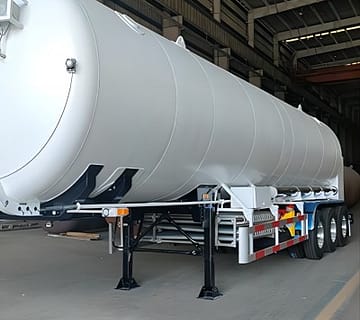
Cryogenic pumps can transfer liquid between stationary storage tanks, transport tanks, trailers and ISO containers when the system design requires mechanical pumping.
Cryogenic Pump in a Gas Supply System
A cryogenic pump is normally one component of a larger gas supply system.
A typical arrangement is:
Cryogenic Storage Tank → Cryogenic Pump → Vaporizer → Pressure Regulation → Gas Distribution → Point of Use
For liquid filling, the configuration may be:
Storage Tank → Cryogenic Pump → Filling Manifold → Cylinders
The exact configuration depends on the gas, storage pressure, required flow rate, downstream pressure, and whether the customer requires the gas in liquid or gaseous form.
Key Factors When Selecting a Cryogenic Pump
Important selection parameters include:
- Cryogenic fluid
- Operating temperature
- Required flow rate
- Required discharge pressure
- Suction pressure
- NPSH requirements
- Tank configuration
- Installation arrangement
- Material compatibility
- Seal requirements
- Operating frequency
- Oxygen-service requirements where applicable
- Applicable safety and regulatory requirements
The pump should be selected together with the storage tank, vaporizer, piping, valves, controls, and downstream equipment rather than considered as an isolated component.
TECHNICAL FAQs
FAQs About What Is a Cryogenic Pump?
A cryogenic pump is a specialized pump designed to transfer and pressurize liquefied gases at extremely low temperatures. Typical applications include liquid nitrogen, liquid oxygen, liquid argon, liquid CO₂, and LNG transfer and supply.
A cryogenic pump normally handles the liquid phase of a cryogenic gas. It transfers liquefied gas from storage or transport equipment to downstream systems.
Yes. Cryogenic pumps are commonly integrated into industrial gas supply systems to transfer liquid from storage tanks to vaporizers, filling systems, or other equipment.
A cryogenic liquid pump transfers and pressurizes liquefied gases. A cryopump is a vacuum pump that uses cryogenic surfaces to capture gas molecules and create high or ultra-high vacuum.
No. Some systems use tank pressure, pressure-building circuits, gravity, or other methods to transfer liquid. A pump is used when the required pressure, flow, transfer distance, or application requires mechanical liquid transfer.
Conclusion
A cryogenic pump is primarily a liquid transfer and pressure-boosting component used in cryogenic gas storage and supply systems. It allows liquefied gases to move from storage or transport equipment to vaporizers, filling systems, process equipment, and downstream distribution networks.
For reliable operation, the pump should be engineered together with the storage tank, piping, vaporizer, valves, controls, and safety equipment.



No comment