




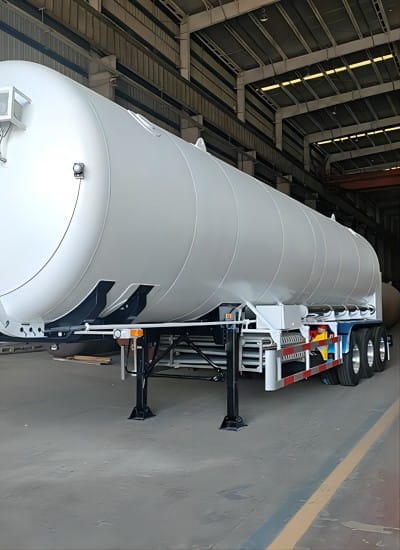
Safe and efficient bulk gas transportation requires equipment designed for the specific gas, capacity, pressure, temperature, transport distance, and logistics method. For liquefied gases, gas transport equipment commonly includes cryogenic tank trailers and ISO tank containers.
DSW manufactures and supplies cryogenic transport equipment for gases such as liquid nitrogen (LIN), liquid oxygen (LOX), liquid argon (LAr), liquid CO2, and LNG. The right cryogenic transportation system depends on whether the application requires road delivery, intermodal transportation, temporary storage, or a combination of transport and distribution.
What Is Gas Transport Equipment?
Gas transport equipment is designed to move compressed or liquefied gases safely between production facilities, filling stations, distribution centers, ports, and end users.
For bulk cryogenic gases, transportation equipment must maintain the required temperature and pressure while minimizing heat transfer, product loss, and operational risk. Common equipment includes cryogenic tank trailers, ISO tank containers, tube trailers, and related transfer equipment.
The appropriate solution depends on the gas being transported, required capacity, transport distance, available transport modes, operating conditions, and applicable regulations.
Main Types of Gas Transport Equipment
Cryogenic Tank Trailers
Cryogenic tank trailers are designed for bulk transportation of liquefied gases by road. They typically use double-wall construction and vacuum insulation to maintain cryogenic temperatures during transportation.
They are commonly used for regional and long-distance delivery of LIN, LOX, LAr, liquid CO2, and LNG. DSW tanker semi-trailers are available in different capacities and configurations for industrial gas distribution, medical oxygen transport, and LNG logistics.
Explore DSW cryogenic tanker semi-trailers
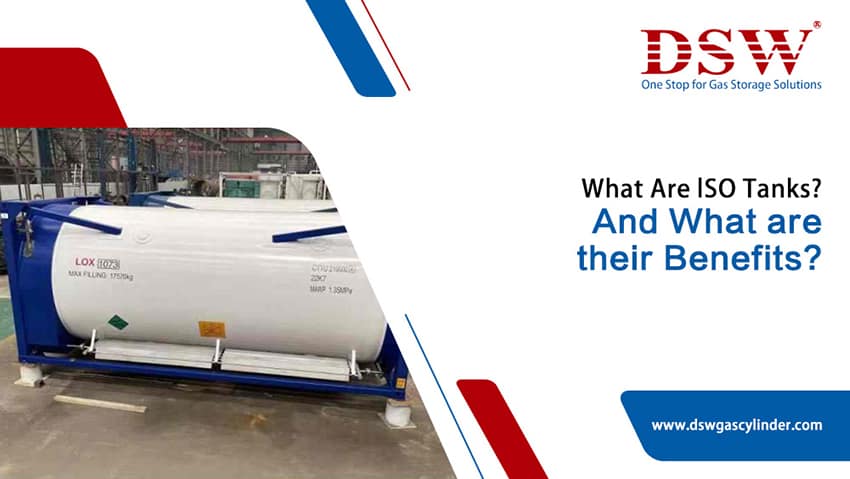
ISO Tank Containers
ISO tank containers combine a pressure vessel with a standardized container frame, allowing them to be transported by road, rail, and sea. This makes them particularly useful for international and intermodal gas logistics.
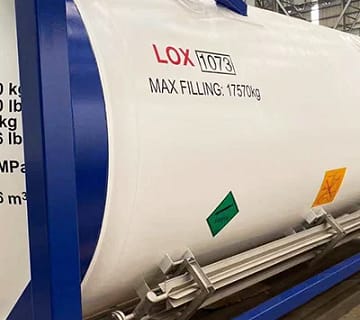
Cryogenic ISO tank containers are commonly used for bulk transportation and, depending on their design and application, temporary storage of liquefied gases. DSW supplies cryogenic ISO tank containers in 20 ft and 40 ft configurations for gases including LIN, LOX, LAr, LCO2, and LNG.
Explore DSW cryogenic tank containers
Tube Trailers
Tube trailers use multiple high-pressure gas cylinders or tubes mounted on a trailer chassis. They are generally used for the transportation of compressed gases rather than cryogenic liquids.
The choice between a tube trailer and a cryogenic transport tank depends primarily on the physical state of the gas, required transport capacity, pressure, and delivery requirements.
Tank Trailer vs. ISO Tank Container
Tank trailers and ISO tank containers can both transport bulk liquefied gases, but they serve different logistics requirements.
| Feature | Tank Trailer | ISO Tank Container |
|---|---|---|
| Primary transport mode | Road | Road, rail, and sea |
| Typical application | Bulk regional and long-distance road delivery | International and intermodal transportation |
| Container frame | Trailer chassis | Standardized ISO frame |
| Intermodal handling | Limited | Well suited |
| International logistics | Depends on road network and regulations | Suitable for multimodal logistics |
| Temporary storage | Application dependent | Can support transport and temporary storage applications |
For primarily road-based distribution, a tanker semi-trailer may be the appropriate solution. When cargo needs to move between road, rail, and sea without transferring the tank contents, an ISO tank container can provide greater logistics flexibility.
Which Gases Can Be Transported?
The design of gas transport equipment depends heavily on the properties of the gas. Cryogenic liquids require vessels and insulation systems capable of maintaining extremely low temperatures, while compressed gases require high-pressure cylinders or tube systems.
Liquid Nitrogen (LIN)
Liquid nitrogen is widely transported for industrial gas distribution, food processing, electronics, healthcare, and other applications. Cryogenic tank trailers and ISO tank containers can be configured for bulk LIN transportation.
Liquid Oxygen (LOX)
LOX transportation requires equipment designed specifically for liquid oxygen service, including appropriate materials, insulation, valves, pressure-control components, and safety systems.
Liquid Argon (LAr)
Liquid argon is commonly supplied to metalworking, welding, manufacturing, and industrial gas customers. Bulk transportation can be handled using cryogenic tank trailers or suitable ISO tank containers.
Liquid CO2
Liquid carbon dioxide is transported in pressure-rated equipment designed for its specific temperature and pressure conditions. Applications include food and beverage processing, dry ice production, welding, and industrial gas distribution.
Liquefied Natural Gas (LNG)
LNG requires specialized cryogenic transport equipment capable of maintaining the required low-temperature conditions during transportation. Depending on the logistics model, LNG can be transported using tanker trailers or ISO tank containers.
For LNG-specific transportation requirements, see our LNG transport solutions.
How to Choose Gas Transport Equipment
Selecting the right gas transport equipment requires more than choosing a tank by capacity. The equipment should be configured according to the complete transportation and delivery requirements.
1. Gas Type
Start with the gas being transported. LIN, LOX, LAr, LCO2, LNG, and compressed gases have different temperature, pressure, material, compatibility, and safety requirements.
2. Transport Capacity
Determine the required payload or working volume based on consumption, delivery frequency, transport distance, and unloading infrastructure. DSW transport equipment is available in different capacities and configurations to support different bulk gas logistics requirements.
3. Transport Distance
Short regional deliveries may favor road tank trailers, while longer international supply chains may benefit from ISO tank containers and intermodal transportation.
4. Operating Pressure and Temperature
The tank design must match the required working pressure, design pressure, operating temperature, and applicable safety requirements. Cryogenic systems also require effective insulation to reduce heat transfer and product loss.
5. Transport Mode
Consider whether the equipment will be transported by road only or needs to move between trucks, rail networks, and vessels. ISO tank containers are specifically designed around standardized container handling and intermodal logistics.
6. Applicable Standards
International gas transportation projects may require compliance with standards and regulations applicable to the destination market, transport mode, pressure vessel design, and gas service. Equipment should therefore be specified according to the project’s required certification and regulatory framework.
Cryogenic Gas Transportation and Safety
Cryogenic gas transportation requires careful control of temperature, pressure, insulation performance, filling limits, valves, relief systems, and loading and unloading procedures.
Vacuum insulation and double-wall construction help reduce heat transfer and maintain cryogenic temperatures. Pressure relief and control systems are also essential for managing pressure during transportation and temporary holding.
Equipment selection should always consider the specific gas, operating conditions, transportation regulations, and destination-market requirements rather than relying on a generic tank configuration.
DSW Gas Transport Equipment
DSW supplies cryogenic transportation equipment for industrial gas distribution and other bulk gas logistics applications. Our product range includes cryogenic tanker semi-trailers, cryogenic ISO tank containers, and related cryogenic equipment.
DSW cryogenic tank containers are available in standardized configurations, including 20 ft and 40 ft formats, while tanker semi-trailers are available in different capacities for bulk liquid gas transportation. Equipment can be configured according to gas type, capacity, pressure, application, and applicable standards.
For stationary bulk storage requirements, see our cryogenic storage solutions.
Request a Gas Transport Equipment Solution
Tell us your gas type, transport capacity, transport distance, operating pressure, application, and destination market. DSW can help configure suitable tank trailers, ISO tank containers, and related cryogenic transport equipment for your project.
Contact DSW for a customized gas transport equipment solution.
TECHNICAL FAQs
FAQs About Gas Transport Equipment
Common equipment includes cryogenic tank trailers, ISO tank containers, and tube trailers. The appropriate equipment depends on whether the gas is transported as a cryogenic liquid or compressed gas, as well as the required capacity, pressure, and transport mode.
A tank trailer is primarily designed for road transportation and is integrated with a trailer chassis. An ISO tank container uses a standardized container frame and can be transported by road, rail, and sea, making it suitable for intermodal logistics.
Cryogenic tank trailers can be designed for liquefied gases such as liquid nitrogen, liquid oxygen, liquid argon, liquid CO2, and LNG, subject to the specific tank design, materials, pressure rating, and applicable regulations.
ISO tank containers are designed around standardized container dimensions and can support intermodal transportation by road, rail, and sea. The specific tank design and certifications must meet the requirements of the gas, transport route, and destination market.
Consider the gas type, transport capacity, transport distance, operating pressure and temperature, transport mode, application, and destination-market requirements. Providing these details to the manufacturer allows the equipment to be configured for the actual transportation conditions.


No comment