





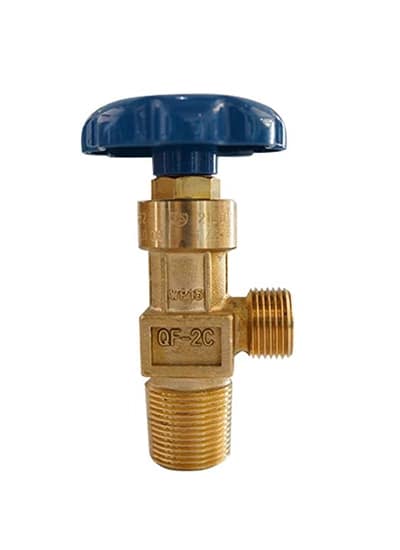
Gas cylinder valves are essential components used to control the filling, sealing, and release of compressed gases stored in high-pressure cylinders. These valves ensure safe gas containment while allowing precise control of gas flow during operation.
Different valve designs are used depending on the gas type, pressure level, purity requirements, and operating environment. Proper valve selection is critical for maintaining safety, preventing leaks, and ensuring reliable gas delivery across industrial, medical, and laboratory applications.
This guide explains the main types of gas cylinder valves, their operating principles, key features, and common applications.
What Are the Types of Gas Cylinder Valves?
The most common types of gas cylinder valves include:
- Pressure seal valves
- O-ring valves
- Diaphragm valves
- Packed valves
These valves are designed to regulate gas flow while maintaining secure sealing under high pressure. Each design offers specific advantages depending on the gas characteristics, pressure range, and safety requirements.
Why Gas Cylinder Valves Are Essential
Gas cylinder valves play a critical role in ensuring safe gas storage and controlled gas delivery. Installed at the top of high-pressure cylinders, these valves regulate gas flow while maintaining a secure seal to prevent leakage.
Key functions include:
- Safe containment of compressed gases
- Controlled release of gas during use
- Prevention of leakage or contamination
- Protection of cylinder integrity and service life
Because the valve is one of the most critical safety components of a gas cylinder system, proper design, operation, and maintenance are essential for reliable performance.
Main Types of Gas Cylinder Valves
Compressed gas cylinders typically use four primary valve designs. Each type is engineered to meet specific operational requirements and gas handling conditions.
These valve types are widely used across industries such as industrial gas supply, healthcare, manufacturing, research laboratories, and energy systems.
-
Pressure Seal Valve
Commonly used for: Inert gases, oxygen, hydrogen
Operating principle:
Pressure seal valves are handwheel-operated and feature a two-piece valve stem. The upper and lower stems interface to form the sealing mechanism. The lower stem contains the threads, while the upper stem is free-floating. A Teflon® packing ring contacts a ridge on the upper stem, providing the seal.
- Sealing force: Generated by both gas pressure and a spring in the handwheel.
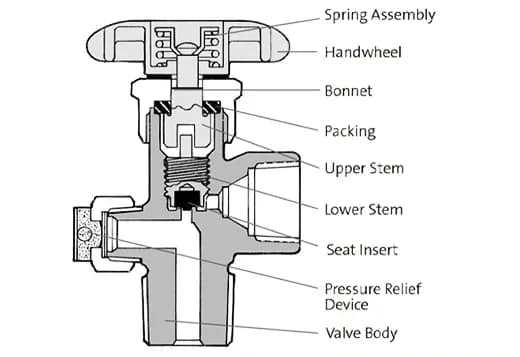
- Function: The spring pulls the stem’s sealing ridge into the packing ring, maintaining the seal around the valve stem.
Applications: High-pressure gas cylinders where secure and durable sealing is essential.
-
Spring-Loaded Diaphragm Valve
Commonly used for: Highly toxic non-corrosive gases, high-purity gases, rare gases, pyrophoric gases
Operating principle:
The valve is handwheel-operated with a two-piece stem separated by non-perforated diaphragms that prevent leakage along the stem.
- The lower limb is encased in a spring, which pushes the branch away from the seat when the valve is opened.
- The upper limb is threaded into a diaphragm retainer nut.
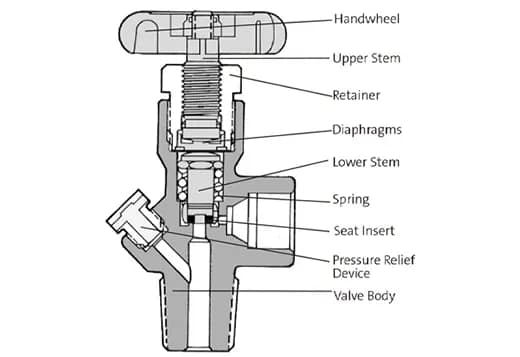
- Turning the handwheel closes the valve by pressing the diaphragms downward, forcing the lower limb against the seat. Opening the valve releases the spring, allowing the lower limb to retract.
Advantages: Replacing elastomeric seals with metal diaphragms provides superior leak integrity to the atmosphere.
-
O-Ring Valve
Commonly used for: Inert gases, oxygen, hydrogen
Operating principle:
The O-ring valve is similar to the pressure seal valve but uses O-ring sealing instead of a washer on the upper stem.
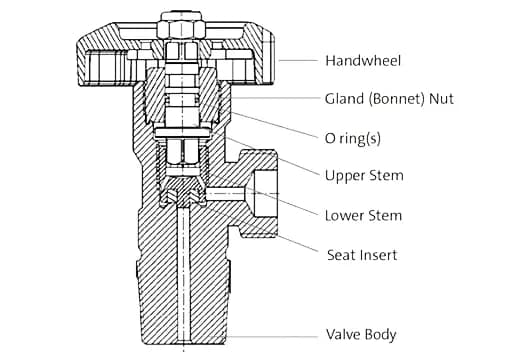
Key features:
- No spring is required, so the handwheel remains stable during rotation.
- The user can sense initial pressure as the gland area engages.
- Recommended opening procedure: The valve does not require back-seating during operation.
-
Wrench-Operated Packed Valve
Commonly used for: Industrial high-flow applications
Identifying features:
- No handwheel; the top of the stem is machined square for a wrench.
- A large internal-threaded packing nut secures the stem where it exits the valve body.
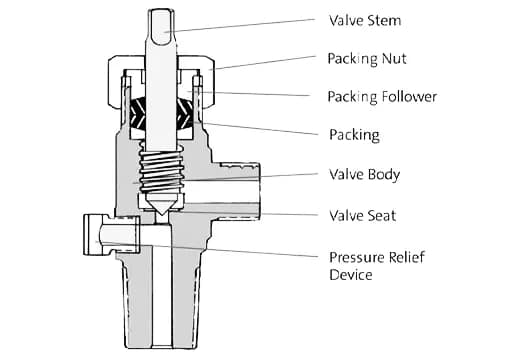
Recommended operating procedure:
- This valve has high flow capacity; full opening is unnecessary.
- Only ¼ to ½ turn from fully closed provides sufficient flow while reducing operator exposure and protecting threads.
- Full rotation can take 15–30 seconds in emergencies, depending on space constraints.
Advantages:
- Suitable for tight installations (gas cabinets, behind barricades).
- Enhances safety and extends valve longevity by reducing thread wear.
Key Considerations for Cylinder Valve Selection
When choosing a valve for your application, consider the following:
- Gas Type: Certain valves are designed for specific gases (e.g., high-purity vs. inert gases).
- Operating Pressure and Temperature: Ensure the valve material and design can withstand the required conditions.
- Application Environment: Evaluate the likelihood of exposure to corrosive elements or confined spaces.
- Maintenance and Repair: Choose valves that are easy to maintain and service and always adhere to the manufacturer’s repair guidelines.
Comparison Chart
Four types of High-Pressure Cylinder Valves highlighting their operating temperature, pressure range, and suitable gases:
This chart helps you compare the key characteristics of each valve type, making it easier to select the right one for your gas storage needs.
| Valve Type | Operating Temperature | Pressure Range | Suitable Gases | Key Features |
| Pressure Seal Valve | -20°F to 180°F (-29°C to 82°C) | Up to 3,000 psi (207 bar) | Inert gases (e.g., nitrogen), oxygen, hydrogen | Handwheel-operated, Teflon packing for sealing, reliable for high-pressure gases |
| Diaphragm Valve | -50°F to 250°F (-46°C to 121°C) | Up to 6,000 psi (414 bar) | Highly toxic, non-corrosive gases; high-purity gases; rare and pyrophoric gases | Superior leak integrity uses metal diaphragms, suitable for critical and hazardous gas applications |
| O-Ring Valve | -20°F to 160°F (-29°C to 71°C) | Up to 3,000 psi (207 bar) | Inert gases, oxygen, hydrogen | Compact design uses O-rings for sealing, no spring required, and easy operation. |
| Wrench-Operated Packed Valve | -20°F to 180°F (-29°C to 82°C) | Up to 4,500 psi (310 bar) | Industrial gases, including compressed air and inert gases | High flow capacity, requires a wrench for operation, recommended for controlled environments |
Notes:
- Operating Temperature: These ranges can vary depending on specific designs and materials used by manufacturers.
- Pressure Range: Always confirm the valve’s specifications for exact ratings. Some designs may exceed the stated ranges.
- Suitability: Choose the valve based on the gas type, purity level, and required operational integrity.
Materials Used in Cylinder Valves
Gas cylinder valves must withstand high pressure, temperature variations, and potential chemical exposure. As a result, manufacturers use durable and corrosion-resistant materials.
Common materials include:
Brass
- Excellent corrosion resistance
- Widely used for industrial gas cylinders
- Compatible with oxygen and inert gases
Stainless Steel
- High mechanical strength
- Suitable for high-purity gases
- Common in laboratory and semiconductor applications
Nickel Alloys and Monel
- Exceptional resistance to corrosive gases
- Suitable for specialty gas applications
Selecting the correct valve material ensures long service life, gas compatibility, and operational safety.
Cylinder Valve Standards and Connections
Gas cylinder valves must comply with recognized international standards to ensure compatibility, safety, and reliable operation.
CGA Standards
The Compressed Gas Association (CGA) defines outlet connections and safety requirements widely used in North America.
ISO Standards
The International Organization for Standardization (ISO) provides global standards for cylinder valve design, pressure ratings, and safety requirements.
DOT Regulations
The U.S. Department of Transportation (DOT) regulates the transport and certification of pressure vessels and gas cylinders.
European Standards (EN / BS)
European standards define requirements for valve performance, materials, and safety compliance.
Adhering to these standards ensures safe gas handling and proper compatibility between cylinders, valves, and regulators.
Industrial Applications
Gas cylinder valves are used in a wide range of industries where compressed gases are required.
Healthcare
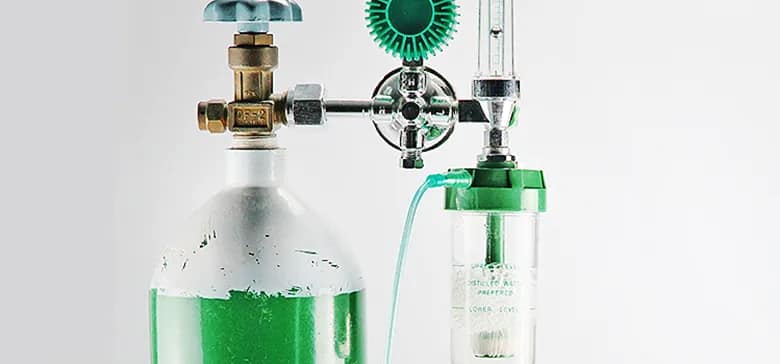
Medical gases such as oxygen and nitrous oxide rely on secure and reliable cylinder valves for safe patient care.
Manufacturing
Industrial gases are used for welding, cutting, and metal fabrication processes.
Research Laboratories
High-purity gases are required for chemical analysis, material testing, and scientific research.
Energy and Hydrogen Systems
Cylinder valves are also used in hydrogen storage and renewable energy systems where safe gas containment is critical.
How to Select the Right Cylinder Valve
Selecting the appropriate valve depends on several technical factors.
Gas Type
Different gases require compatible materials and sealing mechanisms.
Operating Pressure
The valve must be rated to safely handle the maximum cylinder pressure.
Gas Purity Requirements
High-purity gases typically require diaphragm valves to prevent contamination.
Safety Considerations
Toxic or flammable gases require enhanced sealing integrity.
Flow Requirements
Industrial applications may require valves capable of delivering high gas flow rates.
Careful valve selection ensures safe operation, reliable performance, and regulatory compliance.
TECHNICAL FAQs
About Types of Cylinder Valves
A gas cylinder valve is a mechanical device installed on a compressed gas cylinder that controls the filling, sealing, and release of gas.
The most common types include pressure seal valves, diaphragm valves, O-ring valves, and packed valves.
Diaphragm valves are typically used for high-purity gases because they provide superior sealing and prevent contamination.
Most industrial cylinder valves are designed for pressures ranging from 2,000 psi to 6,000 psi, depending on the valve design and material.
A gas cylinder valve controls the filling, sealing, and release of gas from a cylinder, while a gas regulator reduces cylinder pressure to a safe and usable level for equipment. Valves ensure containment, and regulators ensure controlled delivery.
Final Thoughts
Gas cylinder valves are critical components that ensure the safe storage and controlled release of compressed gases. Understanding the different valve types—including pressure seal valves, diaphragm valves, O-ring valves, and packed valves—helps industries select the most appropriate design for their specific applications.
By choosing the correct valve type, material, and standard compliance, organizations can improve safety, enhance operational efficiency, and extend the service life of gas cylinder systems.
For expert guidance on selecting high-quality cylinder valves for your gas storage systems, professional suppliers can provide technical support and tailored solutions based on your application requirements.




No comment