




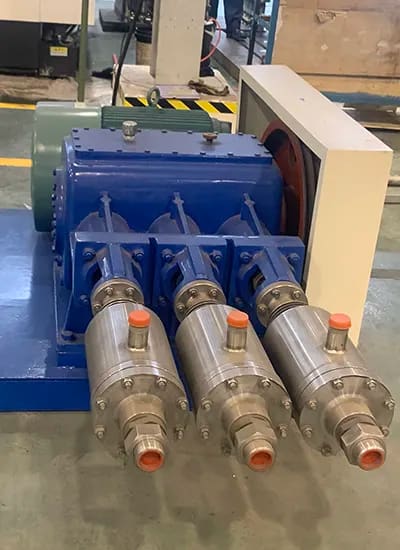
What is a Gas Transfer Pump?
A gas transfer pump (often referred to as a cryogenic transfer pump when handling liquefied gases) is a precision-engineered device designed to safely and efficiently transfer liquefied industrial gases such as liquid nitrogen (LN₂), liquid oxygen (LOX), liquid argon (LAr), and LNG between storage tanks, transport containers, and gas distribution systems.
These pumps help maintain product purity, minimize heat ingress, reduce boil-off gas loss, and ensure safe operation while providing stable pressure and accurate flow control.
Gas transfer pumps are critical in industries ranging from industrial gas production and medical gas supply to LNG fueling stations and cryogenic processing applications. Depending on design and functionality, they may also be referred to as cryogenic liquid pumps, gas cylinder filling pumps, LNG transfer pumps, or low-temperature vacuum pumps.
For gaseous transfer applications, compressors or gas boosters are typically used instead of pumps.
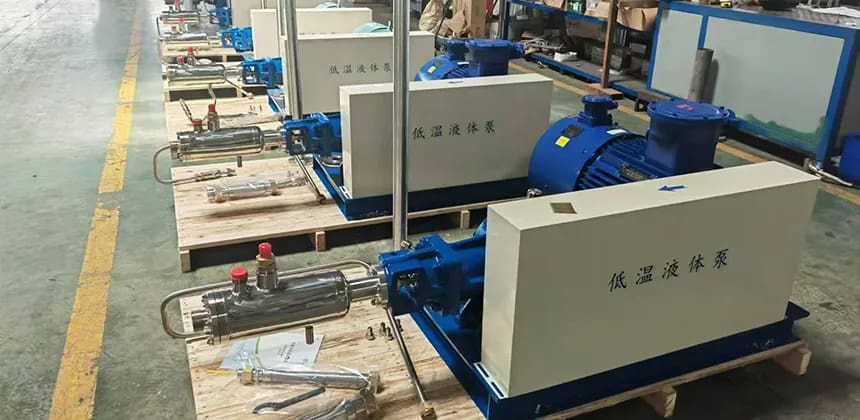
Types of Gas Transfer Pumps
Gas transfer pumps are specialized cryogenic pumps designed for the safe and efficient transfer of liquefied gases under demanding operating conditions. They are typically classified based on their operating mechanism and installation method.
1. Piston Gas Transfer Pumps
- Operate using a reciprocating piston mechanism.
- Provide high pressure and precise flow control for cylinder filling, pipeline pressurization, and fueling systems.
- Commonly used in LNG fueling stations and industrial gas cylinder filling systems.
2. Centrifugal Gas Transfer Pumps
- Use a rotating impeller to transfer energy to the cryogenic liquid.
- Deliver continuous and stable flow at moderate pressure levels.
- Widely used in LNG transfer, bulk storage transfer, and terminal operations.
3. Submersible Gas Transfer Pumps
- Installed directly inside cryogenic storage tanks.
- Reduce suction losses and minimize heat ingress.
- Frequently used in LNG terminals, LNG bunkering systems, and fueling stations.
4. Bath-type Gas Transfer Pumps
- Pump head operates inside a cryogenic liquid bath to maintain stable operating temperature.
- Reduces thermal stress and improves long-term reliability.
- Suitable for continuous industrial transfer applications.
5. Closed-cycle Gas Transfer Pumps
- Use the transferred cryogenic liquid for internal cooling.
- Designed for continuous operation with reduced maintenance needs.
- Common in industrial gas plants and large cryogenic systems.
6. Hybrid Gas Transfer Pumps
- Combine piston and centrifugal technologies.
- Support both high pressure filling and high flow transfer.
- Ideal for facilities requiring flexible gas handling capability.
Comparison of Gas Transfer Pump Types
| Type | Working Principle | Main Features | Typical Applications | Key Advantages |
|---|---|---|---|---|
| Piston Pump | Reciprocating piston transfers cryogenic liquid | High discharge pressure and accurate metering | Cylinder filling, LNG fueling, pipeline pressurization | High precision and high pressure capability |
| Centrifugal Pump | Rotating impeller provides kinetic energy | Continuous smooth flow | Bulk LNG transfer and tank transfer | High flow efficiency for large volumes |
| Submersible Pump | Installed inside cryogenic tank | Minimal heat transfer and suction loss | LNG stations and storage facilities | Compact design and high reliability |
| Bath-type Pump | Pump head cooled by cryogenic liquid bath | Stable low-temperature operation | Continuous LOX/LN₂/LAr transfer | Stable performance and reduced wear |
| Closed-cycle Pump | Self-cooling using transferred liquid | Controlled thermal cycle | Industrial cryogenic transfer systems | Long service life and low maintenance |
| Hybrid Pump | Combination of piston and centrifugal design | High pressure and high flow capability | Flexible industrial gas operations | Multi-purpose performance |
How Cryogenic Transfer Pumps Work
A cryogenic transfer pump is designed to move extremely low-temperature liquefied gases such as LN₂, LOX, LAr, LNG, and LH₂ from storage tanks to distribution systems or process equipment.
These pumps rely on several key engineering principles to ensure safe and efficient operation:
Core Working Principles
- Low-temperature operation:Cryogenic pumps typically operate below –150 °C and require stainless steel construction and specialized alloys to prevent material brittleness.
- Heat transfer control:Vacuum insulation, cold ends, and submersible designs help reduce vaporization during transfer.
- Transfer mechanisms:
- Piston pumps: High pressure cylinder filling
- Centrifugal pumps: Continuous bulk transfer
- Submersible pumps: Efficient tank transfer
- Bath-type pumps: Stable continuous duty
- Closed-cycle pumps: Self-cooling operation
- Hybrid pumps: Combined high flow and pressure
- Sealing technology:Mechanical seals, bellows seals, and magnetic couplings prevent leakage and improve safety.
Key Applications of Gas Transfer Pumps
Cryogenic transfer pumps are essential wherever liquefied gases must be transferred safely and efficiently.
- LNG Industry: LNG transfer, bunkering, and storage tank filling.
- Industrial Gas Production: LOX, LN₂ and argon transfer for manufacturing and electronics.
- Medical Gas Systems: Liquid oxygen filling for hospital supply systems.
- Research Laboratories: Cryogenic cooling systems and superconducting equipment.
- Energy Sector: Hydrogen fueling stations and LNG energy infrastructure.
- Aerospace: Rocket fuel transfer including liquid hydrogen and oxygen.
Advantagess
- Reduced boil-off gas loss during cryogenic liquid transfer.
- High reliability in extreme low-temperature environments.
- Accurate pressure and flow control.
- Long service life with low maintenance requirements.
- Improved safety through advanced sealing technology.
- Suitable for multiple industrial gas applications.
How to Choose a Gas Transfer Pump
When selecting a gas transfer pump, consider the type of gas or cryogenic liquid, the required flow rate, and the operating pressure. Choose a pump design—piston, centrifugal, submersible, or hybrid—that fits your installation, temperature range, and space constraints. Make sure materials and seals are compatible with your gas, and select pumps with proven reliability and low-maintenance features to ensure safe, efficient, and long-term operation.
- Gas type – ensure compatibility with the medium being transferred.
- Temperature range – match pump materials and design to operating temperatures.
- Flow rate – choose a pump that meets your volume requirements.
- Discharge pressure – select based on system pressure and application.
- Installation type – consider space, tank integration, and accessibility.
- Maintenance requirements – prioritize pumps with low-maintenance designs and long service intervals.
- Safety certifications – verify ISO, API, or industry-specific compliance.
TECHNICAL QUESTIONS
Frequently asked questions About Gas Transfer pump
A gas pump typically transfers liquefied gases (cryogenic liquids) at low temperatures, while a compressor increases the pressure of gaseous media. Pumps handle liquids, compressors handle gases.
Yes. Cryogenic pumps are designed to handle extremely cold liquefied gases such as LNG, LN₂, LOX, LAr, and LH₂, with specialized materials, insulation, and seals to maintain low temperatures and prevent vaporization.
The operating pressure depends on the pump type: piston pumps can reach high pressures suitable for cylinder filling and pipeline pressurization, typically up to several hundred bar, while centrifugal and submersible pumps operate at moderate pressures for bulk transfer.
Cryogenic and industrial gas transfer pumps are commonly made from stainless steel (304/316), nickel alloys, and low-temperature-compatible sealing materials to prevent embrittlement and ensure chemical compatibility.
Gas transfer pumps are used in LNG fueling, industrial gas production (LOX, LN₂, LAr), medical oxygen supply, research laboratories, energy storage and hydrogen fueling, and aerospace applications such as rocket fueling.


No comment