

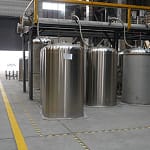



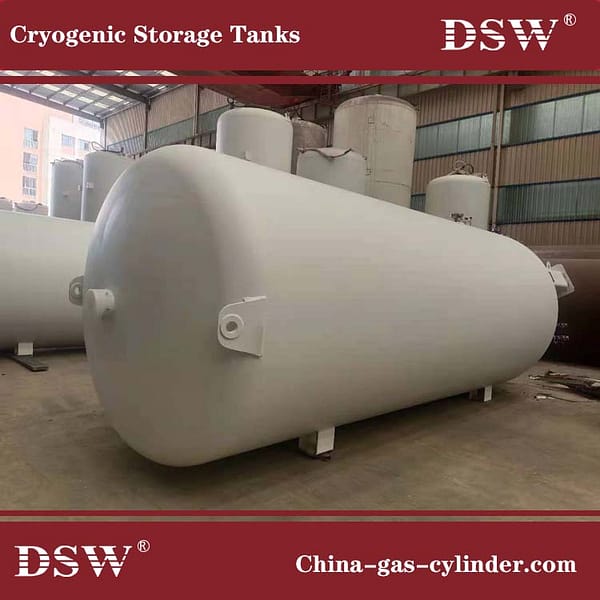

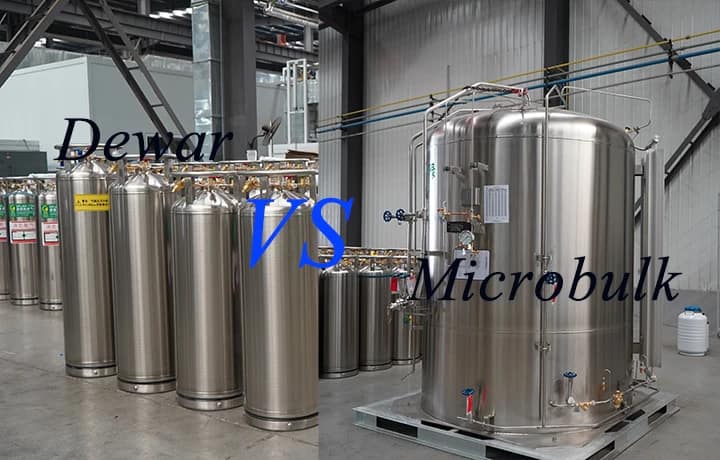
A cryogenic dewar and a microbulk tank are both used to store and supply liquefied gases, but they are designed for different operating requirements. A dewar is generally a portable, smaller-capacity vessel for lower-volume applications, while a microbulk tank is a larger, stationary system designed for on-site storage and continuous gas supply.
The main differences between a dewar and a microbulk tank include capacity, mobility, filling method, gas consumption, handling requirements, installation, and operating cost. Understanding these differences can help laboratories, hospitals, and industrial facilities select the appropriate cryogenic storage solution.
What Is a Cryogenic Dewar?
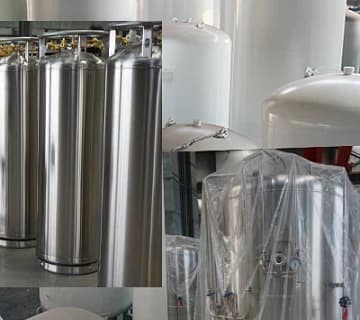
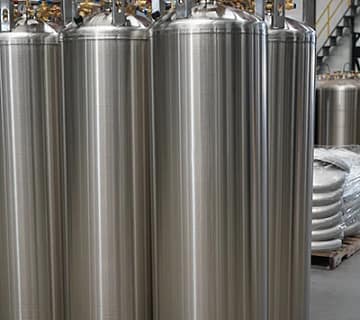
A cryogenic dewar is a vacuum-insulated vessel used to store and dispense liquefied gases such as liquid nitrogen (LN₂), liquid oxygen (LOX), liquid argon (LAr), and, depending on the design, other cryogenic products.
Cryogenic dewars are generally designed for relatively small-volume storage and applications where portability or flexible handling is important. They typically use a double-wall construction with a vacuum-insulated space between the inner and outer vessels to reduce heat transfer and evaporation.
Depending on the design and application, a dewar may include pressure-relief devices, valves, level indicators, and other components for controlled storage and dispensing.
What Is a Microbulk Tank?
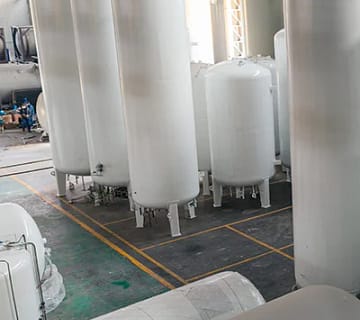
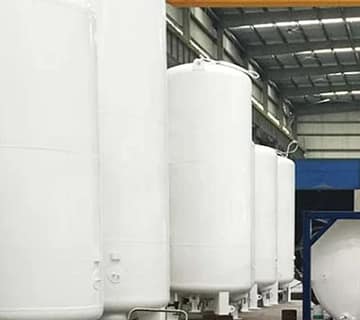
A microbulk tank is a larger, stationary, vacuum-insulated cryogenic storage vessel designed for on-site storage and continuous supply of liquefied gases.
Microbulk tanks bridge the gap between smaller cryogenic dewars and larger bulk storage systems. They are commonly used where gas consumption is too high or too continuous for conventional dewar-based supply, but a full-size bulk storage installation is not necessary.
A microbulk system can reduce manual container handling and provide a more continuous supply of cryogenic gas. Depending on the application, the system may include pressure-control equipment, level measurement, valves, vaporizers, and other gas supply components.
See our microbulk tanks for more information about available cryogenic storage systems.
Dewar vs Microbulk Tank: Key Differences
The table below summarizes the main differences between a cryogenic dewar and a microbulk tank.
| Feature | Cryogenic Dewar | Microbulk Tank |
|---|---|---|
| Typical size | Smaller storage volume | Medium to large storage volume |
| Mobility | Portable or semi-portable, depending on design | Generally stationary |
| Filling | Usually manually filled or filled individually | Typically filled by bulk delivery |
| Gas supply | Suitable for lower-volume or intermittent demand | Suitable for continuous or higher-volume demand |
| Handling | More manual handling | Reduced container handling |
| Installation | Generally simple | Requires suitable installation space and connections |
| Typical users | Laboratories, hospitals, workshops and small-volume users | Industrial, medical and other medium-volume users |
h2>Capacity and Gas Supply
Capacity is one of the most important differences between a dewar and a microbulk tank. Cryogenic dewars are generally selected for smaller storage requirements, while microbulk tanks are designed for larger on-site inventories and more continuous gas consumption.
Dewar capacities can range from relatively small laboratory vessels to larger cryogenic containers. Microbulk tanks are commonly available from several hundred litres to several thousand litres, depending on the application, gas, pressure rating, and equipment design.
| Requirement | Cryogenic Dewar | Microbulk Tank |
|---|---|---|
| Storage volume | Small to medium | Medium to large |
| Gas consumption | Lower or intermittent consumption | Medium to higher consumption |
| Supply frequency | More frequent filling may be required | Longer intervals between bulk deliveries |
| Supply method | Individual vessel filling or replacement | Bulk delivery to an installed tank |
The appropriate capacity should be determined from actual gas consumption, required reserve volume, delivery frequency, operating pressure, and the characteristics of the gas being stored.
What Gases Can Be Stored in Dewars and Microbulk Tanks?
Both cryogenic dewars and microbulk tanks can be designed for a range of liquefied gases. The appropriate vessel depends on the gas properties, required capacity, pressure rating, applicable standards, and the overall supply system.
| Cryogenic Gas | Dewar | Microbulk Tank |
|---|---|---|
| Liquid Nitrogen (LN₂) | Common | Common |
| Liquid Oxygen (LOX) | Common | Common |
| Liquid Argon (LAr) | Common | Common |
| Liquid Carbon Dioxide (LCO₂) | Application dependent | Common in suitable systems |
| Helium | Application dependent | Application dependent |
| Nitrous Oxide | Application dependent | Application dependent |
For a specific gas, the vessel should always be selected according to the manufacturer’s design specifications, working pressure, temperature, applicable regulations, and required safety equipment.
Dewar vs Microbulk Tank: Design and Construction
Both systems use insulation to reduce heat transfer, but their construction and equipment configuration reflect different operating requirements.
| Feature | Cryogenic Dewar | Microbulk Tank |
|---|---|---|
| Construction | Double-wall vessel with an inner vessel and protective outer shell | Double-wall vacuum-insulated storage vessel designed for stationary service |
| Insulation | Vacuum insulation with suitable insulating materials | Vacuum insulation using perlite, multilayer insulation, or other suitable systems |
| Pressure control | Pressure-relief and control components according to design | Pressure-control and relief equipment integrated into the storage system |
| Instrumentation | May include level and pressure indicators | May include level gauges, pressure gauges, valves and monitoring equipment |
| Installation | Limited installation requirements | Requires suitable foundation, connections and installation conditions |
Actual construction, insulation materials, pressure ratings and components vary by model and application. Buyers should verify the technical specification of the specific vessel rather than relying on generic ranges.
Applications of Dewars and Microbulk Tanks
The choice between a dewar and a microbulk tank depends largely on gas consumption, available space, required mobility, and the desired supply method.
Cryogenic Dewar Applications
- Laboratories and research facilities
- Small-scale industrial applications
- Medical and healthcare applications with lower-volume requirements
- Workshops and facilities requiring portable cryogenic storage
- Applications where gas consumption is intermittent
Microbulk Tank Applications
- Industrial gas supply
- Medical gas supply systems
- Laser cutting and metal processing
- Food processing and freezing
- Manufacturing facilities with continuous gas demand
- Facilities seeking to reduce manual container handling
Filling, Operation and Handling
A major difference between the two systems is how the cryogenic liquid is supplied and handled.
Cryogenic dewars are generally filled individually and require more frequent handling. Depending on the vessel size and gas consumption, the operator may need to monitor the liquid level and arrange refilling when the stored liquid approaches the required minimum level.
Microbulk tanks are installed at the user’s facility and are normally replenished by a bulk delivery vehicle. This arrangement can provide a more continuous supply while reducing the need to move and replace individual containers.
For facilities with regular and predictable cryogenic gas consumption, the reduced handling associated with a microbulk system can simplify day-to-day gas supply management.
Safety and Pressure Control
Both cryogenic dewars and microbulk tanks require appropriate pressure-relief devices, inspection, handling procedures, and operating practices. The safety of a cryogenic storage system depends on its design, installation, maintenance, the gas being stored, and how the equipment is operated.
Microbulk systems can reduce manual handling because the storage vessel remains installed while bulk deliveries are made directly to the tank. However, this does not eliminate the need for appropriate pressure protection, ventilation, isolation valves, inspection, and operator training.
For medical and industrial installations, the complete gas supply system should be evaluated rather than considering the storage vessel alone.
Cost and Total Cost of Ownership
The purchase price is only one part of the cost of a cryogenic gas storage system.
A dewar may have a lower initial equipment cost and can be practical for facilities with low or intermittent gas consumption. However, frequent refilling, transportation, manual handling, and delivery costs can become more significant as consumption increases.
A microbulk system generally requires a larger initial investment and suitable installation. In return, it can support continuous supply and reduce manual container handling and delivery frequency for suitable applications.
When comparing the two systems, consider the total cost of ownership, including:
- Equipment purchase cost
- Cryogenic gas cost
- Delivery frequency
- Labor and handling requirements
- Installation costs
- Maintenance and inspection
- Potential product losses
- Downtime and supply interruptions
When Should You Choose a Dewar or Microbulk Tank?
There is no single storage system that is appropriate for every facility. The right choice depends on gas consumption, operating conditions, installation requirements, and supply logistics.
| Your Requirement | Suitable Option |
|---|---|
| Low gas consumption | Cryogenic Dewar |
| Intermittent cryogenic gas demand | Cryogenic Dewar |
| Portable cryogenic storage | Cryogenic Dewar |
| Continuous gas supply | Microbulk Tank |
| Medium to higher gas consumption | Microbulk Tank |
| Reduced individual container handling | Microbulk Tank |
| On-site bulk delivery available | Microbulk Tank |
| Large industrial or medical gas demand | Evaluate a Microbulk Tank or larger bulk system |
For a more accurate selection, consider the gas type, daily consumption, required reserve, working pressure, delivery schedule, available installation space, and local regulatory requirements.
How DSW Can Help
DSW supplies cryogenic dewars and microbulk tanks for different gas storage and supply requirements.
When selecting a cryogenic storage system, we consider factors such as gas type, storage capacity, working pressure, filling method, daily consumption, installation conditions, and required gas supply configuration.
For industrial users, choosing between dewar-based supply and a microbulk system should be based on actual consumption and operating requirements rather than storage capacity alone.
DSW can also provide cryogenic storage equipment for applications requiring a combination of storage, pressure control, vaporization, and gas supply components.
TECHNICAL QUESTIONS
Frequently asked questions about Dewars and Microbulk Tanks
A cryogenic dewar is generally a smaller, portable or semi-portable vessel used for lower-volume storage and handling. A microbulk tank is a larger, stationary storage system designed for on-site storage and more continuous gas supply.
Both use vacuum insulation and are designed for cryogenic liquid storage, but they are normally used in different operating configurations. Microbulk tanks are generally larger stationary systems designed for bulk delivery and continuous supply, while cryogenic dewars are commonly used for smaller-volume and more portable applications.
Microbulk tanks are available in different capacities depending on the gas, pressure rating, application, and manufacturer. Many systems are designed in the range of several hundred litres to several thousand litres.
Refill frequency depends on the dewar capacity, gas consumption, evaporation rate, operating conditions, and required reserve level. Smaller vessels used frequently may require more frequent refilling than larger vessels with lower consumption.
Yes. Liquid nitrogen can be stored in both cryogenic dewars and microbulk tanks when the vessel is appropriately designed and rated for liquid nitrogen service. The choice depends mainly on storage volume, consumption, handling, and supply requirements.
A business may consider microbulk supply when cryogenic gas consumption becomes regular or high enough that frequent dewar filling, transportation, and manual handling become inefficient. The decision should be based on gas consumption, delivery costs, installation requirements, and total cost of ownership.



No comment