




Gas cylinders play a vital role across various industries — from welding and manufacturing to healthcare, food processing, and semiconductor production. Understanding the different types of gas cylinders is essential to ensure safety, performance, and compliance with international standards.
In this guide, we explore the four main types of gas cylinders used in industrial and commercial settings and how DSW, one of China’s leading industrial gas cylinder manufacturers, delivers trusted global solutions.
Table of Contents
- Introduction to Gas Cylinders
- Common Industrial Gases
- Type 1: Seamless Steel Gas Cylinders
- Type 2: Composite Wrapped Gas Cylinders
- Type 3: Fully-Wrapped Aluminium Composite Cylinders
- Type 4: Fully-Wrapped Polymer Liner Composite Cylinders
- Applications of DSW Industrial Gases
- How to Choose the Right Gas Cylinder
- About DSW
- Summary Table: Gas Cylinder Types at a Glance
Introduction to Gas Cylinders
Gas cylinders are high-pressure containers designed to safely store compressed or liquefied gases. Each gas type—flammable, inert, or reactive—requires a cylinder made from materials suitable for its specific properties. Selecting the right type ensures operational efficiency, safety, and compliance with ISO and ASTM standards.
Common Industrial Gases
Industrial gases are used in countless applications, from metal fabrication to medical technology. Here are some commonly used gases:
- Acetylene: Ideal for metal welding and cutting
- Argon: Inert shielding gas used in precision welding and electronics
- Carbon Dioxide (CO₂): Used in beverage carbonation, fire suppression, and dry ice production
- Ethylene: Applied in chemical synthesis and agricultural ripening
- Helium: Used in cryogenics, medical imaging, and leak detection
- Methane: Common in fuel systems and industrial heating
Type 1: Seamless Steel Gas Cylinders
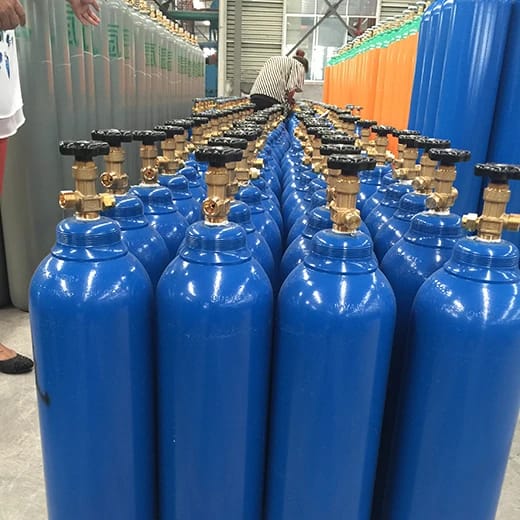
Type 1 cylinders are made from a single piece of seamless high-strength steel, offering superior durability and pressure resistance.
Features
- Constructed from seamless steel for maximum strength
- Withstands pressures up to 300 bar
- Reusable with long service life
- Perfect for heavy-duty industrial use
Best Used For
- Acetylene and methane distribution
- Welding and cutting operations
- Oil and gas industry
Type 1 CNG tubes are widely used in CNG tube trailers and storage skids due to their high strength, excellent fatigue resistance, long service life, and proven safety performance under high-pressure natural gas storage conditions.
Type 2: Composite Wrapped Gas Cylinders
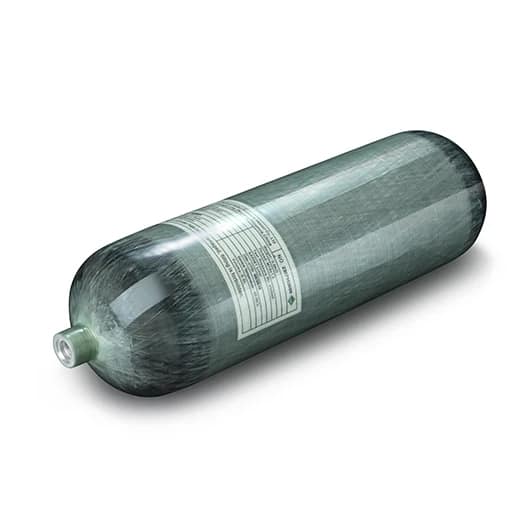
Type 2 cylinders feature a metal liner wrapped with glass or carbon fibre composites, balancing weight reduction and pressure performance.
Features
- Metal liner with composite outer wrap
- Up to 40% lighter than Type 1
- Corrosion-resistant and cost-effective
- Pressure rating up to 250 bar
Best Used For
- Carbon dioxide for beverages
- Helium in laboratories
- Rescue kits and portable devices
Type 3: Fully-Wrapped Aluminium Composite Cylinders
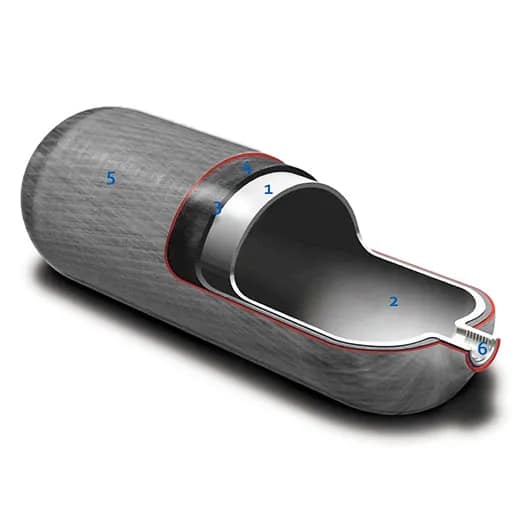
Type 3 cylinders are made with a thin aluminium liner fully wrapped in carbon or glass fibre composites, combining lightness with strength.
Features
- Full composite wrap with aluminium liner
- Excellent corrosion resistance
- High-pressure tolerance
- Longer lifespan
Best Used For
- Argon in aerospace or electronics
- Helium for medical and research purposes
- Precision medical gases
Type 4: Fully-Wrapped Polymer Liner Composite Cylinders
Type 4 cylinders represent the latest advancement, featuring a polymer liner fully wrapped in carbon fibre for ultra-lightweight strength.
Features
- Plastic liner with full composite wrap
- Up to 70% lighter than steel
- Exceptional corrosion and fatigue resistance
- Ideal for mobile or transport applications
Best Used For
- Methane (CNG) in vehicles
- Ethylene in agriculture and chemistry
- Portable field operations
Applications of Industrial Gases
| Gas Type | Recommended Cylinder Type | Typical Application |
|---|---|---|
| Acetylene | Type 1 | Welding and cutting |
| Argon | Type 3 | Shielding gas for welding |
| Carbon Dioxide | Type 2 | Beverage and fire control |
| Ethylene | Type 4 | Agriculture and chemicals |
| Helium | Type 2 / Type 3 | Medical, cryogenic use |
| Methane | Type 1 / Type 4 | Fuel and energy supply |
How to Choose the Right Gas Cylinder
- Gas type: Each gas requires specific materials and pressure ratings.
- Application: Mobile, stationary, or medical use determines design needs.
- Pressure requirements: High-pressure gases often need composite or steel types.
- Weight and cost: Steel for durability, composites for portability.
Summary Table: Gas Cylinder Types at a Glance
| Type | Material | Weight | Pressure Rating | Best For |
|---|---|---|---|---|
| Type 1 | Seamless Steel | Heavy | Up to 300 bar | Methane, Acetylene, Welding |
| Type 2 | Metal + Composite | Medium | Up to 250 bar | CO₂, Helium, Beverage |
| Type 3 | Aluminium + Composite | Light | High | Argon, Medical Helium |
| Type 4 | Polymer + Composite | Very Light | High | CNG, Ethylene, Mobile |
Conclusion
Choosing the right gas cylinder ensures safety, reliability, and cost-efficiency in every operation. Whether your focus is durability or lightweight design, DSW offers a complete range of ISO-certified gas cylinders designed for industrial and commercial excellence worldwide.




No comment