
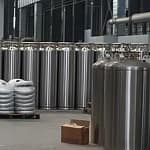


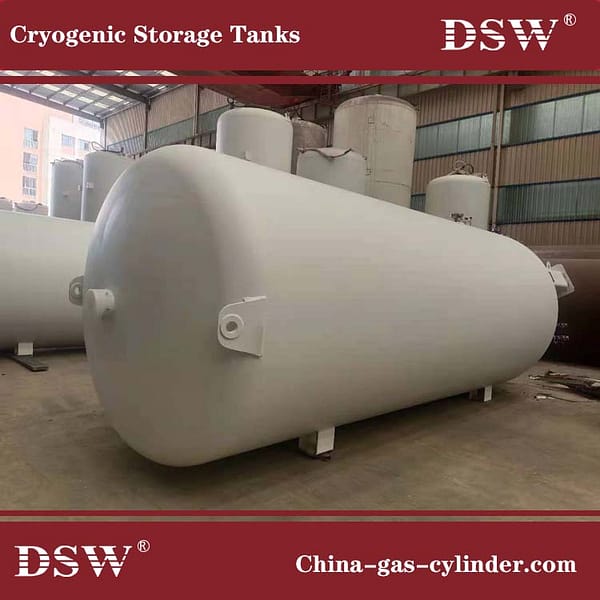

Gas cylinders are pressure vessels designed to safely store and transport gases for industrial, medical, laboratory, energy, food, welding, and specialty applications. The right cylinder depends on more than capacity or pressure. Buyers and engineers should consider the gas, cylinder material, water capacity, working pressure, valve connection, applicable standards, testing requirements, destination market, and intended application.
This gas cylinders guide explains the main cylinder types, sizes, pressure ratings, materials, manufacturing processes, standards, valves, testing, safety requirements, and selection criteria. It is intended for engineers, procurement teams, gas distributors, industrial users, project managers, and buyers sourcing cylinders for international markets.
For detailed cylinder dimensions and capacities, see our Gas Cylinder Sizes Guide.
Gas Cylinder Types at a Glance
Gas cylinders can be classified in several different ways. A single cylinder may belong to several classifications at the same time. For example, a cylinder can be a seamless steel cylinder, a 200 bar industrial nitrogen cylinder, and a cylinder manufactured for a specific export market.
| Classification | Main Types | What It Determines |
|---|---|---|
| By construction | Steel, aluminium, composite | Strength, weight, corrosion resistance and handling |
| By application | Industrial, medical, SCBA, CNG, acetylene | Design, pressure, cleanliness and certification requirements |
| By gas | Oxygen, nitrogen, argon, CO₂, hydrogen, helium, SF₆ | Material compatibility, pressure and gas-service requirements |
| By capacity | Different water capacities and dimensions | Gas quantity, handling and transportation requirements |
| By pressure | 150, 200, 232, 300, 450, 700 bar | Storage density and cylinder design requirements |
| By standard | ISO, EN, DOT, TPED, GB, AS, BIS | Market acceptance, design, testing and certification |
The most important point for buyers is that these classifications are complementary rather than interchangeable. Cylinder selection should begin with the actual gas service and project requirements, followed by pressure, capacity, material, valve, standard, destination market, and documentation requirements.
1. What Is a Gas Cylinder?
A gas cylinder is a pressure vessel engineered to contain gases safely under specified storage and operating conditions. Depending on the physical properties of the gas, the gas may be stored in compressed, liquefied, or dissolved form.
Compressed Gases
Oxygen, nitrogen, argon, helium, hydrogen, breathing air, and many other gases are commonly stored as compressed gases. The gas remains primarily in the gaseous phase and is stored under pressure.
Liquefied Gases
Carbon dioxide, LPG, and certain other gases may be stored as liquids under pressure. The cylinder design, filling procedure, allowable filling ratio, and temperature conditions must be considered for liquefied gases.
Dissolved Gases
Acetylene is stored dissolved in a solvent contained within a porous mass inside the cylinder. Its storage system is therefore different from a conventional compressed-gas cylinder.
A cylinder’s structural integrity depends on appropriate material selection, wall thickness, forming processes, heat treatment, pressure testing, inspection, marking, and compliance with the applicable standard.
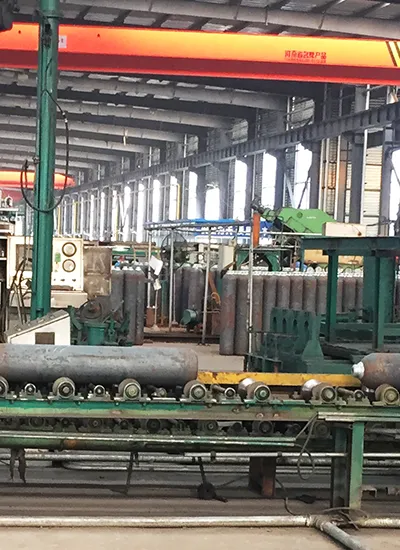
Key Gas Cylinder Specifications
- Gas type and purity
- Water capacity
- Working pressure
- Cylinder material
- Valve and outlet connection
- Applicable standard
- Destination market
- Inspection and certification requirements
2. Types of Gas Cylinders by Construction
Gas cylinders are commonly manufactured from steel, aluminium alloys, or composite materials. The appropriate construction depends on pressure, gas service, capacity, weight, corrosion conditions, handling requirements, and applicable certification.
Steel Gas Cylinders
seamless steel cylinders are widely used for high-pressure compressed gases because of their high strength, durability, and established manufacturing technology. Common cylinder steels include alloy steels such as 34CrMo4 and 37Mn, depending on the applicable standard and design.
Steel cylinders are commonly selected for industrial gases, welding gases, breathing air, and other applications where durability and pressure resistance are important.
Aluminium Gas Cylinders
aluminium gas cylinders provide a lower-weight alternative to steel and offer good corrosion resistance. They are used in medical oxygen, specialty gases, laboratories, diving, beverage, and other applications where weight and handling are important.
Composite Gas Cylinders
Composite cylinders use fibre-reinforced materials to reduce weight while providing high-pressure gas storage. Depending on their construction, composite cylinders may be used for SCBA, CNG, hydrogen, and other applications where portability and weight reduction are important.
Steel vs Aluminium vs Composite Gas Cylinders
| Cylinder Type | Main Advantages | Typical Applications |
|---|---|---|
| Steel | High strength, durability and established manufacturing technology | Industrial gases, welding, breathing air |
| Aluminium | Lower weight and good corrosion resistance | Medical, specialty gases, laboratories, diving |
| Composite | Lightweight construction and high-pressure capability | SCBA, CNG, hydrogen and portable systems |
3. Gas Cylinder Types by Application
Gas cylinders are designed for specific applications, with different requirements for pressure, materials, capacity, valves, and safety standards.
Industrial Gas Cylinders
Industrial gas cylinders are used for manufacturing, welding, metal fabrication, chemical processing, laboratories, energy systems, and other industrial applications. They are available in different materials, capacities, pressure ratings, and valve configurations.
Medical Gas Cylinders
Medical gas cylinders are designed for healthcare applications and may be used for oxygen, nitrous oxide, medical air, and other medical gases. Cleanliness, material compatibility, valve configuration, certification, and traceability are particularly important for medical gas applications.
SCBA Cylinders
SCBA cylinders provide breathing air for firefighters, emergency responders, rescue teams, and workers operating in hazardous environments. Depending on the design, steel or composite construction may be used, with pressure ratings commonly including 221, 300, or 450 bar, subject to the applicable cylinder and equipment standards.
CNG Cylinders
cng cylinders are designed to store compressed natural gas at high pressure for transportation and fuel applications. Common construction classifications include Type 1, Type 2, Type 3, and Type 4, with differences in metallic liners and composite reinforcement.
Acetylene Cylinders
Acetylene cylinders use a porous mass and solvent system to safely contain dissolved acetylene. They are commonly used for oxy-fuel welding, cutting, brazing, and metal fabrication.
4. Gas Cylinder Types by Gas
The gas being stored is one of the most important factors when selecting a cylinder. Gas properties can affect material compatibility, pressure requirements, valve configuration, filling procedures, cleanliness, and applicable safety requirements.
| Gas | Typical Applications | Important Cylinder Considerations |
|---|---|---|
| Oxygen | Medical, welding, cutting, industrial processes | Oxygen-compatible materials, cleanliness and valve selection |
| Nitrogen | Food packaging, purging, blanketing, laboratories | Pressure, purity and valve configuration |
| Argon | TIG/MIG welding, metallurgy, laboratories | Purity and gas-specific valve requirements |
| CO₂ | Beverage carbonation, food processing, welding | Liquefied-gas storage and filling requirements |
| Hydrogen | Energy, fuel cells, chemical processing | High-pressure design, material compatibility and certification |
| Helium | Laboratories, leak detection, scientific applications | Purity, valve and pressure requirements |
| SF₆ | Electrical insulation and high-voltage equipment | Leak-tightness, purity and appropriate handling |
For specific products, visit our Gas Cylinders category.
5. Gas Cylinder Sizes and Capacities
Gas cylinder size can refer to several different measurements. Buyers should distinguish between water capacity, gas capacity, physical dimensions, working pressure, and cylinder weight when specifying a cylinder.
What Is Water Capacity?
Water capacity refers to the internal volume of the cylinder, normally expressed in litres. For example, a cylinder described as a 40 L water-capacity cylinder has an internal volume of approximately 40 litres for the specified cylinder design.
Water Capacity vs Gas Capacity
Water capacity is not the same as the amount of gas available for use. The quantity of compressed gas depends on internal volume, filling pressure, gas properties, temperature, and other conditions.
For this reason, buyers should normally specify both the cylinder water capacity and the required working pressure when requesting a quotation.
Common Gas Cylinder Size Considerations
- Water capacity
- Overall height
- Outside diameter
- Working pressure
- Gas filling quantity
- Empty cylinder weight
- Valve and outlet configuration
- Transportation requirements
- Storage space and handling equipment
For detailed cylinder dimensions, capacities, and common configurations, see our Gas Cylinder Sizes Guide.
Looking for a Reliable Pressure Gas Supply Solution?
Whether you need compressed gas storage, transport, or on-site supply,
6. Gas Cylinder Working Pressure
Working pressure is the pressure at which a cylinder is designed to operate under specified conditions. It should not be confused with test pressure or burst pressure.
| Pressure Term | Meaning |
|---|---|
| Working pressure | The specified pressure for normal cylinder operation. |
| Test pressure | A higher pressure used during specified pressure testing according to the applicable requirements. |
| Burst pressure | The pressure associated with structural failure during destructive testing or qualification. |
150 Bar Gas Cylinders
150 bar cylinders are used where moderate working pressure is suitable for the intended gas and application.
200 Bar Gas Cylinders
200 bar cylinders are widely used for gases such as oxygen, nitrogen, argon, helium, and other compressed gases. They provide a practical balance between gas capacity, cylinder size, handling, and transportation.
232 Bar Gas Cylinders
232 bar cylinders are commonly associated with breathing air, diving, and SCBA applications, subject to the applicable cylinder and equipment standards.
300 Bar Gas Cylinders
300 bar cylinders provide greater gas storage density than lower-pressure cylinders of similar volume. They are used for industrial gases, breathing air, SCBA, and specialty applications requiring higher working pressure.
450 Bar Gas Cylinders
450 bar cylinders are designed for applications requiring higher pressure and storage density, including selected breathing-air and specialty gas systems.
700 Bar Gas Cylinders
700 bar cylinders are associated with high-pressure applications such as hydrogen fuel systems. Composite construction is commonly used where high strength and weight reduction are important.
Important: The permitted working and test pressure of a cylinder must always be determined by its design, certification, applicable standard, gas service, temperature conditions, and regulatory requirements. Pressure should not be selected solely according to desired gas capacity.
7. Gas Cylinder Materials and Manufacturing
Material selection affects pressure resistance, durability, weight, corrosion performance, manufacturing method, inspection requirements, and service life.
Common Cylinder Materials
- Seamless carbon steel
- Alloy steel
- Aluminium alloys
- Carbon-fibre-reinforced composite materials
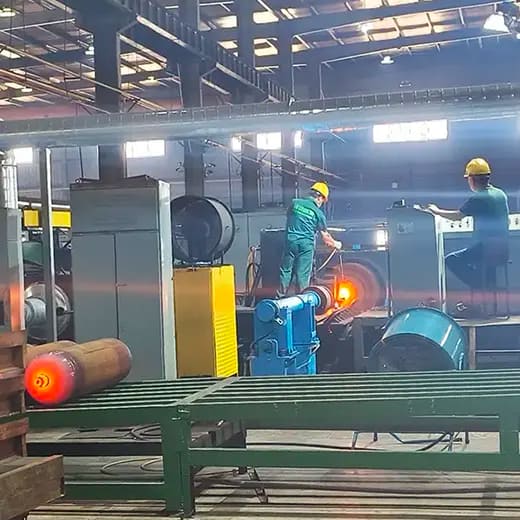
Typical Gas Cylinder Manufacturing Process
- Raw material or tube preparation
- Material verification
- Hot spinning or forming where applicable
- Cold drawing where applicable
- Heat treatment
- Stress relieving where required
- Neck and thread machining
- Dimensional and visual inspection
- Pressure testing
- Non-destructive testing where required
- Surface treatment or painting
- Marking and identification
- Final quality-control inspection
For seamless steel cylinders, controlled forming and heat treatment are important for achieving the required mechanical properties and dimensional consistency. Manufacturing procedures vary according to cylinder design, material, capacity, pressure rating, and applicable standard.
See our detailed Gas Cylinder Manufacturing Process guide.
8. Gas Cylinder Standards and Certifications
Gas cylinders are regulated pressure vessels, and the applicable requirements depend on cylinder design, gas service, country, transportation method, and intended use.
Common Gas Cylinder Standards and Regulatory Frameworks
| Market / Framework | Typical Role |
|---|---|
| ISO | International standards covering applicable cylinder designs, materials, testing and requirements |
| EN | European standards applicable to relevant cylinder designs and applications |
| DOT | Applicable United States requirements for transportable pressure vessels and cylinders |
| TPED | European requirements for transportable pressure equipment where applicable |
| GB | Chinese national standards and regulatory requirements |
| AS | Applicable Australian standards and requirements |
| BIS | Applicable Indian standards and certification requirements |
What Do Gas Cylinder Standards Cover?
- Design specifications
- Material requirements
- Manufacturing procedures
- Heat treatment
- Pressure testing
- Inspection
- Marking and identification
- Traceability
- Certification requirements
The correct standard should be established before manufacturing begins. A cylinder certified for one market or application should not automatically be assumed to meet the requirements of another country or application.
See our dedicated Gas Cylinder Standards guide.
9. Gas Cylinder Valves and Thread Standards
The cylinder valve controls gas filling, storage, and discharge. The valve connection must be compatible with the cylinder, regulator, gas service, pressure rating, filling equipment, and applicable regional requirements.
Common Valve and Connection Systems
| System | Typical Market or Application | Important Consideration |
|---|---|---|
| CGA | North America | Connection varies according to gas and application |
| DIN | Europe and other international markets | Gas, pressure and equipment compatibility must be confirmed |
| BS | United Kingdom and applicable applications | Specific connection requirements apply |
| GB | China | Applicable Chinese standards determine requirements |
| JIS | Japan and applicable applications | Japanese standards and gas-service requirements apply |
| AS | Australia and applicable applications | Australian requirements must be confirmed |
What Does a Cylinder Thread Specification Define?
- Thread diameter
- Thread pitch
- Thread direction
- Sealing method
- Valve connection type
- Pressure compatibility
- Gas-service compatibility
Incorrect thread selection can result in incompatible connections and unsafe installation. For international projects, buyers should provide the destination market, gas type, working pressure, and required valve standard before ordering.
See our Gas Cylinder Thread Standards guide for additional information.
10. Gas Cylinder Testing, Inspection and Requalification
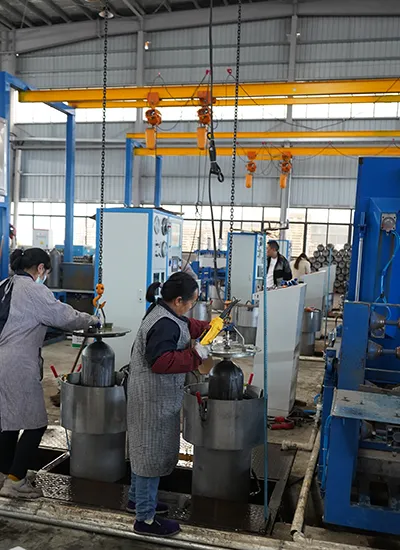
Testing and inspection are essential parts of gas cylinder manufacturing and continued service. The exact inspection and requalification requirements depend on the cylinder standard, gas service, design, destination market, and applicable regulations.
Common Testing and Inspection Methods
- Hydrostatic pressure testing
- Visual inspection
- Dimensional inspection
- Ultrasonic or other non-destructive testing where required
- Leak testing
- Valve inspection and performance checks
- Material and traceability verification
- Marking and documentation checks
Why Is Hydrostatic Testing Important?
Hydrostatic testing is used to verify pressure integrity according to the applicable requirements. It is one part of a broader quality-control process and should be performed using the procedure and pressure specified by the relevant standard or certification requirement.
Gas Cylinder Requalification
Gas cylinders may require periodic inspection or requalification during their service life. The required interval and inspection procedure depend on the cylinder type, applicable regulation, gas service, and destination market.
See our Gas Cylinder Safety Inspection and Testing guide.
11. Gas Cylinder Markings and Identification
Cylinder markings provide important information about the cylinder’s identity, design, manufacturing history, testing status, and applicable requirements. The exact markings depend on the cylinder standard and destination market.
Information Commonly Associated With Cylinder Markings
- Manufacturer identification
- Serial number
- Applicable standard
- Water capacity
- Working pressure where applicable
- Test pressure where applicable
- Manufacturing date
- Material or specification information where required
- Inspection or requalification information
- Traceability information
Buyers should confirm required markings before production because marking and identification requirements can vary significantly between countries, cylinder standards, gas services, and applications.
12. Gas Cylinder Safety Requirements
Safe cylinder operation depends on correct selection, filling, storage, transportation, inspection, and handling. Users should always follow applicable local regulations, cylinder markings, supplier instructions, and gas-specific safety procedures.
Basic Storage and Handling Practices
- Keep cylinders secured in an upright position where required.
- Protect valves from impact and physical damage.
- Use appropriate valve protection caps where required.
- Keep cylinders away from unsuitable heat sources.
- Prevent cylinders from falling, rolling, or being damaged.
- Use appropriate equipment for moving heavy cylinders.
- Separate or manage incompatible gases according to applicable safety procedures.
- Inspect cylinders before use for damage, corrosion, or other visible defects.
- Follow the gas supplier’s handling and storage instructions.
Gas System Safety Equipment
Depending on the installation, an industrial gas system may incorporate pressure regulators, relief devices, monitoring equipment, shut-off valves, ventilation, and leak-detection procedures.
The correct equipment depends on the gas, pressure, installation design, operating environment, and applicable safety requirements.
13. Gas Cylinder Applications Across Industries
Gas cylinders are used across a wide range of industries. The correct cylinder specification depends on the gas, purity, pressure, capacity, application, handling environment, and applicable regulatory requirements.
| Industry | Typical Gas Applications |
|---|---|
| Industrial Manufacturing | Oxygen, nitrogen, argon, carbon dioxide and other gases for production and processing |
| Welding and Fabrication | Oxygen, argon, CO₂ and shielding gases for welding, cutting and fabrication |
| Medical | Medical oxygen, medical air, nitrous oxide and other healthcare gases |
| Laboratory and Research | High-purity gases for analytical equipment, calibration and scientific research |
| Energy and Power | Hydrogen, natural gas and other gases for energy-related applications |
| Petrochemical Processing | Industrial gases for refining, chemical production and process control |
| Food and Beverage | Food-grade CO₂ and nitrogen for carbonation, packaging and processing |
Choosing the correct cylinder helps ensure gas compatibility, safe storage, regulatory compliance, and reliable operation.
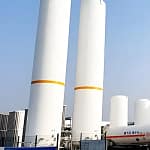
14. Gas Cylinders vs Microbulk vs Bulk Storage
Individual gas cylinders are not always the most efficient gas supply solution. Facilities with continuous or higher gas consumption may find that microbulk or bulk storage provides a more suitable supply model.
| Gas Supply Solution | Best Suited For | Supply Method | Main Benefit |
|---|---|---|---|
| Gas Cylinders | Smaller or variable demand | Individual cylinder delivery and replacement | Flexible and widely available |
| Microbulk System | Continuous medium gas demand | On-site cryogenic storage and delivery | Fewer cylinder changes and more continuous supply |
| Bulk Storage Tank | High continuous demand | Bulk delivery to an on-site storage tank | High-volume gas supply |
The best solution depends on gas consumption, delivery frequency, available site space, operating requirements, logistics, and total supply costs.
For larger industrial gas storage requirements, see our Industrial Gas Supply Systems.
15. How to Select the Right Gas Cylinder
Gas cylinder selection should begin with the actual gas service and project requirements rather than simply choosing a standard cylinder size.
1. Identify the Gas
Specify the exact gas, purity grade, mixture composition where applicable, and whether the gas is compressed, liquefied, or dissolved.
2. Determine the Required Working Pressure
Establish the required working pressure and confirm that the selected cylinder is designed and certified for that pressure.
3. Determine Capacity
Specify the required water capacity, gas quantity, physical dimensions, or other applicable capacity requirements.
4. Select the Cylinder Material
Choose steel, aluminium, or composite construction according to pressure, weight, corrosion, handling, and application requirements.
5. Confirm the Applicable Standard
Identify the destination market and determine which cylinder standard or regulatory framework applies.
6. Select the Correct Valve and Thread
Provide the required valve connection, thread standard, outlet, pressure rating, and gas-service requirements.
7. Check Transportation Requirements
For export projects, confirm requirements governing transport, marking, certification, packaging, and destination-country acceptance.
8. Consider the Operating Environment
Temperature, humidity, corrosion exposure, outdoor storage, handling frequency, and other environmental conditions may affect the cylinder specification.
9. Confirm Documentation
Before production, confirm the required inspection records, certificates, markings, material documentation, and traceability information.
Gas Cylinder RFQ Checklist
Providing complete technical information helps a gas cylinder manufacturer recommend an appropriate design and prepare an accurate quotation.
| Required Information | Example |
|---|---|
| Gas type | Oxygen, nitrogen, argon, CO₂, hydrogen, etc. |
| Gas purity | Industrial, medical, food-grade, specialty purity |
| Working pressure | 200 bar, 300 bar, 450 bar, etc. |
| Water capacity | Specified cylinder internal volume |
| Material | Steel, aluminium, composite |
| Valve | Required valve type and connection standard |
| Standard | Applicable ISO, EN, DOT, TPED, GB, AS, BIS or other requirements |
| Destination market | Country or region where the cylinders will be used |
| Quantity | Required order quantity |
| Documentation | Certificates, inspection records, traceability and other required documents |
For custom projects, drawings, technical specifications, photographs of existing cylinders, or reference samples can also help the engineering team understand the required configuration.
16. What Documents Should You Request From a Gas Cylinder Manufacturer?
Documentation requirements vary according to cylinder type, standard, certification, and destination market. Depending on the project, buyers may need to request documents such as:
- Certificate of conformity
- Material certificates
- Pressure test records
- Inspection records
- Non-destructive testing records where applicable
- Traceability documentation
- Cylinder identification and marking information
- Valve documentation
- Applicable certification documents
- Packaging and shipping documentation
Before Production
- Approved technical specification
- Applicable cylinder standard
- Required pressure and capacity
- Material specification
- Valve and thread specification
- Certification requirements
- Destination-market requirements
Before Shipment
- Certificate of conformity where applicable
- Inspection and test records
- Material documentation where required
- Traceability information
- Marking confirmation
- Shipping and packaging documents
Before placing an international order, confirm the documentation requirements with the relevant authority, inspection body, importer, or end user. Certification requirements can differ significantly between markets and applications.
17. Gas Cylinder Manufacturing Quality Control
Reliable cylinder production depends on quality control throughout the manufacturing process rather than relying only on final inspection.
Typical Quality-Control Stages
- Incoming material verification
- Dimensional and visual inspection
- Forming and manufacturing process control
- Heat-treatment verification
- Neck and thread inspection
- Pressure testing
- Non-destructive testing where required
- Leak testing where applicable
- Surface and coating inspection
- Final marking and traceability verification
- Documentation review
For international projects, the quality-control process should be aligned with the applicable cylinder standard and certification requirements before production begins.
Why Manufacturer Experience Matters
Gas cylinder procurement involves more than manufacturing the vessel itself. The manufacturer should understand the relationship between gas service, cylinder material, pressure, capacity, valve configuration, testing, certification, and destination-market requirements.
A clear technical specification established before production can reduce the risk of incompatible valves, incorrect pressure ratings, unsuitable standards, incomplete documentation, and problems during import or end-use.
TECHNICAL FAQs
About Gas Cylinders Guide
Water capacity refers to the internal volume of a gas cylinder, normally expressed in litres. It should not be confused with the amount of compressed gas contained in the cylinder.
The main difference is the specified working pressure. A 300 bar cylinder can provide higher storage density than a similar-volume 200 bar cylinder, but the appropriate pressure depends on cylinder design, gas, standard, equipment, and application.
Steel cylinders generally provide high strength and durability, while aluminium cylinders offer lower weight and good corrosion resistance. The appropriate choice depends on the application, pressure, handling requirements, and applicable certification.
Steel cylinders rely primarily on a metallic pressure vessel, while composite cylinders use fibre-reinforced materials to reduce weight and provide high-pressure storage. The appropriate construction depends on the application, pressure, weight requirements, and applicable standard.
The required standard depends on cylinder design, gas service, destination country, transportation requirements, and intended application. The applicable standard should be confirmed before manufacturing or purchasing the cylinder.
Valve and thread compatibility is essential for safe connection to filling equipment, regulators, and gas systems. Requirements vary by country, gas, valve type, pressure, and applicable standard.
Testing may include hydrostatic pressure testing, visual inspection, dimensional checks, leak testing, ultrasonic or other non-destructive testing, and valve inspection depending on the applicable requirements.
Inspection and requalification intervals depend on the cylinder type, applicable regulation, gas service, cylinder standard, and destination market. There is no single inspection interval that applies to every gas cylinder.
Depending on the project, buyers may need certificates of conformity, material certificates, pressure test records, inspection records, traceability documents, marking information, valve documentation, and applicable certification documents.
Start with the gas type and purity, then determine the required working pressure, water capacity, material, valve connection, applicable standard, destination market, transportation requirements, operating environment, quantity, and documentation.
Professional Gas Cylinder Manufacturing Solutions
As a global industrial gas equipment manufacturer, we provide certified gas cylinders, cryogenic systems, valves, regulators, and customised storage solutions.
Our engineering team supports:
- Standard compliance consultation
- Custom design development
- International certification support
- Export-ready production
Contact us for technical support and project consultation.
