
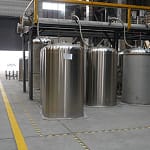
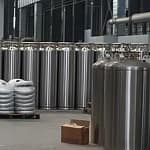

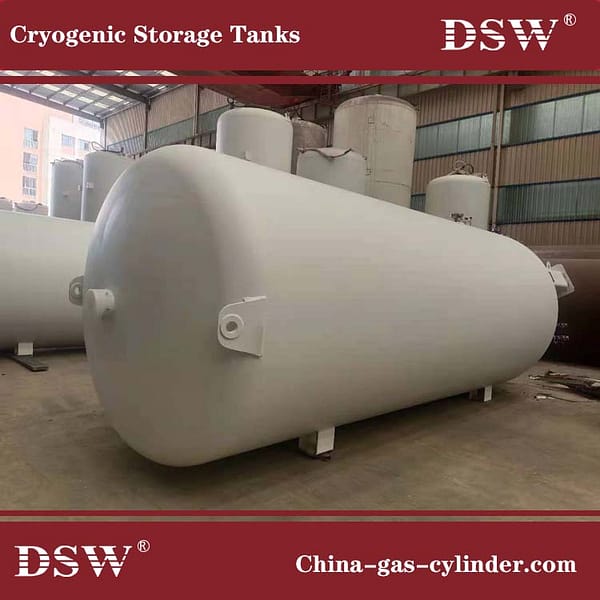
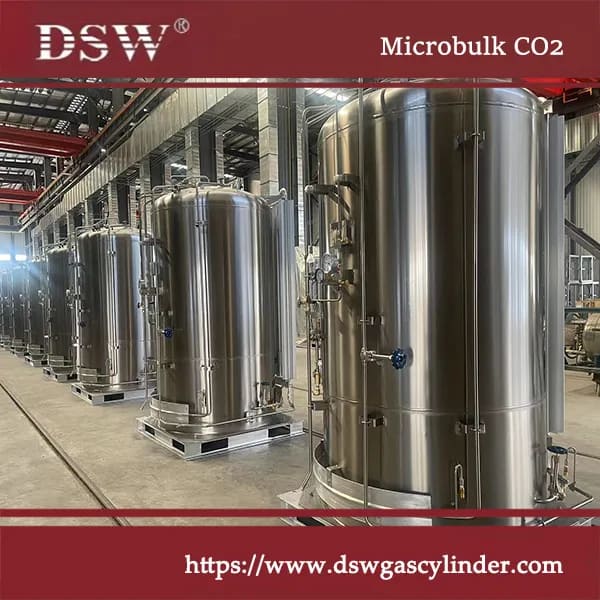


Understanding Dewar vs Microbulk Tank is essential for choosing the right cryogenic storage solution. These storage options serve laboratories, medical facilities, and industrial applications, but differ significantly in capacity, operation, and efficiency. This guide offers a clear comparison to help you make an informed decision.
1. Understanding Dewars and Microbulk Tanks
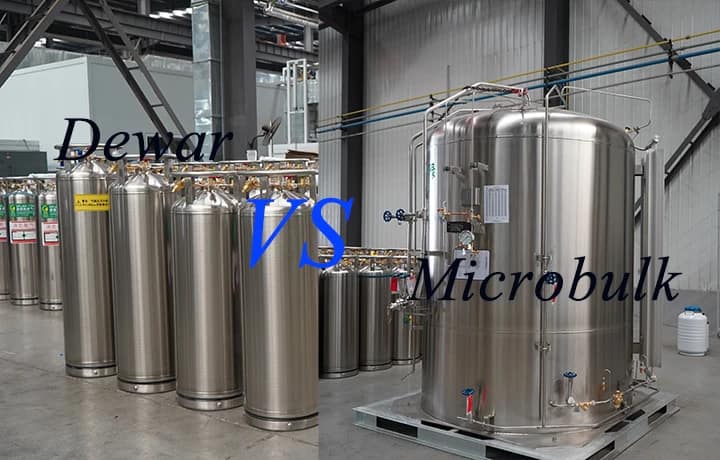
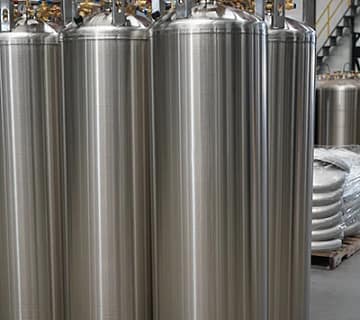
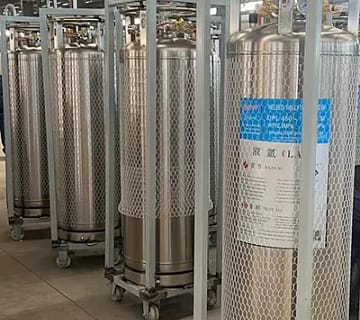
Dewars are small, portable, double-walled vessels designed for the short-term storage and transport of cryogenic liquids such as liquid nitrogen (LN₂), liquid oxygen (LOX), liquid argon (LAr), or carbon dioxide (LCO₂). They are manually filled and ideal for low-volume users such as laboratories and small workshops.
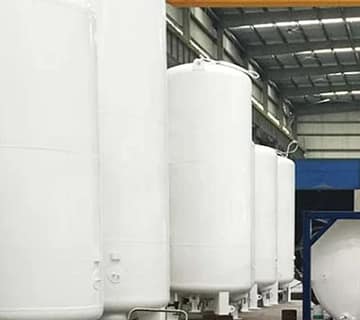
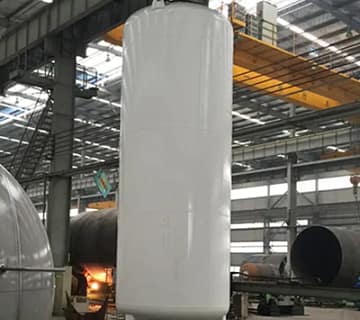
Microbulk tanks are larger, stationary cryogenic storage vessels, usually ranging from 1,000 to 5,000 litres. They bridge the gap between small dewars and large bulk tanks, offering automatic refilling, continuous gas supply, and greater efficiency. These tanks are commonly used in industrial, medical, and laboratory environments where medium-volume supply is required.
2. Gases Stored
Both dewars and microbulk tanks are designed to store a range of cryogenic gases.
While they share compatibility with common industrial gases, the scale and capacity
of each system vary significantly.
| Gas | Dewar | Microbulk Tank |
|---|---|---|
| Liquid Nitrogen (LN₂) | Yes | Yes |
| Liquid Oxygen (LOX) | Yes | Yes |
| Liquid Argon (LAr) | Yes | Yes |
| Liquid Carbon Dioxide (LCO₂) | Yes | Yes |
| Nitrous Oxide (N₂O), Helium (LHe) | Small volumes only | Occasionally |
| Mixed or Specialty Industrial Gases | No | Yes |
Dewars are ideal for small-scale, low-volume applications such as laboratories and short-term usage. In contrast, microbulk tanks are engineered for industrial and medical environments where larger storage volumes, higher efficiency, and specialised gas supply are required.
3. Design and Build Quality: Dewar vs Microbulk Tank
The design and construction of cryogenic vessels directly affect their safety, efficiency, and longevity.
While both Dewars and Cryogenic Microbulk Tanks store cryogenic gases, their engineering, pressure capability, and application differ significantly.
| Feature | Dewar | Microbulk Tank |
|---|---|---|
| Construction | Double-walled vessel with stainless-steel inner liner and protective outer shell | Double-walled, vacuum-insulated stainless-steel pressure vessel for industrial use |
| Insulation | High-vacuum space with multi-layer aluminised film | High-vacuum insulation using perlite or multi-layer systems for superior thermal performance |
| Pressure Rating | 22–37 psi (1.5–2.5 bar) | 100–500 psi (7–35 bar) |
| Standards | EN 1251, GB/T 5454, DOT-4L | ASME, EN 13458, GB/T 18442 |
| Typical Application | Laboratories and small-scale, low-volume applications | Industrial and medical use with large-volume or specialised gas requirements |
4. Manufacturing Process
Dewars: Inner and outer vessels formed by deep drawing or spinning; vacuum insulation; neck tube, pressure-relief valve, handle; hydrostatic and vacuum leak testing.
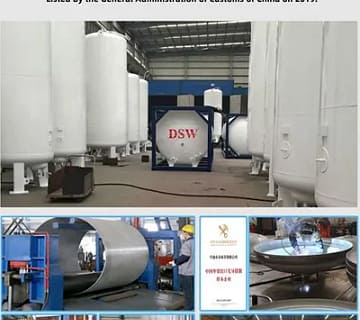
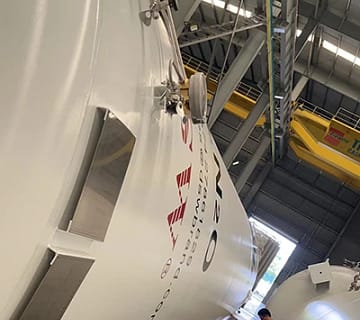
Microbulk Tanks: Welded stainless-steel shells; vacuum-perlite or multi-layer insulation; fitted with pressure regulators, vaporizers, level gauges; ASME/CE certification testing.
5. Capacity and Applications
Dewar tanks are ideal for low-volume, portable applications, while microbulk tanks serve continuous, medium-volume gas supply needs.
| Feature | Dewar | Microbulk Tank |
| Capacity | 1–250 litres | 500–5,000 litres (or more) |
| Application | Laboratories, hospitals, small workshops | Industrial gas supply, laser cutting, medical oxygen, food processing |
| Refill Method | Manual | On-site delivery from microbulk truck |
| Mobility | Portable | Stationary |
6. Operation and Efficiency
Dewars require frequent replacement and manual handling, with higher gas loss due to evaporation.
Microbulk Tanks are low-loss, automated systems providing continuous supply, reducing downtime and cylinder handling.
7. Safety and Controls
Microbulk tanks offer enhanced safety features, automated controls, and optional remote monitoring, making them ideal for critical industrial and medical applications.
| Feature | Dewar | Microbulk Tank |
| Pressure Relief Device | Yes | Yes (dual system) |
| Gas Evaporator | Not built-in | Integrated |
| Level/Pressure Gauge | Optional | Standard |
| Remote Monitoring | No | Yes (optional telemetry) |
8. Cost and Maintenance
Dewars offer low initial cost but higher long-term labour and refill expenses. Microbulk tanks require a higher upfront investment but provide cost efficiency over time for medium- to high-volume users.
9. Choosing the Right Solution
Dewars are ideal for small-scale, portable cryogenic storage. Microbulk tanks provide continuous, automated supply for medium-volume industrial users, with higher efficiency, lower loss, and enhanced safety features.
Selecting the right solution depends on your volume requirements, operational efficiency, and safety priorities.
Contact our experts today to discuss customised cryogenic storage solutions tailored to your facility’s needs.
TECHNICAL QUESTIONS
Frequently asked questions about Dewars and Microbulk Tanks
Microbulk tanks are generally stationary due to their size and design. Portable solutions like dewars are better for mobile applications.
Refill frequency depends on usage and tank size. Smaller dewars may require daily refills, while larger ones can last several days.
Both are safe when used according to standards, but microbulk tanks offer integrated pressure relief, automated monitoring, and reduced handling, making them particularly suitable for medical settings.
Dewars are suitable for common gases such as LN₂, LOX, LAr, and CO₂. Microbulk tanks can also handle specialty gases for industrial application

No comment