



Introduction
Argon gas is a colourless, odourless, and inert noble gas obtained through the fractional distillation of liquid air in cryogenic units. Owing to its stability, non-toxicity, and non-flammability, argon plays a critical role in a wide range of industrial applications. From welding and electronics to food preservation and cryogenics, its versatile uses continue to fuel global market growth.
Argon in the Metal and Manufacturing Industries
Welding and Metal Fabrication
Argon is extensively used as a shielding gas in welding due to its ability to prevent oxidation and ensure high-quality welds. Common gas mixtures include:
- 95% argon and 5% carbon dioxide – widely applied in structural steel welding.
- 98% argon and 2% carbon dioxide – suitable for stainless steel and specialised alloys.
These properties make argon indispensable in automotive, aerospace, energy, construction, and pharmaceutical manufacturing, where clean and strong welds are vital.
Steelmaking and Casting
In steel production and metal casting, argon creates an oxygen-free atmosphere that prevents oxidation. This results in higher purity steels and cleaner castings.
- Used during degassing and refining to remove dissolved gases.
- Protects high-reactivity metals such as titanium, zirconium, and silicon during melting.
Heat Treatment and Powder Metallurgy
During heat treatment processes like annealing or hardening, argon provides a controlled environment that prevents scale and oxide formation. It also plays a role in metal powder production, ensuring powders remain stable and free of contamination.
The metal fabrication industry uses argon gas to shield metals against oxidation when welding. This is due to its non-toxic properties, nonflammability, nonreactivity under extreme temperatures, etc., which drive demand in this sector. Metal fabrication is part of the manufacturing sector and is closely linked to many other industries, including pharmaceuticals, food, beverages, automotive, aerospace, energy and construction.
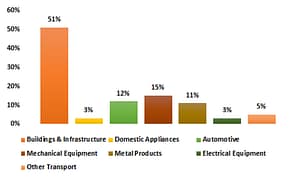
Metal fabrication has boosted the use of Argon in the steel industry. This is a global trend that continues to grow in all sectors. Below is a graph showing the use of steel by different sectors in 2018. (%).
Use of Steel In Different Sectors, 2018
Use of Argon gas
Here are some specific ways argon gas is used in metal production:
It is used in welding with a mixture of 95% argon gas and 25% carbon dioxide or 98% argon gas and 2% carbon dioxide, depending on the steel type.
It is also widely used in insulated and solar windows to improve energy efficiency. This is driving market growth. It is also used to produce microelectronics using excimer lasers and fluorine. Incandescent bulbs and phosphorescent tubes are also made from it, which is why its demand has increased due to the increase in malls, shopping centres, hotels, etc.
The argon gas is also used in other applications, including producing titanium, germanium, and silicon crystals, as a protective environment, filling dry suits for scuba divers, as an air filler in fire extinguishers, and inflating airbags.
Ar produces reactive metals, such as titanium and zirconium. These metals have a high affinity for oxygen and can readily form oxides when exposed to air. Argon gas is used to create a controlled, oxygen-free environment during various stages of the production process. It helps to prevent oxidation, ensuring the production of high-purity metals with desired properties.
Argon gas is employed as a protective gas during heat treatment processes, such as annealing or hardening of metals. When heated to high temperatures, metals can react with oxygen in the air and form undesirable oxides. Using argon creates an oxygen-free atmosphere, preventing oxidation and maintaining the desired material properties during the heat treatment process.
In metal casting and melting processes, argon gas creates an inert atmosphere in the furnace or casting chamber. The presence of argon gas helps to displace oxygen and moisture, minimizing the formation of oxides and ensuring the production of clean, high-quality castings.
Argon gas is used as a protective atmosphere to produce metal powders. It helps to prevent the oxidation of metal powders during atomization or other powder production processes, ensuring the production of high-purity and stable metal powders.
Here are some common uses of argon gas in the food and beverage industry:
- Wine Preservation: Argon gas is commonly used to preserve opened bottles of wine. When wine is exposed to air, it undergoes oxidation, which affects its taste, aroma, and quality. Injecting argon gas into the wine bottle forms a protective barrier on the surface, preventing oxygen from coming into contact with the wine. This helps maintain the wine’s freshness, flavour, and quality for extended periods.
- Coffee and Tea Preservation: Like wine, coffee and tea can also undergo oxidation when exposed to air. Argon gas is used to displace oxygen from coffee and tea packaging, ensuring the products remain fresh and flavorful. It helps to extend the shelf life and preserve the aroma and taste of the coffee or tea.
- Food Packaging: Argon gas is sometimes used in modified atmosphere packaging (MAP) for certain food products. MAP involves replacing the air inside food packaging with a specific gas mixture to extend the product’s shelf life. Argon gas can be part of the gas mixture to displace oxygen and create an oxygen-free or low-oxygen environment, reducing spoilage and maintaining food quality.
- Dairy Products: Argon gas can displace oxygen and create an inert atmosphere in the production and packaging of dairy products. This helps prevent oxidation and maintain the freshness and quality of dairy products such as milk, cream, and yoghurt.
- Oil and Fat Preservation: Argon gas can also preserve oils and fats, such as cooking or vegetable oils. Injecting argon gas into the packaging forms a protective barrier that minimizes contact with oxygen, preventing oxidation and extending the shelf life of the oils and fats.
Cryogenic Applications of Argon
At cryogenic temperatures, argon becomes a liquid at −185.8 °C and solidifies at −189.4 °C. In this state, it is applied in:
- Scientific Research: Creating ultra-low temperature environments.
- Specialty Manufacturing: Handling sensitive biological and industrial materials.
Its role in cryogenics continues to expand with advances in biotechnology and energy storage.
Safety and Handling Considerations
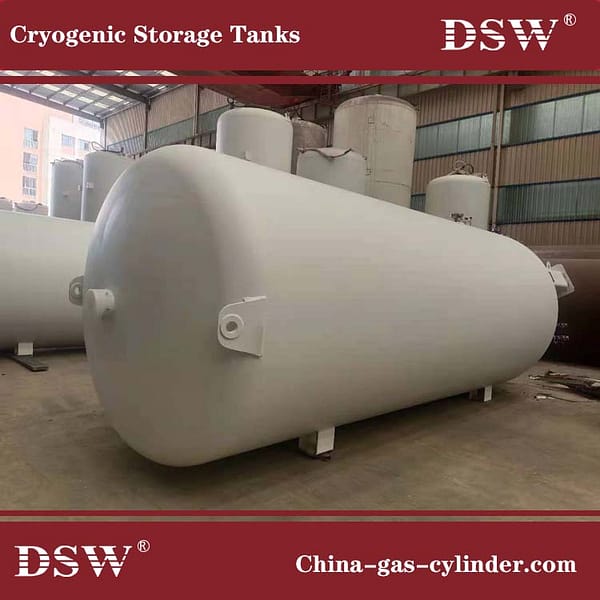
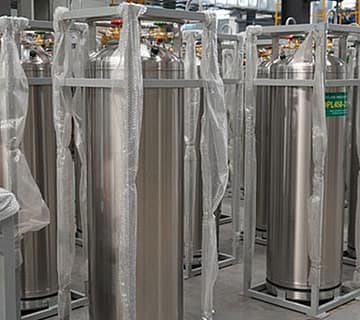
Although argon is non-toxic and chemically inert, it can act as an asphyxiant in confined spaces by displacing oxygen. Safe storage and handling, particularly in cryogenic form, require specialised insulated cylinders and tanks.
Market Outlook
The growing applications of argon in metals, electronics, construction, food, and cryogenics indicate robust demand in the years ahead. With increased focus on sustainability, energy efficiency, and advanced materials, argon is positioned as a key industrial gas supporting innovation across sectors.


No comment