




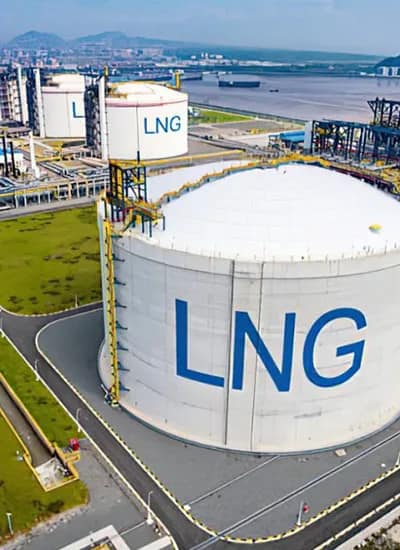
Natural gas and liquefied natural gas (LNG) are closely related energy resources, but they have different physical states, storage requirements, and transportation methods. Natural gas is primarily composed of methane and is normally supplied as a gas, while LNG is natural gas that has been cooled to approximately −162°C to form a liquid.
Understanding the relationship between natural gas and LNG helps explain why LNG is widely used for energy supply, industrial applications, transportation, and locations where conventional pipeline infrastructure is limited.
What is Natural Gas?
Natural gas is a gaseous fossil fuel composed primarily of methane (CH₄), with smaller quantities of ethane, propane, and other hydrocarbons. It occurs naturally in underground geological formations and is extracted through wells before being processed and distributed for different applications.
Because methane has a relatively high energy content and burns efficiently, natural gas is widely used for power generation, industrial heating, commercial and residential energy supply, and as a feedstock for the chemical industry.
The composition of natural gas can vary depending on its source and processing. Before entering a supply network or industrial application, unwanted components and contaminants may be removed to meet the required gas quality and specification.
What is LNG (Liquefied Natural Gas)?
Liquefied natural gas (LNG) is natural gas that has been cooled to approximately −162°C at atmospheric pressure, causing it to change from a gas into a liquid.
The liquefaction process reduces the volume of natural gas by approximately 600 times. This substantial volume reduction makes LNG practical for storage and transportation when moving natural gas through a conventional pipeline is difficult, uneconomical, or unavailable.
LNG is not a different fuel from natural gas. It is essentially natural gas in a liquid state. When LNG is warmed, it changes back into gaseous natural gas through a process known as regasification.
Natural Gas vs LNG
| Property | Natural Gas | LNG |
|---|---|---|
| Physical State | Gas | Liquid |
| Main Component | Methane | Primarily methane |
| Approximate Temperature | Normally ambient or pipeline conditions | Approximately −162°C |
| Volume | Large volume in gaseous form | Approximately 600 times less volume than the gas |
| Typical Supply Method | Pipeline or compressed gas systems | Cryogenic storage and specialized transport |
| Key Advantage | Efficient continuous distribution through pipelines | Efficient storage and transportation where pipelines are limited |
The main difference is therefore the physical state. Natural gas is supplied as a gas, while LNG is maintained as a cryogenic liquid to achieve a much higher storage and transportation density.
Key Properties of Natural Gas and LNG
Methane-Rich Composition
Natural gas consists primarily of methane, although its exact composition varies according to its source. Other components may include ethane, propane, nitrogen, carbon dioxide, and trace compounds.
High Combustibility
Methane is highly combustible and releases energy when it reacts with oxygen. This makes natural gas useful for power generation, industrial heating, cooking, and other energy applications. Because of its flammability, natural gas systems require appropriate leak detection, ventilation, pressure control, and safety measures.
Cryogenic Temperature of LNG
LNG must be maintained at approximately −162°C under atmospheric pressure to remain in liquid form. This extremely low temperature requires suitable materials, insulation, valves, piping, and handling procedures designed for cryogenic service.
Large Volume Reduction
Liquefaction reduces the volume of natural gas by approximately 600:1. This property is one of the main reasons LNG is useful for long-distance transportation and locations where pipeline distribution is not practical.
How Is Natural Gas Used?
Natural gas is used across a wide range of energy and industrial applications. Its relatively high energy content, controllable combustion, and established distribution infrastructure make it an important fuel and chemical feedstock.
- Power generation: Natural gas is used in gas turbines and other power-generation systems.
- Industrial heating: It provides heat for boilers, furnaces, kilns, and industrial processes.
- Chemical production: Natural gas can serve as a feedstock for hydrogen, ammonia, methanol, and other chemical products.
- Residential and commercial energy: It is widely used for heating, cooking, and other building energy requirements.
- Transportation: Natural gas can be used as a vehicle fuel in compressed or liquefied form.
Industrial Uses of LNG
LNG expands the practical use of natural gas by allowing it to be stored and transported as a high-density cryogenic liquid. This is particularly useful for industrial sites, remote facilities, distributed energy networks, and transportation applications that are not directly connected to a natural gas pipeline.
- Industrial energy supply: LNG can provide fuel for industrial heating and process applications.
- Power generation: LNG can be supplied to power plants and distributed generation facilities after appropriate regasification.
- Remote and off-grid energy: LNG can support facilities where pipeline infrastructure is unavailable or insufficient.
- Heavy-duty transportation: LNG can be used as a fuel for selected trucks, ships, and other heavy-duty vehicles.
- Distributed natural gas supply: LNG can be transported to an installation, stored locally, and converted back into gas for end users.
The appropriate LNG supply arrangement depends on consumption, site conditions, required continuity, available infrastructure, and the operating requirements of the end user.
How Is LNG Stored?
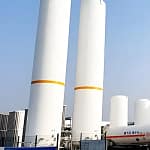
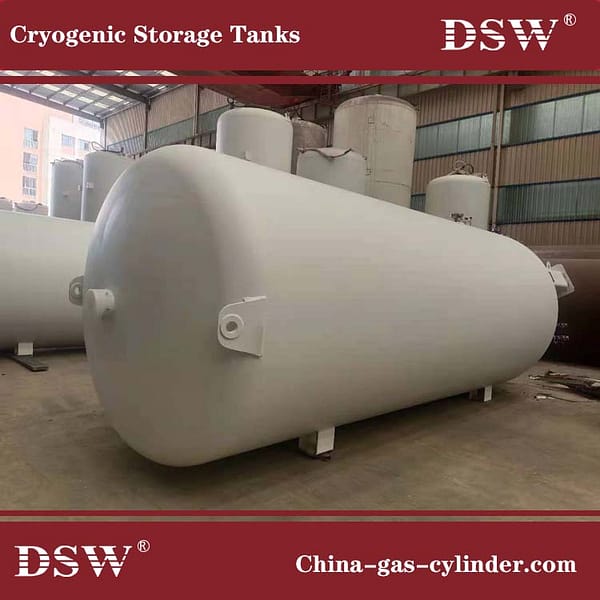
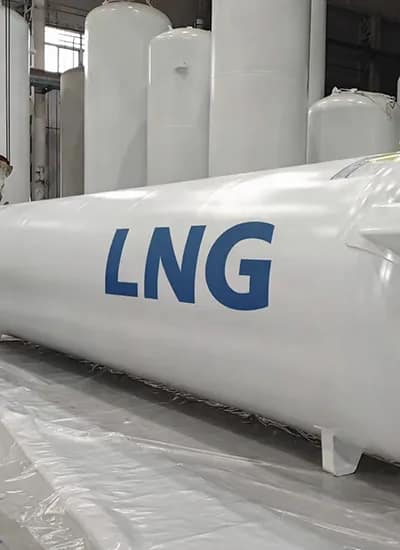
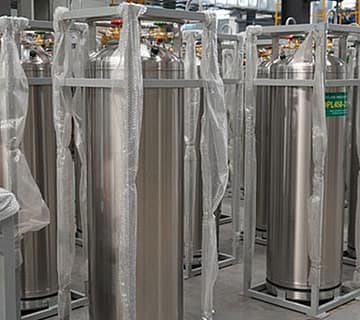
Because LNG must remain at cryogenic temperatures, it cannot be stored in conventional ambient-temperature gas vessels. LNG is maintained as a liquid in specially designed cryogenic storage tanks with thermal insulation systems that reduce heat transfer from the surrounding environment.
The storage arrangement depends on the required capacity, operating conditions, gas consumption, site configuration, and supply method. Industrial LNG installations may combine storage with pressure management, transfer equipment, vaporization, instrumentation, and safety systems.
For detailed information about integrated cryogenic storage systems, see DSW’s cryogenic storage solutions.
For specific LNG tank equipment, see the LNG storage tank product page.
How Is LNG Transported?
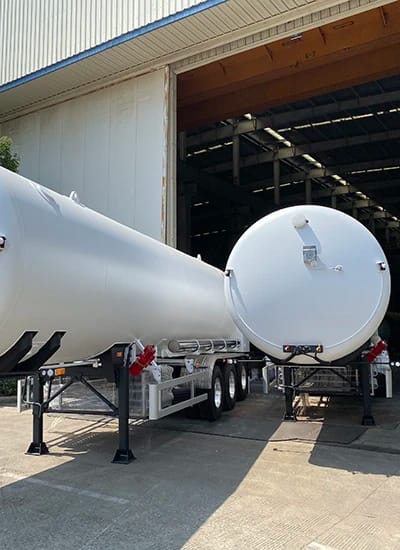
The major advantage of LNG is its ability to be transported in liquid form with substantially reduced volume compared with gaseous natural gas. Depending on the supply chain, LNG may be transported using specialized road tankers, cryogenic tank containers, or LNG carriers.
- Road transportation: LNG tanker trailers can deliver LNG from a supply point to industrial or commercial facilities.
- ISO tank containers: Cryogenic tank containers can support multimodal transportation by road, rail, or sea.
- Marine transportation: LNG carriers are used for large-scale international LNG transportation.
- Local distribution: LNG can be delivered to a storage installation and then vaporized for downstream natural gas supply.
For more information about the equipment and engineering considerations involved in LNG transportation, see LNG transport solutions.
Looking for a Reliable LNG Storage or Supply Solution?
DSW provides cryogenic equipment and LNG solutions for industrial gas storage, transportation, and supply applications.
Natural Gas and LNG Supply Options
The most appropriate gas supply method depends on the location, consumption profile, available infrastructure, and required supply continuity.
| Supply Method | Typical Application | Main Consideration |
|---|---|---|
| Pipeline natural gas | Facilities connected to gas distribution networks | Pipeline availability and gas demand |
| LNG supply | Sites without suitable pipeline infrastructure | Storage, transportation, and regasification |
| Small-scale LNG | Distributed industrial and commercial applications | Demand profile and local logistics |
| Regasified LNG | Natural gas supply from stored LNG | Vaporization and downstream pressure requirements |
LNG therefore provides a flexible way to bring natural gas to locations where a conventional pipeline connection is unavailable, insufficient, or impractical.
Safety Considerations for Natural Gas and LNG
Natural gas and LNG require appropriate engineering controls because of their flammability and, in the case of LNG, its extremely low temperature.
- Flammability: Natural gas can form flammable mixtures with air under suitable conditions.
- Leak detection: Gas detection and monitoring systems are important for installations where leakage could create a hazard.
- Ventilation: Adequate ventilation helps reduce the accumulation of gas in enclosed areas.
- Cryogenic hazards: Direct contact with LNG or very cold equipment surfaces can cause cold burns and other injuries.
- Material selection: Equipment exposed to cryogenic temperatures must use materials suitable for the operating conditions.
- Pressure protection: Appropriate pressure-relief and emergency protection systems are required for cryogenic and gas-handling installations.
Actual equipment selection and system design should follow the applicable codes, standards, site requirements, and local regulations.
Environmental Considerations
Natural gas generally produces less carbon dioxide per unit of energy than coal when combusted, although its overall environmental impact depends on the entire supply chain.
Methane emissions are particularly important because methane is a potent greenhouse gas. Emissions can occur during natural gas production, processing, transportation, storage, and distribution. Effective leak detection, maintenance, and process control are therefore important for reducing environmental impact.
LNG itself is not a separate fuel from natural gas; it is a liquid form of natural gas produced through cooling. Its environmental performance therefore depends on the source of the gas, liquefaction process, transportation, storage, regasification, and final use.
Natural Gas and LNG in Industrial Energy Supply
Natural gas and LNG serve different but complementary roles in industrial energy infrastructure. Pipeline natural gas is well suited to facilities with reliable access to gas distribution networks, while LNG provides a practical alternative where gas must be transported and stored before use.
For industrial users, an LNG-based supply chain may include LNG delivery, cryogenic storage, transfer equipment, vaporization, pressure control, and downstream gas distribution. The configuration should be selected according to the required gas flow, storage capacity, operating pressure, site conditions, and supply continuity.
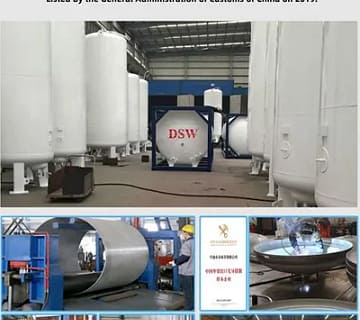
DSW provides equipment and solutions for LNG storage, transportation, and related cryogenic gas applications, including cryogenic tanks, LNG storage tanks, and cryogenic tank containers.
TECHNICAL QUESTIONS
Know About Natural Gas and LNG
Natural gas is a fossil hydrocarbon fuel primarily composed of methane (CH₄), with minor fractions of ethane, propane, and other light hydrocarbons. It is extracted from subsurface reservoirs and used extensively for power generation, heating, and chemical feedstock applications due to its high combustion efficiency and relatively low carbon intensity.
Liquefied Natural Gas (LNG) is natural gas that has been cryogenically cooled to approximately -162°C, transforming it into a liquid phase. This liquefaction process reduces its volume by approximately 600:1, enabling efficient storage and long-distance transportation where pipeline infrastructure is not available.
Natural gas is highly combustible and exhibits clean combustion characteristics, producing primarily carbon dioxide (CO₂) and water vapor. It has a lower carbon intensity compared to coal and petroleum-based fuels, making it a transitional energy source in decarbonization strategies.
Natural gas is widely used in industrial sectors including power generation via gas turbines, process heating in furnaces and boilers, chemical synthesis for ammonia and methanol production, hydrogen generation through steam methane reforming (SMR), and as a fuel source for transportation in compressed or liquefied form.
LNG is stored in vacuum-insulated cryogenic tanks designed to maintain ultra-low temperatures. Transportation is conducted via LNG ISO tanks for multimodal logistics, LNG carriers for marine transport, and regasification terminals where LNG is converted back into gaseous state for pipeline distribution.
Natural gas systems require strict leak detection, ventilation, and pressure control due to flammability risks. LNG handling introduces additional cryogenic hazards such as cold burns and material embrittlement. Proper insulation, safety valves, and emergency shutdown systems are essential for safe operation.
Natural gas combustion produces lower greenhouse gas emissions compared to coal and oil, resulting in reduced CO₂ output per unit of energy. However, methane leakage during extraction and transport must be controlled, as methane has a significantly higher global warming potential than carbon dioxide.
Conclusion
Natural gas is primarily a methane-rich gas used for energy generation, industrial heating, transportation, and chemical production. LNG is natural gas that has been cooled to approximately −162°C, reducing its volume by about 600 times and making it suitable for efficient storage and transportation.
The key distinction is therefore physical rather than chemical: natural gas is normally supplied in gaseous form, while LNG is maintained as a cryogenic liquid until it is transported, stored, and eventually converted back into gas for use.
Understanding these differences helps industrial users select the appropriate natural gas or LNG supply method for their energy, storage, transportation, and infrastructure requirements.


No comment