




Sulfur hexafluoride (SF₆) is a colorless, odorless, non-flammable fluorinated gas composed of one sulfur atom and six fluorine atoms. Because of its high dielectric strength, chemical stability, and excellent arc-quenching performance, SF₆ has been widely used in high-voltage electrical equipment, including gas-insulated switchgear (GIS) and high-voltage circuit breakers.
SF₆ is also used in semiconductor manufacturing, leak detection, scientific research, and other specialized industrial applications. However, its extremely high global warming potential has increased regulatory requirements and accelerated the development of lower-emission alternatives.
What Is Sulfur Hexafluoride (SF₆)?
Sulfur hexafluoride, commonly abbreviated as SF₆, is a synthetic inorganic compound consisting of sulfur and fluorine. Its molecular structure is octahedral, with one sulfur atom surrounded by six fluorine atoms.
Under normal conditions, SF₆ is chemically stable and non-flammable. Its combination of electrical insulation capability and arc-quenching performance makes it particularly valuable in high-voltage power systems.
- Chemical formula: SF₆
- Chemical name: Sulfur hexafluoride
- Compound type: Inorganic fluorinated compound
- Molecular structure: Octahedral
- Appearance: Colorless gas
- Odor: Odorless
- Flammability: Non-flammable
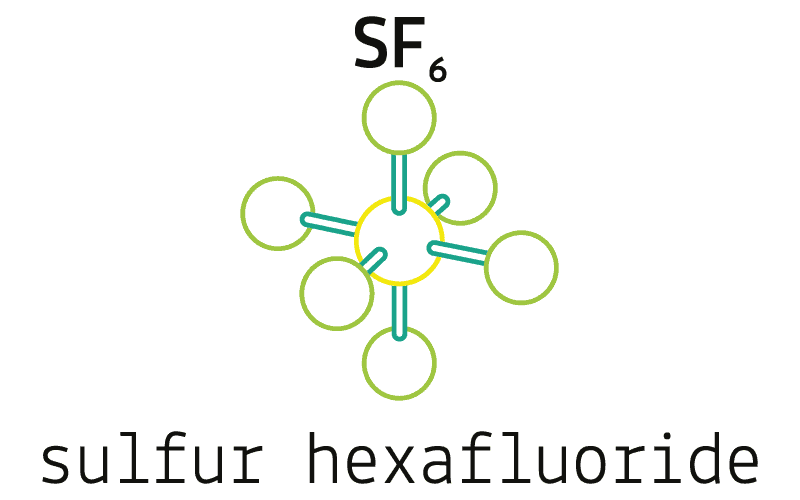
SF₆ Gas Properties
The physical and chemical properties of SF₆ determine its suitability for demanding electrical and industrial applications.
- High dielectric strength: SF₆ provides strong electrical insulation and helps prevent electrical breakdown.
- Excellent arc-quenching performance: SF₆ can rapidly interrupt electrical arcs in high-voltage switching equipment.
- Chemical stability: SF₆ is relatively inert under normal operating conditions.
- High density: SF₆ is significantly denser than air.
- Non-flammable: SF₆ does not support combustion under normal conditions.
- Thermal stability: Its stability supports reliable operation in specialized electrical equipment.
What Is SF₆ Gas Used For?
The largest and most established application of SF₆ gas is in the electrical power industry. Its high dielectric strength and arc-quenching capability allow electrical equipment to achieve reliable insulation and current interruption in compact designs.
Gas-Insulated Switchgear (GIS)
SF₆ is widely used as an insulating and switching medium in gas-insulated switchgear (GIS). GIS can provide high-voltage electrical insulation within a compact enclosure, making it suitable where installation space is limited.
High-Voltage Circuit Breakers
SF₆ is used in high-voltage circuit breakers to interrupt electrical current and extinguish arcs during switching operations. Its electron-capturing properties help restore insulation after current interruption.
Gas-Insulated Transmission Lines
SF₆ has also been used as an insulating medium in gas-insulated transmission lines (GIL), particularly in high-voltage installations where compact equipment and reliable insulation are required.
Other Industrial and Scientific Uses of SF₆
Semiconductor Manufacturing
SF₆ can be used as a process gas for plasma etching and chamber cleaning in semiconductor and electronics manufacturing. Its controlled chemical behavior makes it suitable for specialized microfabrication processes.
Leak Detection and Tracer Applications
Because SF₆ can be detected at low concentrations, it has been used as a tracer gas for leak detection, airflow studies, and certain scientific applications.
Research and Specialized Applications
SF₆ is also used in selected scientific and industrial applications where a stable, detectable, and non-flammable gas is required.
Why Is SF₆ Used in High-Voltage Equipment?
The main reason SF₆ has been widely adopted in high-voltage equipment is its combination of high dielectric strength and effective arc interruption. SF₆ can capture free electrons, reducing the likelihood of electrical breakdown and supporting rapid recovery of insulation after an arc is interrupted.
These characteristics allow manufacturers to develop compact and reliable high-voltage equipment while maintaining the required electrical insulation and switching performance.
- High electrical insulation performance
- Effective arc interruption
- Compact equipment design
- Reliable high-voltage operation
- Long-established use in power transmission and distribution
SF₆ Gas Supply and Cylinders
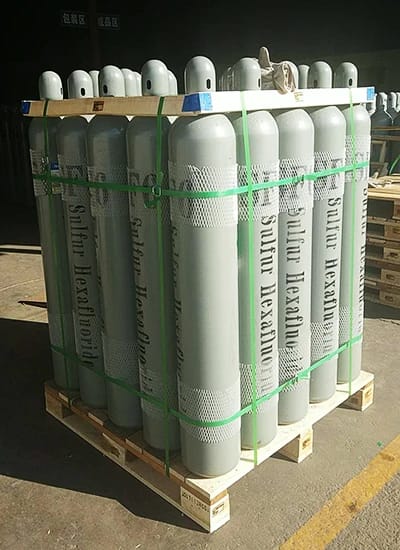
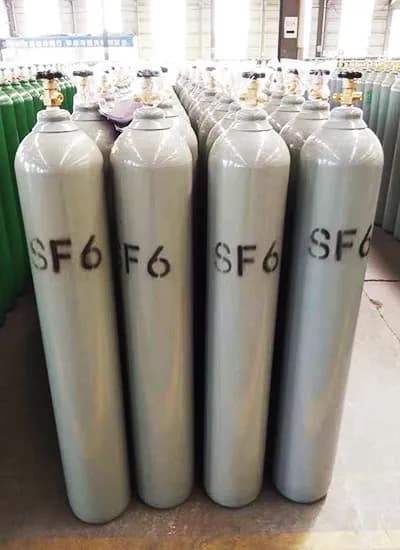
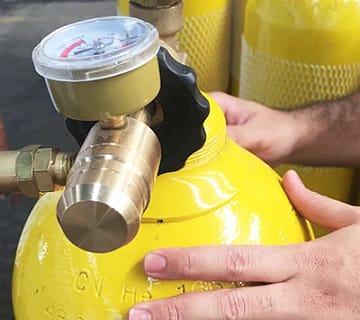
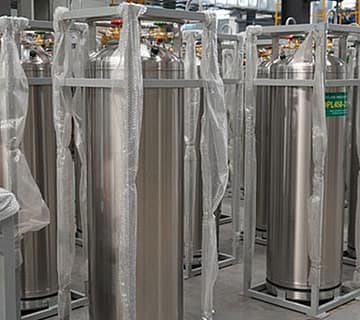
For industrial and electrical applications, SF₆ is commonly supplied in high-pressure gas cylinders, cylinder bundles, and other specialized gas transportation systems. The appropriate supply method depends on gas volume, purity requirements, application, and site conditions.
SF₆ Gas Cylinders
High-pressure cylinders provide a practical solution for storing and transporting SF₆ gas for maintenance, equipment servicing, industrial processes, and other applications. Cylinder specifications should be selected according to the required filling pressure, water capacity, valve configuration, applicable standards, and transportation requirements.
DSW manufactures industrial gas cylinders for a wide range of gas applications. For SF₆ applications, cylinder selection should consider the required working pressure, cylinder capacity, valve type, gas purity, and applicable inspection and testing requirements.
Learn more about SF₆ gas and its supply options for industrial applications.
Cylinder Bundles
SF₆ cylinder bundles combine multiple cylinders into a connected supply system. They can provide greater gas capacity and help reduce the frequency of cylinder replacement in applications requiring a more continuous supply.
SF₆ Gas Handling and Recovery
Because SF₆ has a very high global warming potential, proper gas handling is an important part of modern SF₆ management. Recovery, purification, leak detection, and recycling systems can help reduce emissions during equipment maintenance and servicing.
Looking for a Reliable SF₆ Gas Supply Solution?
We provide cylinders, bundles, and complete gas handling systems tailored to your application needs.
SF₆ Environmental Impact
Although SF₆ offers excellent technical performance, it is a potent greenhouse gas. Its environmental impact has led to increasingly strict requirements for emission control, monitoring, recovery, and the use of alternative technologies.
Global Warming Potential of SF₆
SF₆ has an extremely high global warming potential compared with carbon dioxide and can remain in the atmosphere for a very long period. As a result, even relatively small emissions are environmentally significant.
SF₆ Emission Control
Modern SF₆ management increasingly emphasizes leak prevention, gas recovery, recycling, monitoring, and controlled handling during equipment installation and maintenance. Requirements vary by country, application, and regulatory framework.
SF₆ Alternatives
The environmental impact of SF₆ has accelerated the development and adoption of alternative insulation and switching technologies. Depending on voltage level and equipment design, alternatives may include vacuum technology, air insulation, and lower-GWP gas mixtures.
| Technology | Typical Application | Main Advantage | Key Consideration |
|---|---|---|---|
| SF₆ | GIS, GIL, high-voltage circuit breakers | High dielectric strength and excellent arc interruption | Very high global warming potential |
| Air Insulation | Air-insulated substations and switchgear | No SF₆ greenhouse gas | Larger equipment footprint |
| Vacuum | Vacuum circuit breakers and medium-voltage equipment | Very low direct greenhouse-gas impact | Application depends on voltage and equipment design |
| Lower-GWP Gas Mixtures | Selected next-generation switchgear | Reduced environmental impact compared with SF₆ | Application and system design requirements vary |
SF₆ Gas Safety and Handling
SF₆ is non-flammable and generally stable under normal conditions, but safe handling is still essential. In enclosed spaces, released SF₆ can displace oxygen because the gas is much denser than air. Electrical arcing can also produce hazardous decomposition products.
SF₆ cylinders should therefore be stored, transported, connected, and handled according to applicable gas-cylinder, workplace-safety, and environmental requirements.
SF₆ Gas Supply from DSW
DSW provides industrial gas cylinder manufacturing and gas supply solutions for applications requiring reliable storage and transportation of specialized gases. For SF₆ applications, the appropriate cylinder solution depends on capacity, pressure, valve configuration, gas purity, transportation requirements, and applicable standards.
Our industrial gas cylinder solutions can support power utilities, electrical equipment manufacturers, industrial gas distributors, EPC contractors, and other professional users requiring dependable gas storage and transportation equipment.
For SF₆ gas cylinder requirements, contact DSW to discuss cylinder specifications, capacities, valves, testing requirements, and supply arrangements.
TECHNICAL QUESTIONS
About Sulfur Hexafluoride (SF₆)
SF₆ stands for sulfur hexafluoride, a fluorinated inorganic compound consisting of one sulfur atom and six fluorine atoms.
SF₆ gas is primarily used for electrical insulation and arc interruption in high-voltage equipment such as gas-insulated switchgear and circuit breakers. It also has specialized industrial and scientific applications.
SF₆ provides high dielectric strength and effective arc-quenching performance, allowing high-voltage equipment to achieve reliable insulation and switching in relatively compact designs.
Yes. SF₆ is an extremely potent greenhouse gas, which is why its emissions are increasingly controlled through leak prevention, recovery, recycling, monitoring, and regulatory requirements.
Yes. Depending on the application, alternatives include vacuum circuit breakers, air-insulated technologies, and lower-GWP gas mixtures used in next-generation electrical equipment.
Yes. SF₆ can be supplied in high-pressure gas cylinders and cylinder bundles. Cylinder capacity, pressure rating, valve configuration, and applicable testing requirements should be selected according to the intended application and relevant standards.

: Properties, Uses and Gas Supply)
No comment