
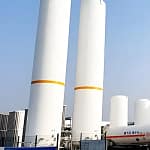
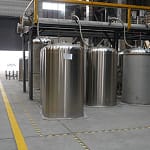

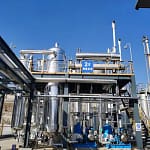


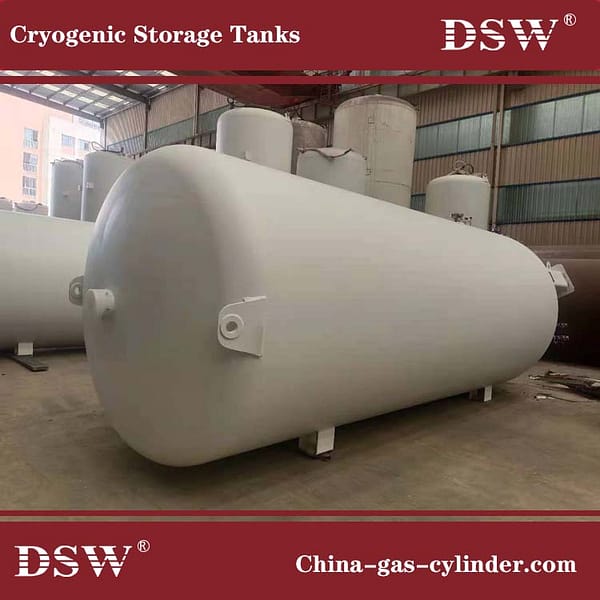

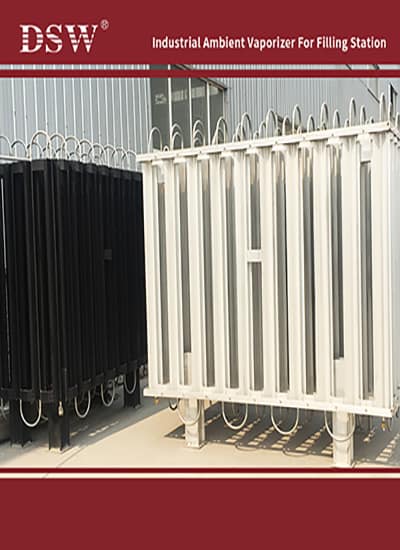
Filling stations that dispense cryogenic liquids such as LNG, CNG, nitrogen, oxygen, or carbon dioxide require reliable and efficient systems to convert these liquids into gaseous form. An industrial ambient vaporizer is a cost-effective, eco-friendly solution that uses ambient air to safely vaporize cryogenic liquids without relying on external power or fuel sources. For filling station operators, these vaporizers provide a simple, low-maintenance, and dependable method to ensure a steady supply of gas for vehicles or industrial applications.
What Is an Industrial Ambient Vaporizer?
Principle of Operation
An ambient vaporizer is essentially a heat exchanger designed to transform cryogenic liquids into gas by absorbing heat from the surrounding environment. The process relies on natural convection and ambient heat to gradually raise the temperature of the liquid until it reaches the gaseous state. This eliminates the need for external heating systems such as electric or fuel-powered vaporizers, making ambient vaporizers both energy-efficient and environmentally friendly.
Key Components and Structure
Typical ambient vaporizers consist of:
- Finned heat exchange tubes – provide maximum surface area for heat absorption.
- Manifolds and piping – direct cryogenic liquid into the vaporiser and deliver gas to storage or dispensing points.
- Support frame – often made from durable steel or aluminium alloys suitable for outdoor installations.
- Protective casing (optional) – shields the system from weather and debris.
How Ambient Air Vaporizers Work
Ambient air vaporizers use specially designed finned aluminum tubes to maximize heat transfer from the atmosphere. As cryogenic liquid flows through the tubes, heat from the surrounding air raises the liquid temperature until it changes into gas.
The vaporization process typically follows these steps:
- Cryogenic liquid leaves the storage tank.
- The liquid enters the ambient air vaporizer.
- Atmospheric heat transfers through the finned heat exchange surfaces.
- The liquid gradually vaporizes into gas.
- The gas exits at the required pressure and temperature.
- The gas is supplied to dispensers, cylinders, pipelines, or industrial processes.
This simple operating principle eliminates the need for burners, electric heaters, or other external heat sources.
Types of Ambient Vaporizers
There are several types available to suit different operational needs:
- Natural Draft Vaporizers – use convection and ambient air for heat transfer.
- Forced Draft or Fan-Assisted Vaporizers – incorporate fans to increase airflow in low-temperature or high-capacity environments.
- High-Pressure Vaporizers – designed for applications where the output gas needs to be delivered at high pressures, such as vehicle refuelling or industrial pipelines.
Role of Ambient Vaporizers in Filling Stations
Efficient Gas Conversion
Cryogenic liquids such as LNG and LOX must be converted to gas before they can be safely dispensed through hoses or into storage cylinders. Ambient vaporizers facilitate this conversion by providing controlled heating, ensuring gas is delivered at the correct pressure and temperature.
A well-designed vaporizer guarantees a constant flow of gas to meet operational demand. This ensures that vehicle refuelling or industrial processes are uninterrupted, which is especially important during peak usage periods.
Integration with Storage Tanks and Skid Systems
Ambient vaporizers are typically installed downstream of bulk cryogenic storage tanks or skid-mounted systems. They are compatible with existing piping and control systems, allowing seamless integration into modern filling station operations.
Typical Filling Station Vaporization System Layout
A typical cryogenic filling station vaporization system consists of:
- Cryogenic storage tank
- Vacuum-insulated transfer pipeline
- Ambient air vaporizer
- Pressure control system
- Gas buffer storage or manifold
- Dispenser, cylinder filling manifold, or process outlet
Cryogenic liquid is transferred from the storage tank into the vaporizer, where atmospheric heat converts the liquid into gas. The gas then passes through pressure regulation equipment before being delivered to the end-use application.
Technical Specifications and Design Features
Construction Materials
Most ambient vaporizers are manufactured from high-strength aluminum alloys because of their excellent thermal conductivity, corrosion resistance, and suitability for cryogenic temperatures.
Typical Performance Range
- Flow capacity: 50 Nm³/h to over 5,000 Nm³/h
- Design pressure: up to 40 bar or higher
- Operating temperature: down to -196°C
- Suitable for LOX, LIN, LAR, LNG, and CO₂ applications
Key Design Features
- Large finned heat exchange surface area
- Low maintenance requirements
- No external power consumption
- Modular design for future expansion
- Long service life
- Environmentally friendly operation
Optional Configurations
- Horizontal or vertical installations.
- Skid-mounted modules for portability and modular expansion.
- High-capacity units for heavy-duty refuelling stations.
Ambient Vaporizer vs Water Bath Vaporizer
| Feature | Ambient Air Vaporizer | Water Bath Vaporizer |
|---|---|---|
| Heat Source | Ambient Air | Heated Water |
| Power Requirement | None | Electricity or Fuel |
| Operating Cost | Low | Higher |
| Maintenance | Minimal | Moderate |
| Environmental Impact | Excellent | Moderate |
| Installation Complexity | Simple | More Complex |
| Best Application | Industrial Gas and LNG Stations | High-Capacity Vaporization Systems |
Applications
LNG Fueling Stations
Ambient vaporizers convert LNG into natural gas for vehicle fueling systems and LCNG stations.
Industrial Gas Filling Plants
They provide continuous gasification of liquid oxygen, liquid nitrogen, liquid argon, and carbon dioxide for cylinder filling and bulk gas supply.
Cryogenic Storage Facilities
Cryogenic storage terminals use ambient vaporizers to deliver gas from bulk storage tanks to industrial processes and distribution systems.
Food and Beverage Industry
Carbon dioxide vaporizers support beverage carbonation, food freezing, and packaging applications.
Healthcare and Medical Gas Systems
Liquid oxygen vaporizers supply oxygen gas to hospitals, healthcare facilities, and medical gas distribution networks.
Engineering Note: Ambient vaporizer sizing should be based on gas type, flow rate, operating pressure, ambient temperature, humidity, frost accumulation, and peak demand requirements. Proper engineering evaluation helps ensure safe and efficient vaporization performance.
TECHNICAL FAQs
About Industrial Ambient Vaporizer for Filling Stations
An ambient air vaporizer is a heat exchanger that converts cryogenic liquids into gas by absorbing heat from the surrounding air. It operates without external power or fuel, making it an energy-efficient solution for LNG and industrial gas applications.
Ambient vaporizers are commonly used to vaporize liquid oxygen (LOX), liquid nitrogen (LIN), liquid argon (LAR), liquefied natural gas (LNG), and carbon dioxide (CO₂) in industrial gas, medical, and energy systems.
Natural draft ambient vaporizers do not require electricity as they use atmospheric heat and natural convection. Some forced draft models may use small fans powered by electricity to increase airflow and vaporization capacity.
Ambient vaporizers use heat from the surrounding air to vaporize cryogenic liquids, while water bath vaporizers use heated water. Ambient vaporizers have lower operating costs and simpler maintenance, while water bath vaporizers are used for higher and more stable capacity requirements.
Ambient vaporizers are widely used in LNG fueling stations, LCNG systems, industrial gas filling plants, cryogenic storage terminals, hospitals, and food processing industries for continuous gas supply.
Vaporizer sizing depends on gas type, liquid flow rate, operating pressure, ambient temperature, humidity, frost formation conditions, and peak demand requirements. Proper engineering calculations ensure safe and stable gas output.
Ambient air vaporizers offer low operating cost, no fuel consumption, minimal maintenance, high reliability, and environmentally friendly operation, making them ideal for LNG and industrial gas vaporization systems.




No comment