
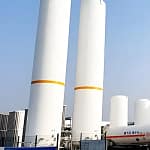
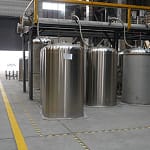

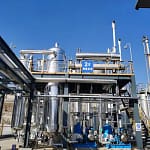


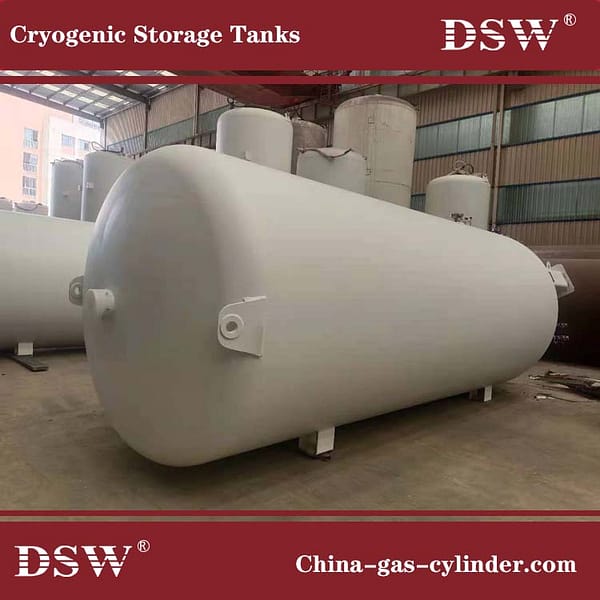

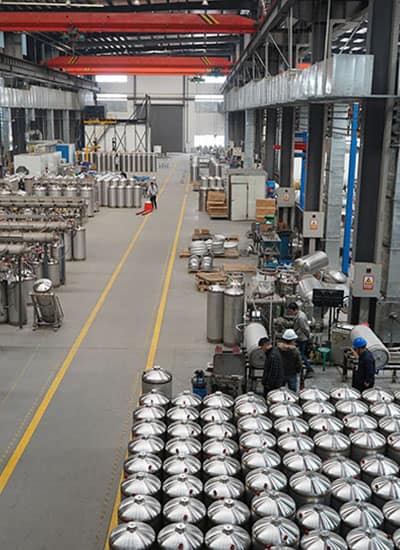
Cryogenic applications use extremely low temperatures and liquefied gases to support cooling, freezing, preservation, inerting, testing, manufacturing, transportation, and energy processes. Common cryogenic media include liquid nitrogen (LN₂), liquid oxygen (LOX), liquid argon (LAr), liquid carbon dioxide (LCO₂), helium, and LNG.
Depending on the application, a cryogenic system may include cryogenic storage tanks, Dewars, microbulk tanks, vaporizers, pressure-control equipment, cryogenic pumps, vacuum-insulated piping, and gas distribution equipment.
This guide explains how cryogenic technology is used across major industries and what types of cryogenic equipment are typically required for each application.
Quick Answer: What Are Cryogenic Applications?
Cryogenic applications are industrial, medical, scientific, and energy-related processes that use extremely low temperatures, generally below approximately -150°C (-238°F). Depending on the process, cryogenic gases can be used in liquid or gaseous form for rapid cooling, freezing, preservation, inerting, material processing, testing, and controlled gas supply.
Common cryogenic applications include:
- Industrial gas supply
- Food freezing and food processing
- Medical oxygen and healthcare applications
- Cryopreservation and biobanking
- Pharmaceutical manufacturing
- Electronics and semiconductor manufacturing
- Metalworking and precision assembly
- Aerospace and rocket systems
- LNG storage and fuel systems
- Laboratory and scientific research
- Environmental and climate research
- Specialized energy-storage systems
Major Cryogenic Applications by Industry
| Industry | Typical Application | Common Cryogenic Media | Typical Equipment |
|---|---|---|---|
| Industrial Manufacturing | Gas supply, inerting, cooling | LN₂, LAr, LOX, LCO₂ | Storage tanks, vaporizers, gas supply systems |
| Food Processing | Rapid freezing and cooling | LN₂, CO₂ | Dewars, bulk tanks, transfer systems |
| Healthcare | Medical gas supply and cryopreservation | LOX, LN₂ | Cryogenic tanks, Dewars, vaporizers |
| Pharmaceutical | Freezing and temperature control | LN₂, CO₂ | Storage tanks, Dewars, supply systems |
| Electronics | Cooling and environmental testing | LN₂ | Bulk tanks, microbulk systems, gas supply equipment |
| Metalworking | Cooling and shrink fitting | LN₂ | Dewars, tanks, liquid transfer equipment |
| Energy & LNG | Storage, transportation and fuel supply | LNG | LNG tanks, ISO tank containers, vaporizers |
| Aerospace | Propellant storage and specialized cooling | LOX, LH₂ | Cryogenic tanks and transfer systems |
| Research | Low-temperature testing and preservation | LN₂, LHe and other cryogens | Dewars, research cryostats, storage systems |
1. Industrial Gas Supply
Industrial gas supply is one of the most widespread cryogenic applications. Manufacturing plants and processing facilities may consume large quantities of nitrogen, oxygen, argon, or carbon dioxide for production, inerting, cutting, welding, heat treatment, food processing, and other industrial processes.
For facilities with continuous or relatively high gas consumption, bulk cryogenic storage can provide a more practical supply method than handling large numbers of individual cylinders.
A typical installation may combine a vacuum-insulated storage tank with a pressure-build system, vaporizer, pressure regulation, valves, instrumentation, and downstream gas distribution piping.
For larger industrial projects, see DSW’s cryogenic storage solutions.
2. Food Processing and Cryogenic Freezing
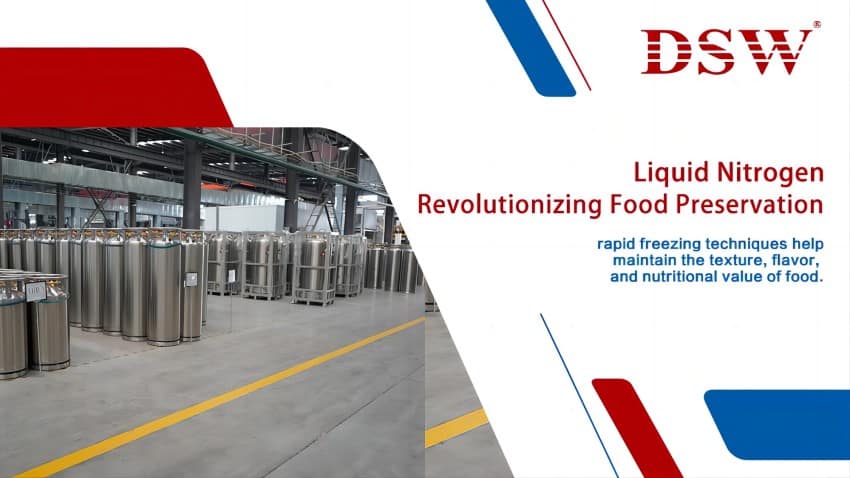
Liquid nitrogen and carbon dioxide are widely used for rapid cooling and freezing in food-processing operations. Cryogenic freezing can provide very fast heat transfer and can help reduce the time required to bring food products to the desired temperature.
Common Food Applications
- Meat and seafood freezing
- Fruit and vegetable processing
- Ice cream and frozen desserts
- Bakery products
- Prepared meals
- Ingredient cooling
- Temperature control during processing
Depending on production volume, a food-processing facility may use Dewars for smaller operations or bulk cryogenic storage for continuous, high-volume consumption.
The storage and supply system should be selected according to gas type, consumption rate, required liquid flow, storage capacity, and installation conditions.
3. Medical and Healthcare Applications
Cryogenic gases play an important role in healthcare facilities. Liquid oxygen can be stored in bulk cryogenic tanks and vaporized before being supplied to medical gas systems. Liquid nitrogen is also used in laboratories, cryopreservation, dermatological procedures, and other specialized medical applications.
Medical Cryogenic Applications Include
- Medical oxygen storage and supply
- Biological sample preservation
- Laboratory applications
- Cryotherapy
- Cell and tissue storage
- Medical research
Medical installations require appropriate equipment selection, pressure control, safety systems, monitoring, and compliance with applicable local requirements.
4. Cryopreservation and Biobanking
Cryopreservation uses extremely low temperatures to preserve biological materials for long-term storage. Liquid nitrogen is commonly used to maintain cryogenic storage environments for cells, tissues, reproductive materials, and other biological samples.
Typical applications include:
- Stem cell storage
- Sperm and egg preservation
- Embryo storage
- Blood and tissue preservation
- Biobank storage
- Biomedical research
Small and medium facilities may use vacuum-insulated Dewars or specialized cryogenic storage vessels, while larger facilities may require centralized liquid nitrogen storage and distribution systems.
5. Pharmaceutical and Biopharmaceutical Applications
Cryogenic technology is used in pharmaceutical and biopharmaceutical manufacturing for freezing, temperature control, preservation, and selected processing operations.
Liquid nitrogen can provide controlled low-temperature environments, while nitrogen gas can also be used to create inert conditions that reduce unwanted oxidation or exposure to atmospheric air.
Typical Applications
- Biopharmaceutical processing
- Freeze-drying processes
- Temperature-sensitive materials
- Cell and biological product preservation
- Controlled-atmosphere processes
Equipment selection depends on the required temperature, gas consumption, storage capacity, flow rate, pressure, and process configuration.
6. Electronics and Semiconductor Manufacturing
Electronics and semiconductor manufacturing can require highly controlled environments and reliable supplies of industrial gases. Nitrogen is widely used for inerting, purging, cooling, and process support.
Liquid nitrogen can also be used in specialized low-temperature testing and cooling applications.
Typical Cryogenic Requirements
- Continuous nitrogen supply
- Inerting and purging
- Low-temperature testing
- Process cooling
- Thermal management
Facilities with continuous consumption may use bulk or microbulk storage systems connected to vaporizers and controlled gas distribution equipment.
7. Metalworking and Precision Manufacturing
Liquid nitrogen is used in several metalworking and precision-engineering applications because its very low temperature can rapidly cool metal components.
Shrink Fitting
In cryogenic shrink fitting, a metal component is cooled with liquid nitrogen so that its dimensions temporarily decrease. The cooled component can then be assembled into another part before returning toward its normal temperature and expanding into position.
This method can be used for precision assemblies where controlled dimensional change is advantageous.
Tool and Process Cooling
Cryogenic cooling can also be applied to selected machining and metal-forming processes where temperature control is important.
8. Aerospace and Cryogenic Propellants
Aerospace applications represent some of the most demanding uses of cryogenic technology. Liquid oxygen and liquid hydrogen can be stored at cryogenic temperatures and used as rocket propellants.
Cryogenic aerospace systems require specialized storage vessels, transfer systems, insulation, pressure control, instrumentation, and safety arrangements.
Because aerospace applications involve highly specialized engineering requirements, equipment specifications must be determined according to the actual project, operating conditions, applicable standards, and safety requirements.
9. LNG Storage and Fuel Applications
Liquefied natural gas (LNG) is stored and transported at cryogenic temperatures. LNG infrastructure therefore relies on specialized cryogenic tanks, insulation systems, transfer equipment, pressure management, vaporizers, and safety systems.
Common LNG applications include:
- LNG storage
- LNG transportation
- LNG fueling systems
- Industrial LNG supply
- Natural gas vaporization
- Remote or off-grid gas supply
For LNG projects, equipment selection must consider storage capacity, filling method, operating pressure, vaporization demand, transportation requirements, and destination-market regulations.
10. Laboratory and Scientific Research
Research laboratories use cryogenic liquids for low-temperature experiments, sample preservation, material testing, cooling, and specialized scientific equipment.
Liquid nitrogen is particularly common because it provides a convenient cryogenic cooling medium for many laboratory applications.
Smaller laboratories may use Dewars or compact cryogenic vessels, while larger research facilities can require centralized storage and distribution systems.
11. Environmental and Climate Research
Cryogenic storage and low-temperature preservation are also used in environmental and climate research. Ice cores, biological samples, and other temperature-sensitive materials may require controlled low-temperature storage during transportation, analysis, and long-term preservation.
These applications generally require reliable temperature control, suitable storage vessels, and procedures designed around the characteristics of the material being preserved.
12. Cryogenic Energy Storage
Cryogenic energy storage systems use low-temperature liquefaction and expansion processes to store and later recover energy. Depending on the technology, air or nitrogen can be liquefied during periods of available electricity and later expanded to generate power.
Large-scale systems can require:
- Cryogenic storage tanks
- Cryogenic pumps
- Heat exchangers
- Expansion equipment
- Control systems
- Insulated process piping
These systems are substantially more complex than conventional industrial gas storage and must be engineered as complete process systems.
13. Cryogenic Testing and Thermal Simulation
Cryogenic environments can be used to test the performance of materials, components, sensors, electronics, and mechanical assemblies under extremely low temperatures.
Testing can help engineers evaluate:
- Material behaviour at low temperatures
- Thermal contraction
- Seal performance
- Component reliability
- Electrical performance
- Mechanical integrity
The required cryogenic system depends on the test temperature, chamber size, cooling rate, sample size, operating cycle, and required temperature stability.
14. Specialized Low-Temperature Computing and Research
Some advanced research systems require temperatures far below those provided by conventional liquid nitrogen systems. Quantum-computing platforms based on superconducting qubits, for example, can require dilution refrigeration systems operating at millikelvin temperatures.
These systems should not be confused with conventional liquid-nitrogen cooling. Liquid nitrogen may support certain auxiliary cooling or thermal-management functions, but it is not cold enough to directly provide the millikelvin operating environment required by dilution refrigerators.
This distinction is important when selecting cryogenic equipment for advanced research applications.
15. Cryogenic Transportation and Supply Chains
Cryogenic gases must often be transported between production facilities, distribution centres, storage terminals, and end users. Specialized cryogenic transport equipment maintains the required low-temperature conditions while allowing the product to be transferred safely between locations.
Depending on the gas and transport mode, equipment can include:
- Cryogenic ISO tank containers
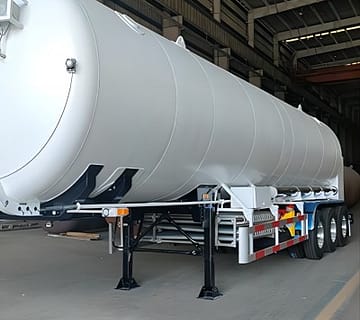
- Tank trailers
- Transportable cryogenic tanks
- Dewar containers
- Liquid-gas transfer equipment
Transportation requirements vary according to the gas, capacity, pressure, route, loading method, destination market, and applicable transport regulations.
Cryogenic Equipment Used Across These Applications
A cryogenic application normally requires more than a single tank or container. The equipment configuration should be designed around the complete gas-storage and supply process.
Cryogenic Storage Tanks
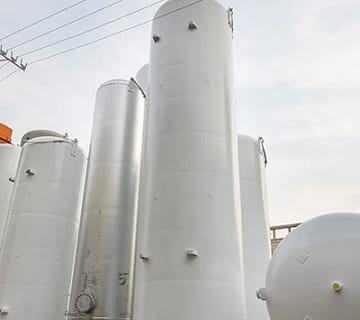
Vacuum-insulated cryogenic tanks are used for bulk storage of liquefied gases such as nitrogen, oxygen, argon, carbon dioxide, and LNG.
Tank selection depends on gas type, storage capacity, working pressure, design pressure, installation conditions, and applicable standards.
Explore DSW cryogenic storage tanks
Cryogenic Dewars
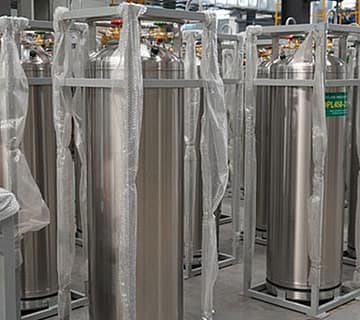
Cryogenic Dewars are generally used where smaller storage capacity, portability, or flexible handling is required. They are common in laboratories, medical facilities, research applications, and smaller industrial processes.
Explore cryogenic Dewars and cylinders
Microbulk Storage Systems
Microbulk systems provide an intermediate solution between conventional cylinders and large bulk storage installations. They can provide continuous on-site liquid gas supply while reducing cylinder handling and delivery frequency.
Microbulk systems are particularly useful where gas consumption is consistent but does not justify a large bulk installation.
Cryogenic Tank Containers
Cryogenic ISO tank containers are designed for the transportation and storage of liquefied gases across international and intermodal supply chains.
They can be used for gases such as LNG, nitrogen, oxygen, and argon, depending on the tank design, certification, and service requirements.
Explore cryogenic tank containers
Cryogenic Vaporizers
A vaporizer converts stored cryogenic liquid into gaseous form before the gas enters a downstream distribution system.
Vaporizer selection depends on gas type, required flow rate, inlet conditions, outlet pressure, ambient conditions, and operating profile.
Pressure-Building and Pressure-Control Equipment
Cryogenic storage systems may require pressure-building equipment to maintain tank pressure and pressure-control equipment to provide stable downstream gas supply.
Depending on the installation, the system may include regulators, valves, pressure gauges, transmitters, safety relief devices, and related instrumentation.
How to Select Cryogenic Equipment for an Application
There is no single cryogenic storage configuration that is suitable for every application. Equipment should be selected according to the actual gas consumption and process requirements.
1. Gas Type
Identify the cryogenic medium first. Nitrogen, oxygen, argon, carbon dioxide, helium, and LNG have different temperature, pressure, material, and safety requirements.
2. Storage Capacity
Storage capacity should be based on daily and peak consumption, delivery frequency, required reserve, and available installation space.
3. Consumption Rate
Peak gas demand is particularly important when selecting vaporization equipment. A storage tank may have sufficient volume but still fail to meet the required instantaneous gas flow if the vaporization system is undersized.
4. Operating Pressure
The required downstream pressure influences tank pressure, pressure-building equipment, regulators, valves, and gas distribution arrangements.
5. Application
Food processing, medical gas supply, semiconductor manufacturing, LNG fueling, laboratories, and industrial manufacturing can require substantially different system configurations even when the same cryogenic gas is used.
6. Installation Conditions
Available space, ambient temperature, access, piping arrangement, maintenance requirements, safety clearances, and local regulations should be considered before selecting the final equipment configuration.
7. Destination Market and Standards
Pressure-vessel and cryogenic equipment requirements vary by destination market and project. Depending on the application, equipment may need to comply with standards such as ASME, PED, EN, GB, ISO, CGA, or other applicable regulations.
Cryogenic Application → Gas → Equipment → System
The most important point when designing a cryogenic installation is to consider the complete system rather than selecting a storage tank independently.
| Application | Typical Gas | Typical Equipment | System Requirement |
|---|---|---|---|
| Industrial Gas Supply | LN₂, LAr, LOX | Bulk tank + vaporizer | Continuous gas supply |
| Food Freezing | LN₂, CO₂ | Dewar or bulk tank | Controlled liquid supply |
| Medical Gas | LOX | Cryogenic tank + vaporizer | Reliable gas distribution |
| Laboratory | LN₂, LHe | Dewar or compact tank | Flexible low-volume supply |
| Semiconductor Manufacturing | LN₂ | Bulk or microbulk system | Continuous high-purity supply |
| LNG | LNG | LNG tank + vaporizer | Storage and controlled delivery |
| Gas Transportation | LN₂, LOX, LAr, LNG | ISO tank or transport tank | Safe cryogenic transport |
Cryogenic Safety Considerations
Cryogenic liquids and gases require appropriate engineering controls because extremely low temperatures, pressure, gas expansion, and oxygen-deficiency risks can create significant hazards.
- Use suitable personal protective equipment when handling cryogenic liquids.
- Provide adequate ventilation in enclosed areas.
- Assess oxygen-deficiency hazards where inert cryogenic gases may accumulate.
- Use appropriate pressure-relief and overpressure protection.
- Inspect valves, connections, hoses, and transfer equipment regularly.
- Use equipment designed for the specific cryogenic medium and operating conditions.
- Follow applicable local safety standards and pressure-vessel regulations.
Safety requirements should always be evaluated as part of the complete cryogenic system rather than as an isolated equipment issue.
DSW Cryogenic Engineering and Equipment
DSW supplies cryogenic equipment and storage solutions for industrial gas, healthcare, food processing, energy, manufacturing, transportation, and research applications.
Depending on project requirements, DSW can provide equipment such as:
- Cryogenic storage tanks
- Liquid nitrogen tanks
- Liquid oxygen tanks
- Liquid argon tanks
- Liquid CO₂ tanks
- LNG cryogenic tanks
- Cryogenic Dewars
- Microbulk tanks
- Cryogenic ISO tank containers
- Vaporizers
- Pressure-control equipment
- Cryogenic gas supply systems
For a complete storage and supply project, DSW can configure the equipment according to gas type, storage capacity, consumption rate, operating pressure, application, installation conditions, and destination market.
How to Start a Cryogenic Equipment Project
The most useful information for an initial equipment recommendation is:
- Gas type: LN₂, LOX, LAr, LCO₂, LNG, helium, etc.
- Storage capacity: Required liquid storage volume.
- Consumption rate: Daily and peak consumption.
- Operating pressure: Required working pressure.
- Application: Manufacturing, medical, food, LNG, laboratory, etc.
- Destination market: Country and applicable standards.
These parameters allow the storage vessel, vaporizer, pressure-control equipment, connections, safety devices, and overall system configuration to be evaluated together.
TECHNICAL FAQs
About Cryogenic Applications
Common cryogenic applications include industrial gas supply, food freezing, medical oxygen storage, cryopreservation, pharmaceutical processing, semiconductor manufacturing, metalworking, LNG storage and transportation, laboratory research, and specialized aerospace applications.
Common cryogenic media include liquid nitrogen, liquid oxygen, liquid argon, liquid carbon dioxide, helium, and LNG. The appropriate gas depends on the process and application.
Typical equipment includes vacuum-insulated storage tanks, Dewars, microbulk tanks, cryogenic ISO tank containers, vaporizers, pressure-building equipment, pressure regulators, valves, instrumentation, pumps, and vacuum-insulated piping.
Tank selection depends on gas type, storage capacity, consumption rate, operating pressure, installation conditions, required reserve, vaporization requirements, applicable standards, and destination market.
A cryogenic storage tank is generally designed for larger stationary or bulk storage, while a Dewar is typically used for smaller quantities, laboratory applications, portable handling, or lower-volume cryogenic supply.
Some storage and supply equipment can support multiple applications, but the complete system must be evaluated according to the gas, pressure, flow rate, purity, safety requirements, and process conditions of the intended application.


No comment