




Argon gas is one of the most important inert gases used in modern industry due to its excellent chemical stability, availability, and wide range of applications. As a noble gas, argon is colorless, odorless, non-flammable, and highly resistant to chemical reactions, making it ideal for protective atmospheres in manufacturing, electronics, laboratories, and medical applications.
Argon represents approximately 0.93% of Earth’s atmosphere, making it the third most abundant atmospheric gas after nitrogen and oxygen. Because of its inert nature and relatively low cost compared to other noble gases, argon has become an essential industrial gas across many sectors.
What Is Argon Gas?
Argon (symbol Ar) is a colorless, odorless, and inert noble gas that makes up approximately 0.93% of Earth’s atmosphere, making it the third most abundant atmospheric gas.
Discovered in 1894 by Lord Rayleigh and William Ramsay, its name comes from the Greek word “Argos”, meaning inactive—a reference to its extremely low chemical reactivity.
As a non-flammable and chemically stable gas, argon is widely used where an inert shielding atmosphere is required.
Physical & Chemical Properties
| Property | Value |
|---|---|
| Chemical Symbol | Ar |
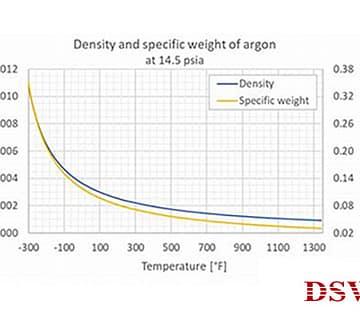
| Density | 1.784 g/L |
| Molecular Weight | 39.948 u |
| Melting Point | −189.4 °C |
| Boiling Point | −185.8 °C |
| Reactivity | Inert (noble gas) |
Argon Gas Structure – Ar
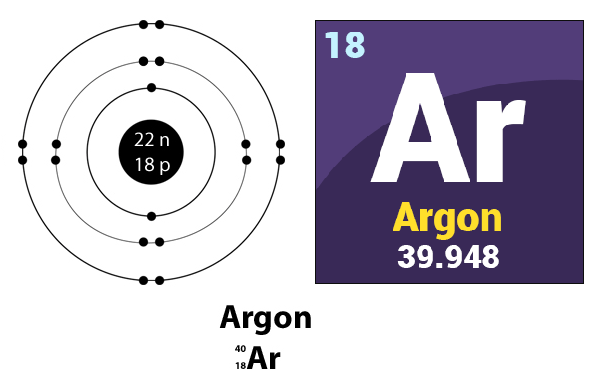
Argon is chemically inactive under standard conditions. Only under extremely low temperatures or high-energy environments can it form short-lived compounds. Its inert nature makes it ideal for processes requiring oxygen-free or moisture-free environments.
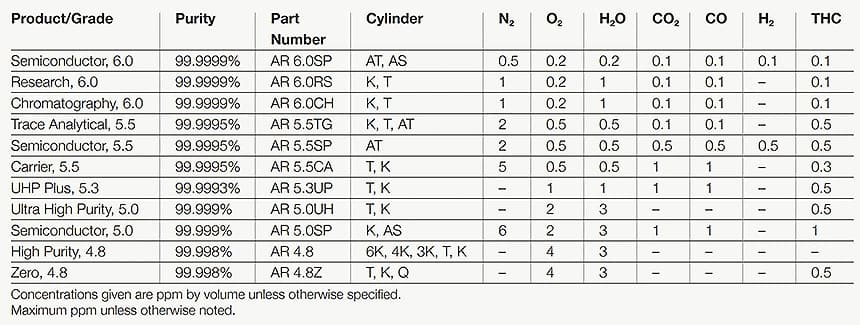
The Grade of Argon Gas Purity
The grade of argon gas purity is classified based on the percentage of argon and the allowable level of impurities. Here’s a clear breakdown:
Industrial Grade Argon
- Purity: 99.0% – 99.9%
- Use: Welding, metal fabrication, and general industrial applications.
High-Purity / Ultra-High-Purity (UHP) Argon
- Purity: 99.99% – 99.999%
- Use: Semiconductor, electronics manufacturing, laboratory, and medical applications.
Specialty Grade / Research Grade Argon
- Purity: >99.999%
- Use: Extremely sensitive processes like high-end analytical instruments, laser applications, and certain scientific experiments.
Key Point: As purity increases, the cost increases significantly due to more stringent purification and handling requirements.
How Is Argon Gas Produced?
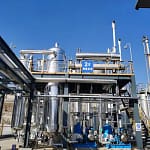
Industrial argon is produced through cryogenic fractional distillation of liquid air in an Air Separation Unit (ASU).
The process separates atmospheric gases based on their boiling points:
- Nitrogen: 77.3 K
- Argon: 87.3 K
- Oxygen: 90.2 K
Global production of argon exceeds 700,000 tons per year, meeting the demand of manufacturing, metallurgy, medical, and scientific industries.
In addition to understanding its applications, it is also important to understand how argon is stored and supplied in industrial environments.
Industrial Uses of Argon Gas
1. Welding and Metal Fabrication
Argon provides an inert shielding atmosphere during:
- TIG welding
- MIG welding
- Plasma cutting
- Metal additive manufacturing
It prevents oxidation, ensuring clean, strong welds.
2. Electronics and Semiconductor Manufacturing
Used for:
- Growing semiconductor crystals
- Plasma etching
- Protecting sensitive electronic components
Its purity and inert characteristics make it essential for high-precision manufacturing.
3. Lighting Industry
Argon is commonly used as a filling gas in:
- Incandescent lamps
- Fluorescent tubes
- Specialty neon sign tubes
It prevents oxygen from damaging the filament and improves lamp efficiency.
4. Medical and Surgical Applications
- Argon-enhanced electrosurgery reduces blood loss and tissue damage.
- Argon plasma coagulation (APC) allows non-contact, controlled coagulation using electrically conductive argon plasma.
5. Industrial Inerting and Blanketing
Because argon is heavier than air, it is ideal for:
- Protecting reactive materials
- Displacing oxygen in storage tanks
- Creating stable atmospheres for scientific research
Forms of Argon Supply
Argon is supplied as compressed gas or cryogenic liquid depending on volume, purity, and industrial requirements. Common supply methods include cylinders, liquid tanks, and bulk systems.
Gaseous Argon (Cylinders)
Argon cylinders are available in 40L–50L sizes with typical pressures of 150–300 bar, suitable for welding, laboratories, and small industrial applications.
- Sizes: 40L / 47L / 50L
- Pressure: 150–300 bar
- Uses: Welding, research, maintenance
Liquid Argon (Cryogenic Tanks)
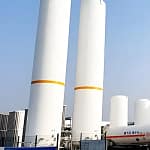
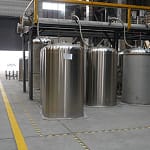
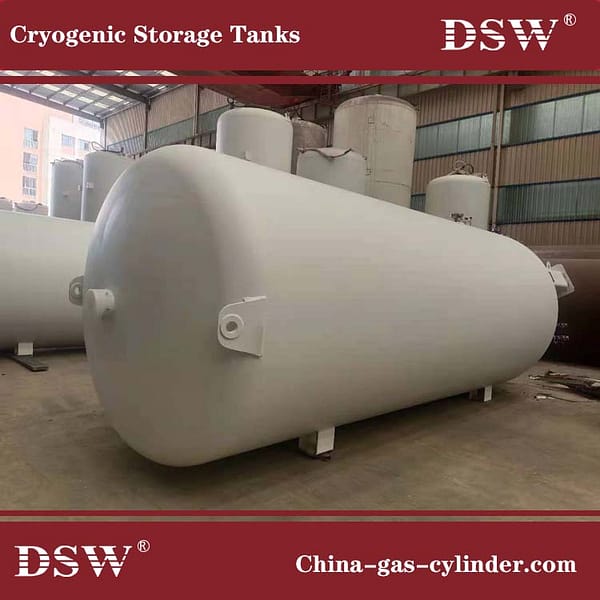
Liquid argon is stored at −186°C in vacuum-insulated tanks for high consumption. One liter of liquid produces about 840 liters of gas.
- Temperature: −186°C
- Expansion ratio: 1:840
- Uses: Continuous industrial supply
Bulk Argon Supply Systems
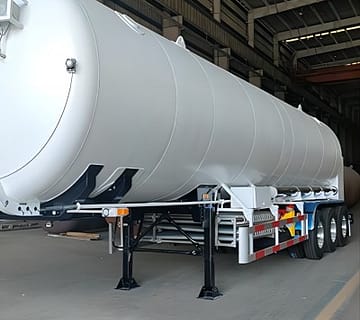
Bulk systems use cryogenic tanks, vaporizers, and pipelines to ensure stable supply for large industrial users.
- Bulk tanks
- Microbulk systems
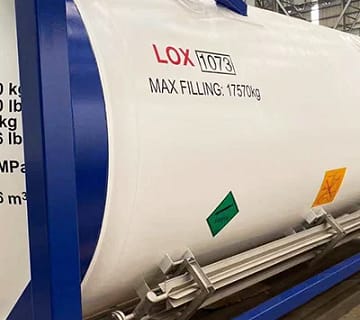
- ISO tank transport
- Liquid Argon Dewar
Choosing the correct supply form depends on consumption volume, required purity, delivery logistics, and operational continuity requirements.
Looking for a Reliable Liquid Argon Supply Solution?
Whether you need bulk storage, transport, or on-site supply,
Is argon gas toxic?
Even though argon gas is non-toxic, in closed areas, it is 38 percent denser than air, and it, therefore, can be considered a dangerous asphyxiant. It’s hard to spot because it’s colorless, odorless, and without taste.

Storage and Handling of Argon Gas
Proper storage and handling are essential to ensure safe use of argon gas.
- Store cylinders in upright positions
- Secure cylinders to prevent falling
- Keep away from heat sources
- Use compatible pressure regulators
- Ensure proper ventilation in storage areas
Cryogenic liquid argon systems require vacuum insulated tanks and proper safety valves to manage pressure buildup.
Safety Considerations
Although argon is non-toxic and non-flammable, it can present an asphyxiation hazard in confined spaces because it can displace oxygen. Since argon is colorless and odorless, oxygen monitoring may be required in enclosed environments.
Main safety considerations include:
- Ensure adequate ventilation
- Use oxygen monitoring in confined spaces
- Follow compressed gas safety procedures
- Train personnel in gas handling safety
TECHNICAL QUESTIONS
Frequently Asked Questions About Argon Gas
Argon gas is non-toxic and non-flammable but can displace oxygen in confined spaces. Oxygen below 19.5% can cause dizziness, fatigue, or unconsciousness. Ensure proper ventilation and oxygen monitoring when using large volumes.
Argon creates an inert shielding atmosphere that prevents oxidation and weld defects. Its low ionization energy (15.76 eV) ensures a stable arc. Sometimes mixed with helium or CO₂ for better heat and penetration.
Yes, argon has a density of 1.784 kg/m³, ~38% heavier than air. It can accumulate in low areas, so ventilation is essential.
- Gas cylinders: 150–300 bar for small/medium usage.
- Liquid argon: −186°C cryogenic tanks for larger volumes.
- Bulk transport: ISO tanks, compliant with IMDG, ADR, or DOT regulations.
- Metal fabrication & steelmaking
- Semiconductor & electronics manufacturing
- Automotive & aerospace welding
- Research laboratories & energy sector
- Additive manufacturing
Why Choose DSW Industry as Your Argon Gas Supplier?
DSW Industry provides high-purity argon in multiple forms:
- High-pressure cylinders
- Liquid argon tanks
- Bulk argon supply
- ISO tank containers
- Customized gas solutions
As a trusted manufacturer, we ensure:
- Stable purity levels
- Reliable filling and packaging
- Competitive global delivery
- Technical support for industrial applications
We serve customers across automotive, medical, electronics, energy, and manufacturing sectors.
: Properties, Production & Industrial Uses)
No comment