
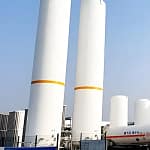
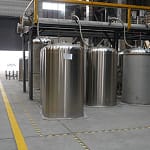

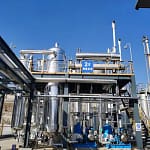


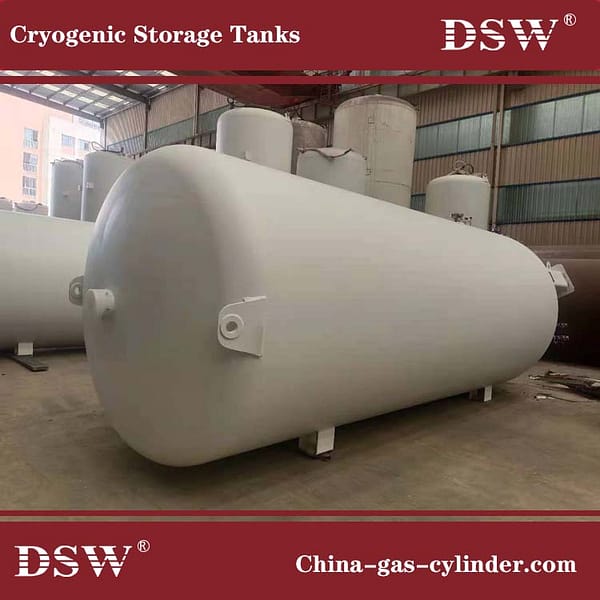

ISO /ASME Cryogenic Tank CONTAINER
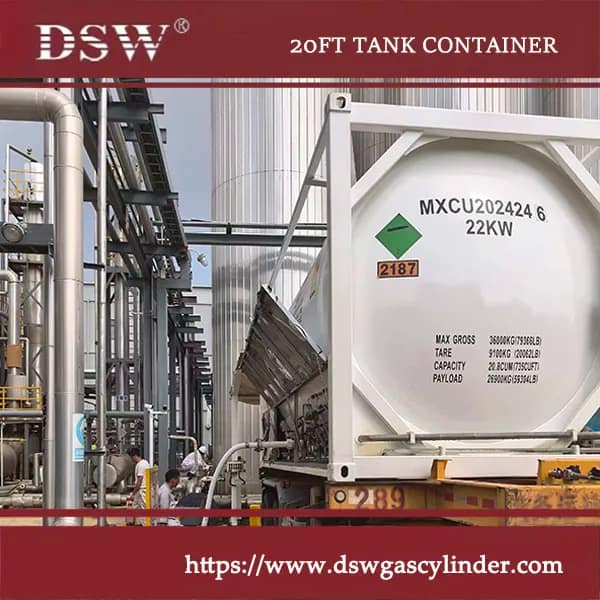
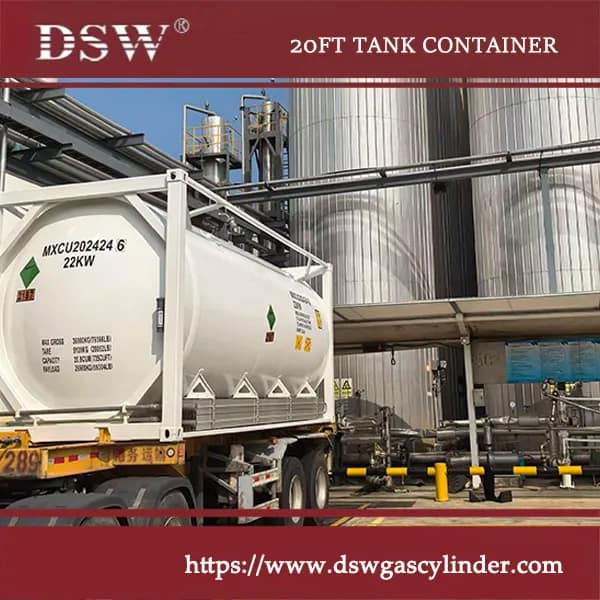
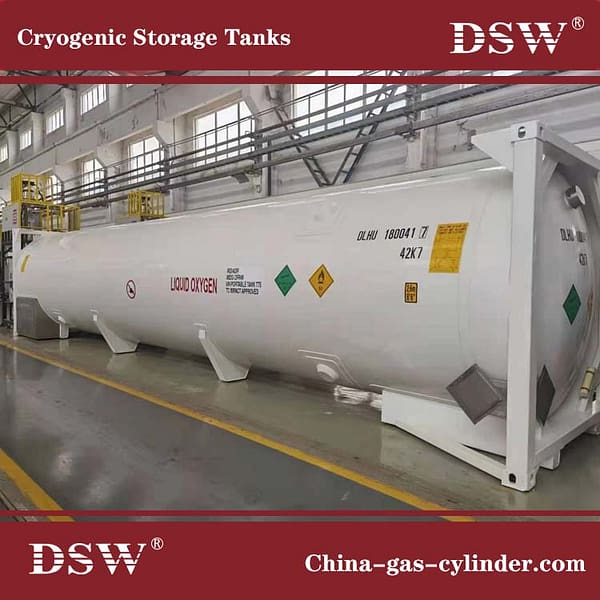
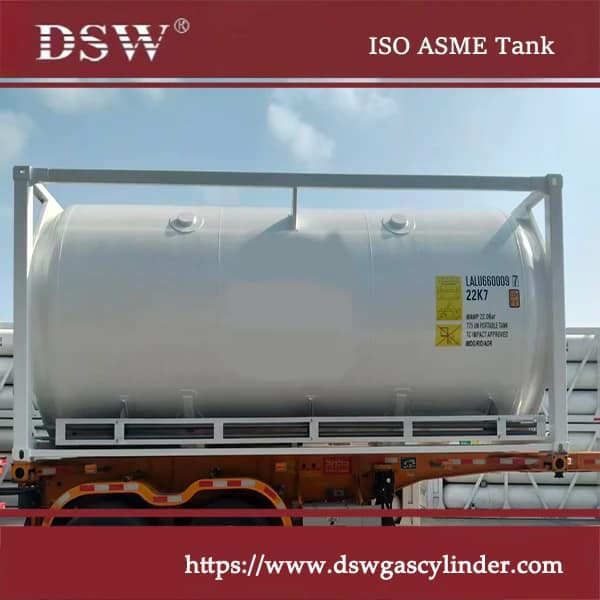
A cryogenic tank container is a specialized shipping container designed for transporting and storing cryogenic liquids, such as liquid nitrogen, oxygen, or argon, at extremely low temperatures.
Incorporated in 2004, DSW is one of the most reputed companies in the cryogenic tank container market and complies with the size, durability, and strength per the ISO standards.
Our cryogenic tanks are built for safe, efficient, and long-term storage
of liquefied gases such as liquid nitrogen (LIN),
liquid oxygen (LOX), liquid argon (LAR),
and carbon dioxide (CO₂).
Each unit features a double-shell, vacuum-Perlite insulation system,
available in 20ft and 40ft configurations with
working pressures of 8 bar, 16 bar, or 22 bar.
This design ensures excellent thermal efficiency and minimal product loss.
Key Features & Specifications
Dimensions & Format
The container conforms to the standard 20 ft ISO container footprint, with external dimensions of 6058 mm (L) × 2438 mm (W) × 2591 mm (H).
Volume
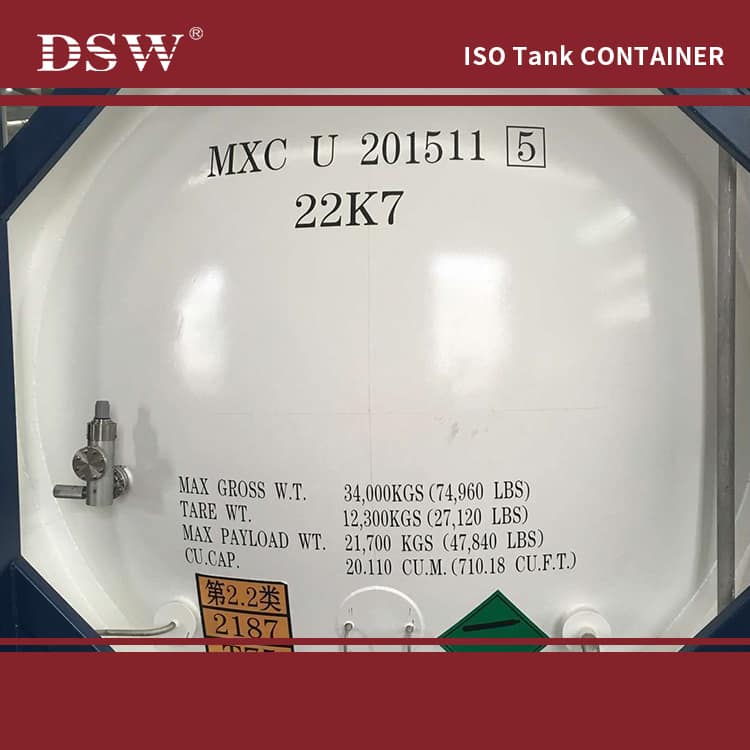
The gross volume is approximately 20.8 m³, with an effective inner vessel volume of around 19.76 m³.
Working Pressure
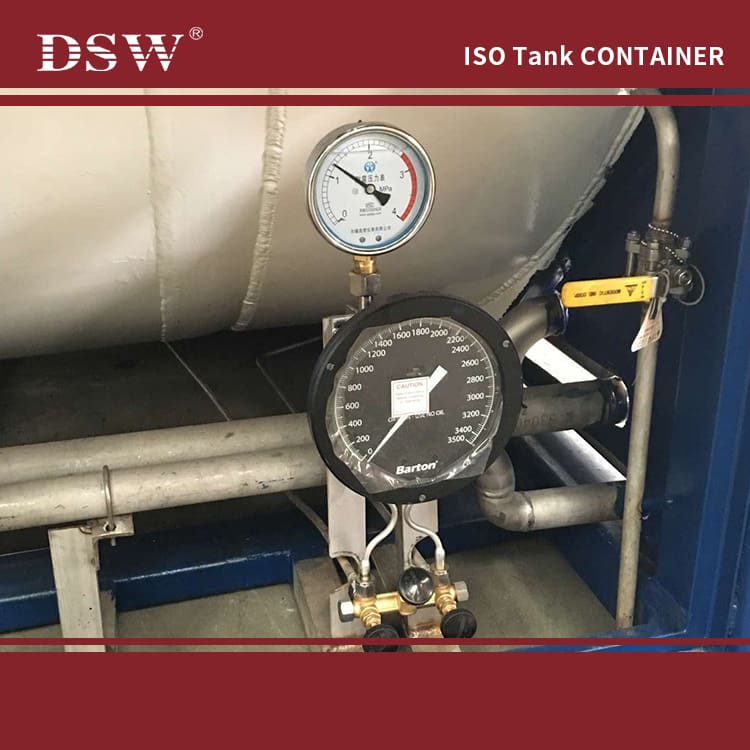
Available in working pressures of 1.6 MPa (16 bar) and optional variants up to 22 bar, meeting diverse operational requirements.
Temperature & Insulation
Engineered for cryogenic applications with operating temperatures down to –196 °C, featuring a double-shell, vacuum-perlite insulation system for superior thermal performance and minimal product loss.
Materials
The inner vessel is constructed from high-grade stainless steel (S30408), while the outer vessel is made of durable carbon steel (Q345R).
Surface treatments include pickling, passivation, sandblasting, and protective coating to ensure long-term corrosion resistance and strength.
Cryogenic ISO Tank Technical Specifications
Model: 1CC-TCS-20000/16
Insulation Type: Multilayer Vacuum Insulation
| No. | Specification | Inner Vessel | Outer Vessel |
|---|---|---|---|
| 1 | Design Pressure (MPa) | 1.6 | -0.1 |
| 2 | Working Pressure (MPa) | 1.6 | -0.1 |
| 3 | MAWP (MPa) | 1.6 | / |
| 4 | Design Temperature (℃) | -196 | -19 to +50 |
| 5 | Working Temperature (℃) | ≥ -196 | Normal |
| 6 | Pneumatic Test Pressure (MPa) | 1.6 | HLD |
| 7 | Gross Volume (m³) | 20.8 | 5.5 (interlayer) |
| 8 | Effective Volume (m³) | 19.76 | / |
| 9 | Medium | LOX / LIN / LAR | Multilayer |
| 10 | Main Material | S30408 | Q345R |
| 11 | Surface Treatment | Pickling and Passivation | Sandblasting and Coating |
| 12 | Corrosion Allowance (mm) | 0 | 0 |
| 13 | Joint Efficiency | 1 | 0.85 |
| 14 | Filling Rate | 95% | / |
Performance & Safety Parameters
| No. | Specification | Value |
|---|---|---|
| 15 | Static Evaporation Rate (%/d) | ≤0.22 (LOX), ≤0.35 (LIN), ≤0.24 (LAR) |
| 16 | Vacuum Degree (Pa) | ≤1 × 10⁻² |
| 17 | Vacuum Interspace Leakage Rate (Pa·m³/s) | ≤1 × 10⁻⁶ |
| 18 | ISO Code | 22T7 |
| 19 | Diameter (mm) | Inner: Φ2150 / Outer: Φ2400 |
| 20 | External Dimensions (L×W×H, mm) | 6058 × 2438 × 2591 |
| 21 | Orientation Type | Horizontal |
| 22 | Tare Weight (kg) | ~7890 |
| 23 | Fully Loaded Weight (kg) | ~15986 (LIN), ~27585 (LAR), ~22546 (LOX) |
| 24 | Design Service Life | 15 years |
| 25 | Safety Valve Opening Pressure (MPa) | 1.89 |
| 26 | Container Classification | Class III |
| 27 | Portable Tank Guideline | T75 |
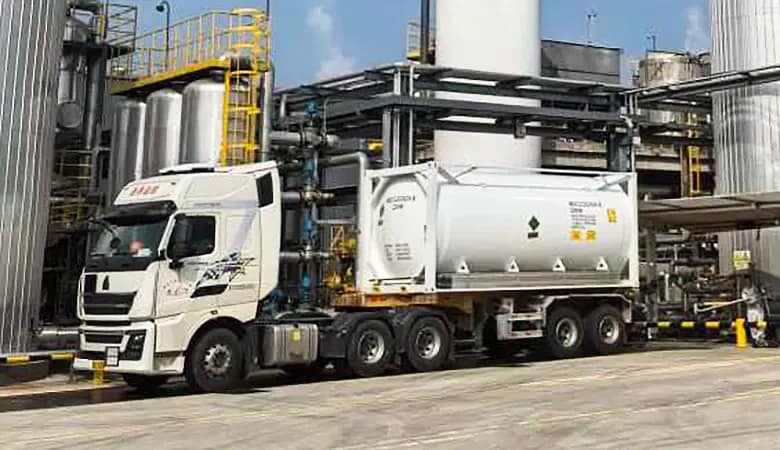
The structure for Cryogenic Containers
An inner vessel constructed of stainless steel and designed to withstand very low temperatures.
Carbon steel forms the outer vessel. To maintain cryogenic temperatures and ensure safety, these vessels are separated using various insulation materials that insulate each other.
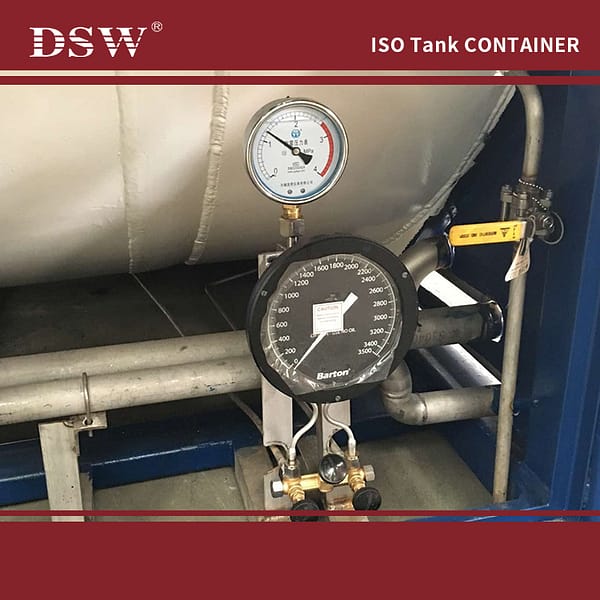
Cryogenic storage tanks feature two containers and an innovative pressure regulation system to maintain constant pressure for user needs and requirements.
How to choose a cryogenic container?
It is dependent upon which liquid gas to store.
Companies looking for cryogenic tank containers must carefully consider which substances they need to store, then inform the manufacturer.
Different substances require tanks with different shapes and designs to store their respective cryogenic liquid effectively.
Some common substances that require a cryogenic container include:
LIN (liquid nitrogen)
LOX (Liquid Oxygen)
LAR (Liquid Argon)
CO₂ (Carbon Dioxide)
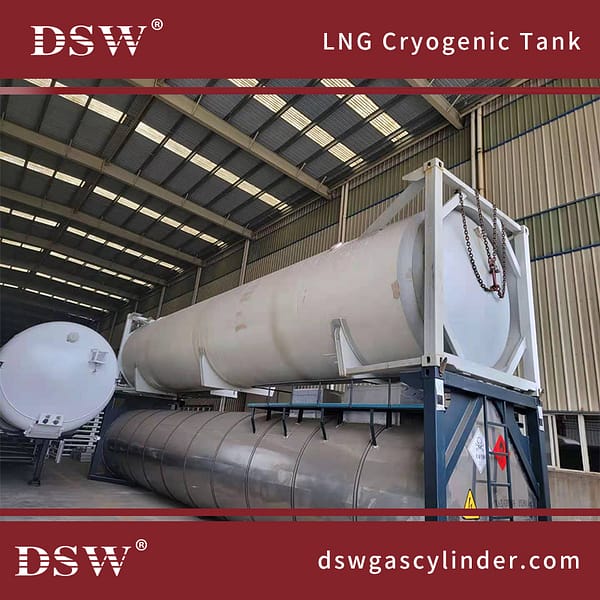
LNG (Liquefied Natural Gas)
LHe (Liquid Helium)
LH2 (Liquid Hydrogen)
LPG (Liquefied Petroleum Gas)
Liquid Ethylene
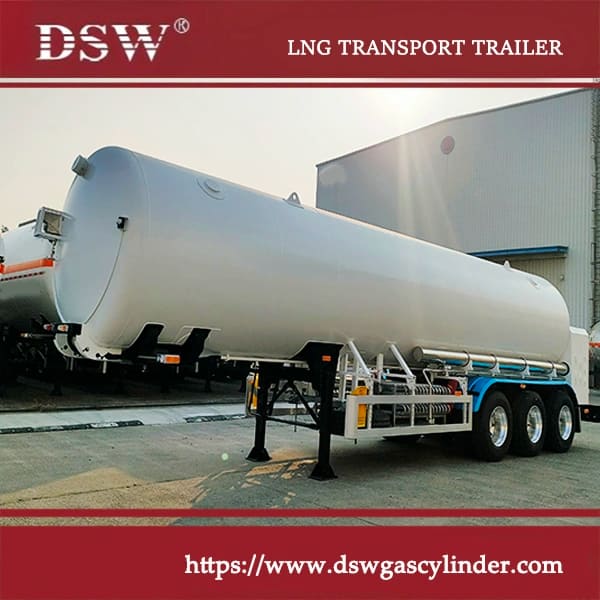
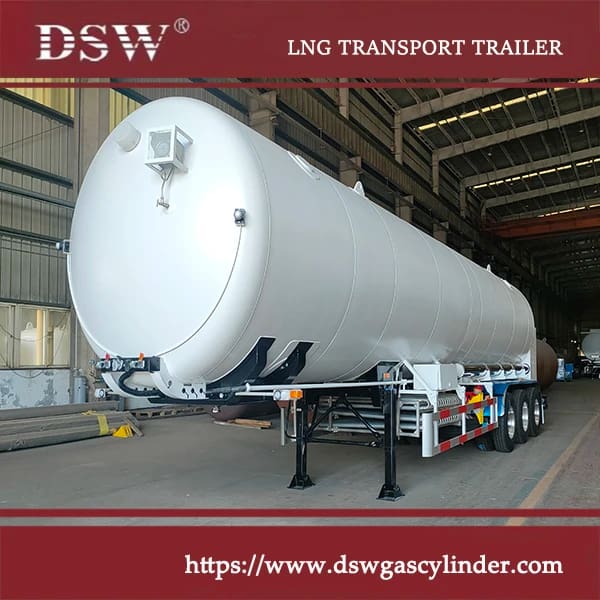
DSW would supply a full range of transport and storage solutions for cryogenic air gases like nitrogen, oxygen, and argon (LIN/LOX/LAR), carbon dioxide (CO2), liquefied natural gas (LNG), and other gases.
ASME tanks (Cryogenic Tank Containers) get their name from the American Society of Engineers. These vessels are designed for permanent installation on a property. Because they have thicker steel and are not exposed to the same hazards that portable DOT cylinders are, recertification is not required. ASME tanks are measured in gallons. Standard tank sizes range from 120 gallons to 2,000 gallons. On the other hand, the capacity of DOT cylinders is measured in pounds of water. They might vary in size from 5 pounds to 420 pounds.
Applications
The 20 ft Cryogenic Tank Container is designed for a wide range of uses, including:
- Transportation of industrial gases — liquid nitrogen (LIN), liquid oxygen (LOX), liquid argon (LAR) and carbon dioxide (CO₂) by road, rail or sea.
- Temporary or mobile cryogenic storage at production facilities, plants or LNG terminals.
- Integration into logistics systems that require ISO-container compatibility for efficient handling, stacking and transport.
- Long-distance cryogenic transport projects where reliable temperature control, minimal evaporation losses and safe pressure management are essential.


Reviews
There are no reviews yet.