
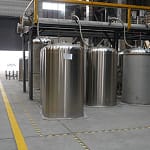
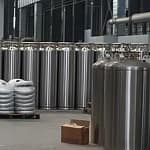
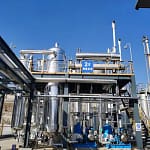

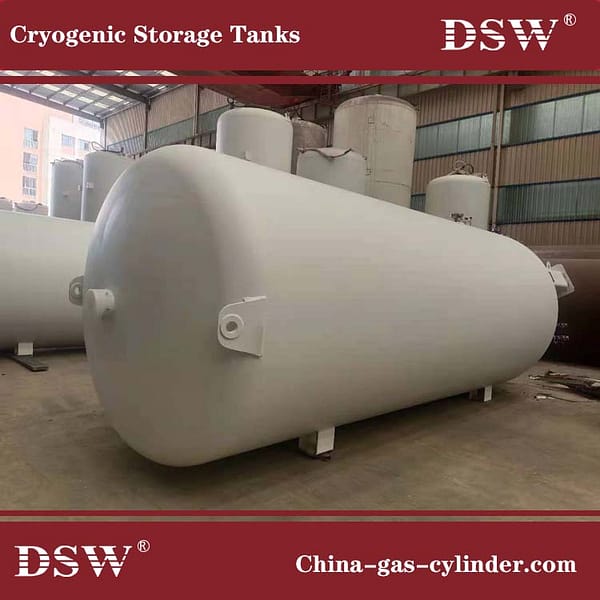
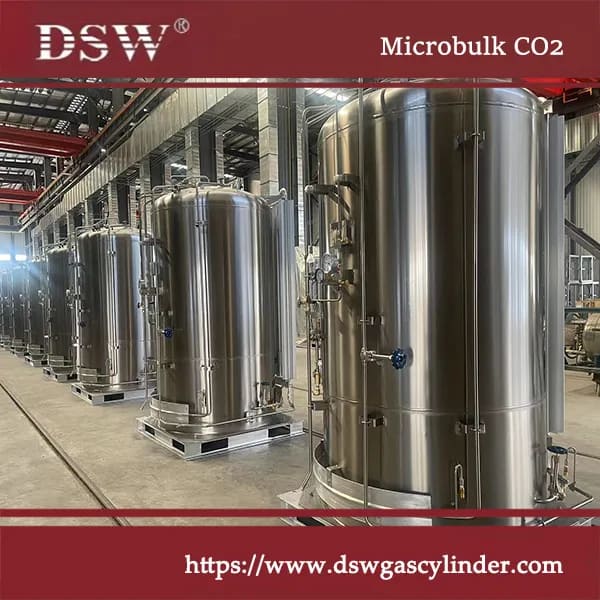


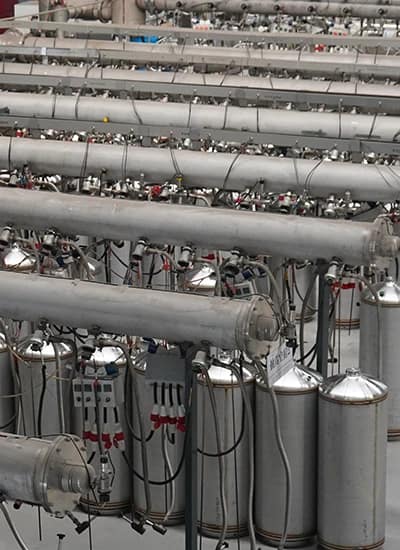
A microbulk tank is a vacuum-insulated cryogenic storage system used to store liquefied industrial gases and supply them continuously at the point of use. It operates at controlled low pressure and integrates storage, vaporization, and delivery into a single on-site gas supply solution.
Microbulk systems are commonly used for gases such as nitrogen, oxygen, argon, and carbon dioxide in industrial manufacturing, medical facilities, laboratories, and food processing. They are designed for medium-volume gas consumption, offering a practical alternative between high-pressure cylinders and large bulk storage tanks.
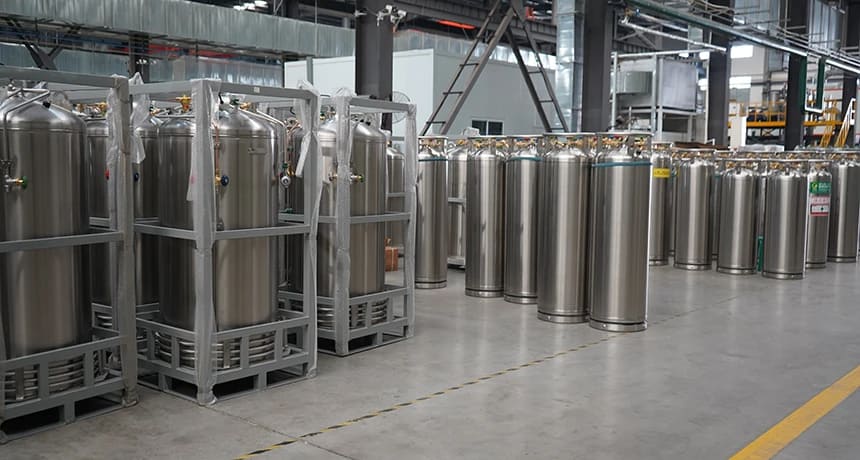
Microbulk Tanks in Industrial Gas Supply Systems
In modern gas distribution, microbulk tanks serve as an intermediate solution that combines the operational simplicity of bulk systems with the flexibility of cylinder supply. They eliminate frequent cylinder changeovers while avoiding the infrastructure requirements of large-scale bulk installations.
- Continuous on-site gas supply
- Reduced manual handling and logistics
- Compact footprint for indoor or outdoor installation
- Scalable system configuration based on demand
How Microbulk Systems Work
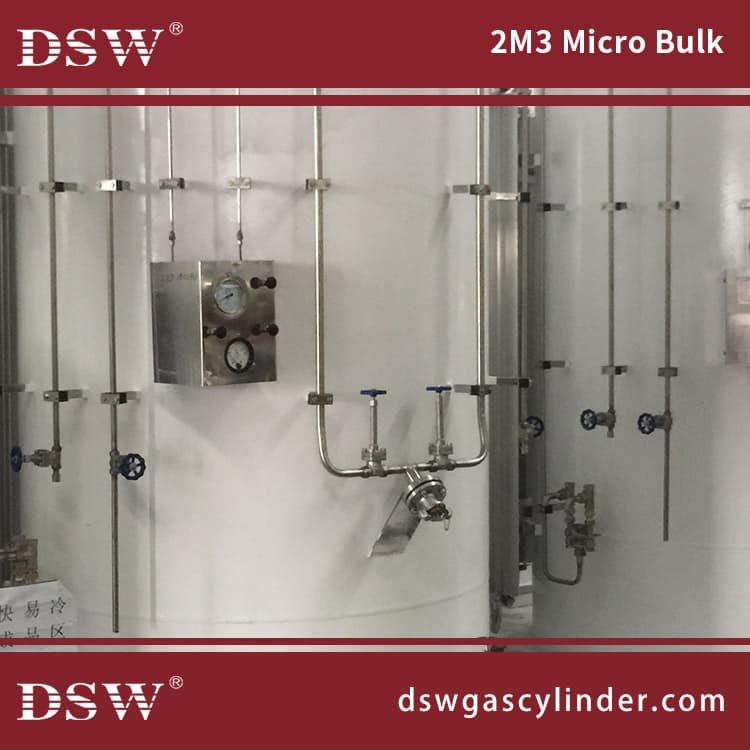
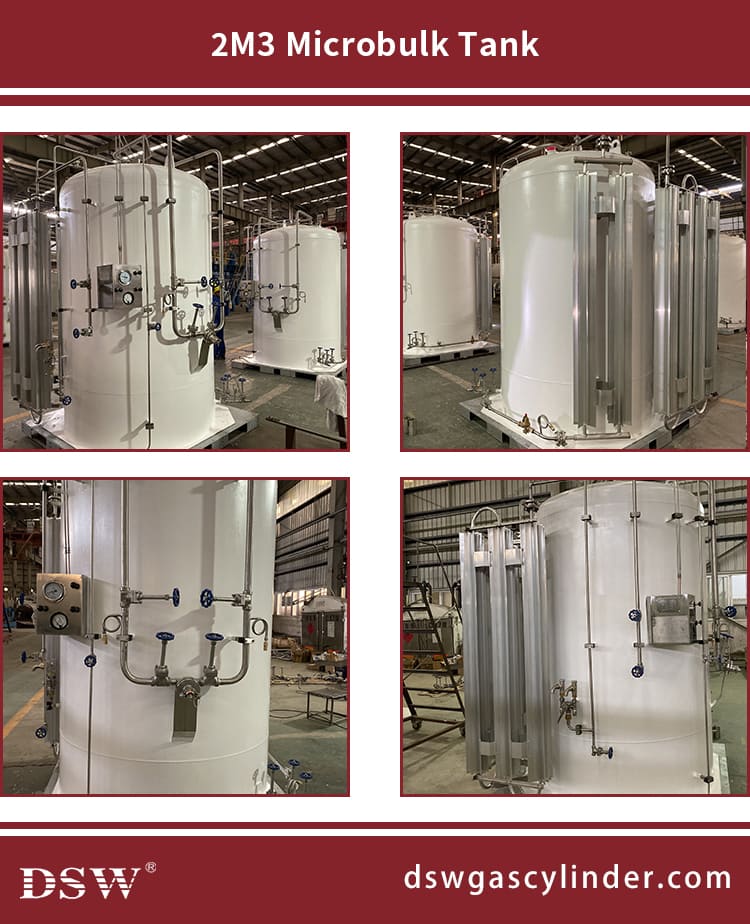
Microbulk systems store gas in liquid form inside a vacuum-insulated vessel. When gas is required, the liquid is converted into gas through a vaporization process and delivered through a fixed piping network to end-use equipment.
Operating Principle
- Cryogenic liquid is stored in a double-wall insulated tank
- An integrated vaporizer converts liquid into gas
- Pressure control systems regulate flow and output
- Gas is delivered directly to process or application points
This configuration ensures stable pressure, consistent flow, and uninterrupted gas availability without manual intervention.
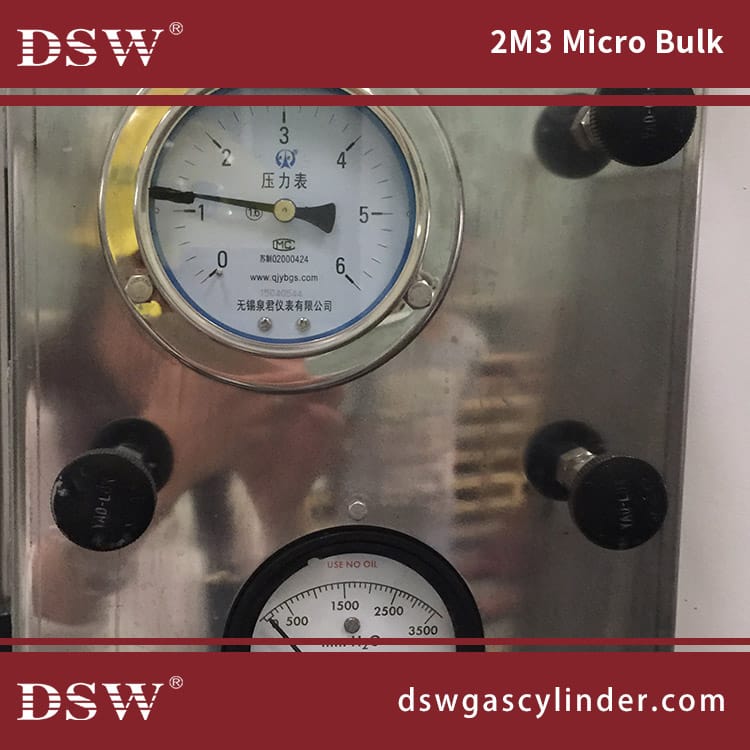
Automated Refill and Telemetry Monitoring
Modern microbulk systems incorporate telemetry technology to monitor tank levels and operating conditions in real time. This enables automated supply management and improves operational reliability.
Key Functions
- Continuous liquid level monitoring
- Automated refill scheduling based on consumption
- Remote system status visibility
- Reduction of manual inventory tracking
By integrating telemetry, microbulk systems help prevent unexpected gas shortages and reduce downtime in critical operations.
Microbulk Tanks vs High-Pressure Gas Cylinders
Microbulk systems are commonly adopted as facilities transition away from high-pressure cylinder supply toward more efficient and automated gas delivery methods.
| Feature | Microbulk Tanks | High-Pressure Cylinders |
|---|---|---|
| Storage pressure | Low pressure | Very high pressure |
| Supply continuity | Continuous | Interrupted by changeouts |
| Labor requirement | Minimal | High |
| Safety risk | Reduced | Higher |
| Residual gas loss | Negligible | Common |
| Inventory management | Automated | Manual |
Compared to cylinders, microbulk systems improve safety, reduce labor, and provide more consistent gas supply for continuous operations.
Microbulk Tanks vs Cryogenic Bulk Tanks
Microbulk tanks are designed for applications that require more capacity than cylinders but do not justify full bulk storage infrastructure.
| Feature | Microbulk Tanks | Cryogenic Bulk Tanks |
|---|---|---|
| Storage Capacity | Typically up to 3,000 liters | 5,000 liters to several hundred thousand liters |
| Installation Requirements | Minimal site prep; can be installed indoors or outdoors | Extensive site prep; usually outdoors with dedicated containment and piping |
| Operating Pressure | Low pressure (simpler safety requirements) | Medium to high pressure (requires high-pressure design & safety systems) |
| Supply Continuity | Continuous with automated refill via telemetry | Continuous; depends on bulk refill schedule |
| Space Utilisation | Compact, saves floor space | Large footprint, requires significant space |
| Labor & Handling | Minimal; no cylinder changeouts | Requires dedicated personnel for cylinder or transfer management |
| Thermal Efficiency | High; vacuum-insulated with low NER | High, but larger liquid gas tanks may have slightly higher heat ingress due to scale |
| Safety | Lower stored energy; fewer handling risks | Higher stored energy; requires rigorous safety protocols |
| Ideal Use Cases | Medium-volume consumption; laboratories, hospitals, small production facilities | High-volume industrial production, gas distribution depots, large-scale operations |
| Cost | Lower initial cost; faster ROI for medium-volume users | Higher capital investment; best for high-volume users |
| Flexibility | Easily scaled, relocated, or supplemented with additional tanks | Fixed location; expansion requires major civil and mechanical works |
| Supported Gases | Nitrogen, oxygen, argon, CO₂, N₂O, LNG | Same gases, plus larger variety of specialty gases due to scale |
This positioning makes microbulk systems a cost-effective and flexible option for growing operations.
Technical Design of Microbulk Tanks
Vacuum-Insulated Construction
Microbulk tanks use double-wall construction with high-vacuum insulation and multi-layer insulation (MLI) to minimize heat ingress. This design reduces evaporation losses and maintains stable internal pressure during operation.
Cryogenic Inner Vessel
The inner vessel is typically manufactured from stainless steel, providing mechanical strength, corrosion resistance, and reliable performance under cryogenic temperatures.
Vaporization System
Ambient air vaporizers are commonly used to convert liquid into gas using environmental heat. Electric vaporizers may be applied in high-demand or controlled environments.
Key Benefits of Microbulk Systems
Increased Productivity and Cost Efficiency
- Eliminates downtime from cylinder changeouts
- Reduces labor costs associated with handling and logistics
- Improves accounting accuracy and gas usage tracking
- Minimizes floor space used for gas storage
Operational Convenience
- Uninterrupted gas supply
- No manual cylinder handling
- Reduced inventory management workload
- Faster installation compared with bulk systems
High Gas Quality and Yield
- Consistent high-purity gas delivery
- Reduced contamination risk
- Uniform flow and pressure stability
Safety Advantages of Microbulk Storage
Microbulk tanks operate at significantly lower pressures than compressed gas cylinders, reducing stored energy and the consequences of accidental release. Fixed installations eliminate risks associated with cylinder movement, tipping, and valve damage.
- Reduced leak potential
- Lower handling-related injuries
- Simplified compliance with workplace safety regulations
Telemetry and Supply Management
Advanced telemetry systems provide real-time visibility into tank status and consumption.
- Continuous level monitoring
- LCD system status display
- Accuracy within ±0.10 inches
- Multi-level alarm settings
- Audible low-level alarms with remote communication
Delivery and On-Site Installation
Microbulk tanks are permanently installed at the customer’s facility and serviced by dedicated cryogenic pumper trucks designed exclusively for liquefied gas transfer.
- Professionally engineered fill connections
- Rapid, clean refilling without process interruption
- Broad delivery coverage via regional distribution points
Applications of micro bulk tanks
Microbulk tanks are used for storing and supplying various types of gases. They are designed for medium gas consumption and are a cost-effective packaging option. Here are some of their applications:
Laser Cutting, Metal Processing & Fabrication, Precision Welding:
Microbulk systems are used in high-pressure, high-flow applications, including laser cutting, metal processing & fabrication, and precision welding.
Laboratory & Research:
These systems are used in laboratories and research facilities for various purposes.
Medical Oxygen: Microbulk systems store and supply medical oxygen in healthcare facilities.
Food & Beverage Packaging/Preservation:
These systems are used for packaging and preservation in the food and beverage industry.
Electronics Manufacture & Testing:
Microbulk systems are used in the manufacturing and testing of electronics.
Inert Purging & Blanketing: These systems are used for inert purging and blanketing.
Microbulk tanks are available for storing and supplying various gases such as oxygen, nitrogen, argon, carbon dioxide, nitrous oxide (N2O), and LNG.
They are designed to replace high-pressure gas cylinders, eliminating waste and expense of complete empty gas cylinders, cylinder change-overs, residual gas losses, lost or damaged cylinders, and manual handling injuries.
They are also designed to have a higher level of thermal efficiency than competitor products, which means they hold their gas contents longer with lower pressure rise.
Gases Supported by Microbulk Systems
- Oxygen (O2)
- Nitrogen (N2)(see nitrogen storage solutions)
- Argon (Ar)
- Carbon Dioxide (CO2)
- Nitrous Oxide (N2O)
- Liquefied Natural Gas (LNG)(LNG storage systems)
Thermal Efficiency and Performance
Compared with conventional liquid cylinders, microbulk tanks demonstrate superior thermal efficiency, allowing longer gas retention with lower pressure rise. This improves product yield and minimizes venting losses, particularly in intermittent-use applications.
Engineering Support and System Integration
A complete microbulk solution includes system design, tank sizing, piping layout, installation, and commissioning support to ensure reliable long-term operation.
When Are Microbulk Tanks the Right Choice?
- Gas demand exceeds cylinder efficiency
- Continuous supply is required for operations
- Limited space for bulk storage systems
- Reduced labor and improved safety are priorities
For low or intermittent gas usage, cylinder supply systems may still be appropriate. System selection should be based on consumption patterns and operational requirements.
TECHNICAL QUESTIONS
FAQs About Microbulk Tank Systems
A microbulk tank is a vacuum-insulated cryogenic storage system designed to store liquefied industrial gases and supply them continuously at the point of use. It integrates storage, vaporization, and delivery into a single on-site gas supply solution.
A microbulk system stores gas in liquid form inside an insulated tank. When gas is needed, the liquid is converted into gas through a vaporizer and delivered through a fixed piping system to end-use equipment, ensuring continuous and stable supply.
Microbulk tanks provide continuous gas supply with automated refilling and minimal manual handling, while gas cylinders require manual replacement, operate at higher pressure, and may interrupt supply during changeovers.
Microbulk tanks are used when gas consumption exceeds the efficiency of cylinders, continuous supply is required, and space or infrastructure limitations prevent the use of large bulk storage systems.
Microbulk tanks can store gases such as nitrogen, oxygen, argon, carbon dioxide, nitrous oxide, and liquefied natural gas, depending on system design and application requirements.
Microbulk tanks are refilled by specialized cryogenic delivery trucks. Many systems use telemetry monitoring to track tank levels and automatically schedule refilling when predefined thresholds are reached.
This content is based on standard cryogenic storage engineering principles and industrial gas system design practices.

No comment