LNG Storage Tanks

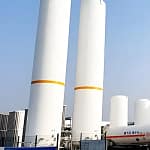
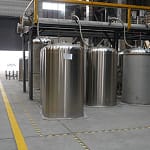
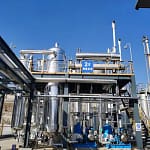
DSW LNG Storage Tanks are designed for safe and efficient storage of liquefied natural gas at -162°C.
They use advanced vacuum insulation to reduce heat loss and minimize boil-off gas, ensuring stable long-term storage.
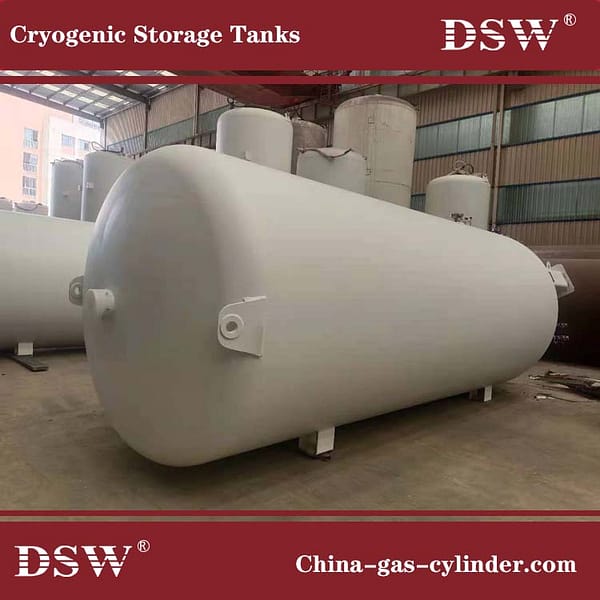
Available in vertical and horizontal types, with capacities from 5 m³ to 100+ m³, these tanks are suitable for LNG storage, fuel supply, and industrial gas applications.
Built to ASME or GB standards, each tank features stainless steel construction, high safety protection systems, and reliable cryogenic performance for global use.

Optimizing Efficiency and Safety with Reliable LNG Storage Solution
DSW designs and manufactures LNG cryogenic tanks for safe, efficient, and long-term storage of liquefied natural gas. Since 2004, we have delivered over 2,000 cryogenic storage systems worldwide for energy, industrial gas, and infrastructure applications.
Our LNG tanks are engineered for high safety performance, low boil-off loss, and stable operation under demanding industrial conditions.

Key Features

  • Storage capacity: 3,000 L to 100,000+ L
  • Operating pressure: 18 bar / 22 bar / 36 bar
  • Vertical and horizontal configurations available
  • Vacuum insulated cryogenic design
  • Suitable for LNG storage and distribution systems

Engineering Design & Structure

Vacuum Insulated Technology

Each LNG tank is built with a high-performance vacuum insulation system to minimize heat transfer and ensure safe cryogenic storage.

  • Inner vessel: Austenitic stainless steel (cryogenic grade)
  • Outer shell: Carbon steel protective jacket
  • Insulation: Expanded perlite + vacuum layer

Performance Benefits

  • Reduced heat ingress
  • Lower boil-off gas (BOG) losses
  • Stable -196°C storage conditions
  • Improved operational efficiency
LOX cryogenic tanks,LIN cryogenic tanks,LAR cryogenic tanks
LOX cryogenic tanks, LIN cryogenic tanks, LAR cryogenic tanks

Vertical Liquefied Natural Gas (LNG) Tanks – Sizes Available

Model Volume (m³) Pressure (MPa) Boil-off Rate (%/day) Inner Weight (kg) Total Weight (kg) Dimensions (mm)
DSWV-5/0.8 5 0.8 0.65 1040 4430 Φ1400×3680 / Φ1900×5115
DSWV-10/0.8 10 0.8 0.55 1980 7230 Φ1700×4950 / Φ2200×6400
DSWV-15/0.8 15 0.8 0.53 2735 9080 Φ1900×5905 / Φ2400×7330
DSWV-20/0.8 20 0.8 0.50 3575 11010 Φ2100×6465 / Φ2600×7955
DSWV-30/0.8 30 0.8 0.44 5300 16440 Φ2400×7410 / Φ3000×8930
DSWV-50/0.8 50 0.8 0.35 8705 25870 Φ2600×10380 / Φ3200×12000
DSWV-100/0.8 100 0.8 0.25 16140 48765 Φ3000×15425 / Φ3600×17260

Certifications & Compliance

  • ISO 9001 Quality Management System
  • ASME U / U2 / R Stamp Certification
  • China Special Equipment Manufacturing License
  • EU PED 2014/68/EU compliance
  • EN 13458 Cryogenic Vessel Standard

20M3 Cryogenic Storage Tank,20M3 Cryogenic ISO Tank

Applications

DSW LNG cryogenic storage systems are used across key industrial and energy sectors requiring safe, efficient LNG handling and supply:

  • Industrial energy storage and fuel supply systems
  • LNG fueling stations and distribution networks
  • Peak shaving and backup power applications
  • Power generation plants using LNG as fuel
  • Chemical and manufacturing processes requiring stable gas supply
  • Research, laboratory, and engineering facilities requiring cryogenic storage and testing support

Why Choose DSW

  • 20+ years of cryogenic engineering experience
  • 2,000+ LNG systems delivered worldwide
  • Custom-engineered solutions
  • International compliance standards
  • High-efficiency vacuum insulation design
  • Strong technical support and after-sales service

TECHNICAL QUESTIONS

Know About Natural Gas and LNG

How does vacuum insulation improve LNG storage performance?

Vacuum insulation significantly reduces conductive and convective heat transfer into the cryogenic tank, lowering boil-off gas (BOG) generation and improving long-term LNG storage efficiency and stability.

How do LNG storage tanks manage pressure fluctuations during vaporization

LNG storage tanks use engineered pressure regulation systems and dual safety relief valves to safely manage pressure increases caused by natural LNG vaporization under cryogenic conditions.

What is the structural design of a vacuum-insulated LNG tank?

A vacuum-insulated LNG tank consists of a cryogenic-grade stainless steel inner vessel, a carbon steel outer shell, and multi-layer insulation using expanded perlite combined with a high-vacuum annular space.

What operating pressures are commonly used in LNG storage tanks?

Industrial LNG storage tanks are typically designed for operating pressures ranging from 0.8 MPa up to 3.6 MPa, depending on application requirements and system configuration.

What engineering standards apply to LNG cryogenic storage tanks?

LNG storage tanks are commonly designed and manufactured in compliance with ASME Section VIII Division 1, EU PED 2014/68/EU, EN 13458, ISO 9001, and relevant national pressure vessel codes.

What factors influence boil-off rate in LNG storage systems?

Boil-off rate is influenced by insulation quality, vacuum integrity, ambient heat ingress, tank surface area, and operating pressure stability within the cryogenic storage system.

What applications require vertical LNG storage tanks?

Vertical LNG storage tanks are commonly used in industrial gas supply systems, LNG fueling stations, peak shaving facilities, power generation plants, and centralized cryogenic distribution networks.

Reviews

There are no reviews yet.

Be the first to review “LNG Storage Tanks”

Your email address will not be published. Required fields are marked *

Reviews

There are no reviews yet.

Be the first to review “LNG Storage Tanks”

Your email address will not be published. Required fields are marked *