DSW Cryogenic Systems Engineering Guide
This technical guide explains cryogenic storage systems used in industrial gas supply infrastructure, including system design, working principles, components, safety architecture, sizing methodology, and applications.
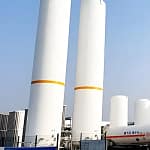
Cryogenic storage systems are integrated engineering solutions used to store and deliver liquefied gases such as oxygen, nitrogen, argon, CO₂, and LNG at extremely low temperatures.
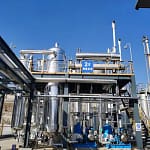
Unlike standalone tanks, cryogenic storage systems include tanks, vaporizers, pressure regulation, and gas distribution networks operating as a complete industrial gas supply system.
What Is a Cryogenic Storage System?
A cryogenic storage system is a fully engineered industrial gas supply system designed to store liquefied gases at temperatures below -150°C and deliver them in controlled gaseous form.
- Vacuum insulated cryogenic storage tank
- Pressure building system
- Vaporization unit (ambient or heated)
- Gas pressure regulation system
- Safety and control instrumentation
- Pipeline distribution network
These systems ensure continuous, stable, and safe industrial gas supply for high-demand applications.
Why Cryogenic Storage Systems Are Used in Industry
Industries adopt cryogenic storage systems to overcome limitations of cylinder-based gas supply:
- Unstable gas delivery and supply interruptions
- High logistics and handling costs
- Manual cylinder replacement risks
- Limited storage capacity per cylinder
Cryogenic storage systems enable continuous automated gas supply with significantly lower operating cost and improved safety.
Typical stationary bulk cryogenic tanks operate in a pressure range of approximately 0.8–2.4 MPa (8–24 bar), depending on gas type, vaporization demand, and system configuration. The pressure is not fixed inside the storage vessel; instead, it is actively maintained by a pressure-building circuit to ensure stable downstream delivery.
Looking for Custom Cryogenic Storage Solutions?
For project consultation and customized engineering solutions, or if you want to reduce operational expenses and ensure uninterrupted gas supply, contact us today.
Industrial Gases Used in Cryogenic Storage Systems
- Liquid Oxygen (LOX) – medical and combustion systems
- Liquid Nitrogen (LIN) – inerting, cooling, and manufacturing
- Liquid Argon (LAR) – welding and metallurgy protection
- Liquid CO₂ – food processing and industrial applications
- Liquefied Natural Gas (LNG) – energy and fuel systems
Each gas requires specific engineering parameters including material selection, pressure design, and vaporization configuration.
Engineering Principle of Cryogenic Storage Systems
Cryogenic storage systems operate based on three core engineering principles:
- Vacuum insulation minimizes heat transfer into cryogenic liquid
- Phase equilibrium maintains liquefied gas stability
- Controlled vaporization enables regulated gas output
The system continuously balances liquid storage, boil-off gas control, and demand-driven gas delivery.
How the System Works
- Cryogenic liquid stored in insulated inner vessel
- Vacuum insulation reduces heat ingress
- Controlled boil-off generates internal pressure
- Pressure building system stabilizes output
- Vaporizer converts liquid into gas
- Gas delivered through pipeline network
Cryogenic Storage System Architecture
1. Storage Subsystem
Vacuum insulated cryogenic tank designed for low-temperature containment and pressure stability.
2. Pressure Control Subsystem
Maintains system pressure using controlled vaporization and regulation valves.
3. Vaporization Subsystem
Converts cryogenic liquid into gaseous form using ambient air or heated vaporization.
4. Safety & Control Subsystem
Includes relief valves, rupture discs, instrumentation, and emergency shutdown systems.
Main Components of Cryogenic Storage Systems
Inner Vessel
Stainless steel vessel designed for cryogenic temperature and pressure resistance.
Outer Jacket
Carbon steel shell providing structural support and vacuum insulation containment.
Vacuum Insulation System
Multi-layer insulation reduces heat transfer and minimizes boil-off losses.
Pressure Building System
Regulates internal pressure to ensure stable gas output.
Safety System
Includes relief valves, rupture discs, pressure gauges, and emergency shutdown devices.
Design Standards and Compliance
- ASME Boiler & Pressure Vessel Code
- ISO 21009 Cryogenic Vessel Standard
- GB150 Pressure Vessel Standard
- EU PED Directive
All systems undergo structural analysis, cryogenic impact testing, vacuum validation, and pressure certification.
Cryogenic Storage System Manufacturing Process
- Material selection and certification (MTC traceability)
- CNC forming and precision welding
- Non-destructive testing (RT / UT / PT)
- Vacuum insulation assembly
- Helium leak detection testing
- Hydrostatic and pressure testing
Each system is engineered for long-term industrial operation and safety compliance.
Types of Cryogenic Storage Systems
Vertical Systems
- High-capacity industrial installations
- Compact footprint
- Standard EPC configuration
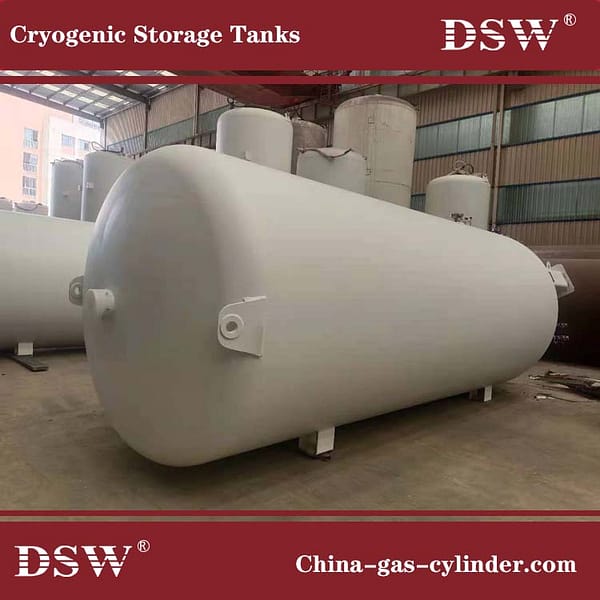
Horizontal Systems
- Transport-friendly design
- Lower height profile
- Site-constrained applications
Types of Cryogenic Storage Tanks and Systems: Features & Applications
| Type | Capacity Range | Mobility | Design Features | Applications | Safety & Compliance |
|---|---|---|---|---|---|
| Bulk Storage Tanks (Stationary) | 5,000 – 100,000+ L | Fixed installation | Double-walled, vacuum-insulated, multilayer reflective insulation, pressure control, level sensors | Industrial gas supply, hospitals, LNG terminals | ASME/EN standards, pressure relief valves, insulation monitoring |
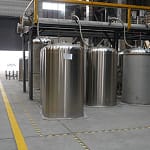
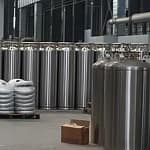
| Cryogenic Dewars | 1 – 1,000 L | Portable / small | Vacuum-insulated, stainless steel, manual or semi-auto filling | Lab samples, medical gases, small-scale industrial use | Pressure relief valves, leak-proof design, portability certification |
| Cryogenic Tube Trailers / ISO Containers | 5,000 – 60,000 L | Mobile (road/sea) | Vacuum-insulated carbon steel or stainless steel, BOG management, safety valves | Supply to remote plants, LNG bunkering, industrial gas distribution | DOT/CGA, EN, ISO 21011 compliance, active boil-off control |
| Cryogenic Pump Skids | N/A (paired with tanks) | Semi-mobile / skid-mounted | Vacuum-jacketed piping, cryogenic valves, automated control, integrated with tanks | Chemical plants, LNG fueling stations, industrial transfer systems | Pressure & flow monitoring, automatic shutdown, ASME/EN standards |
| Micro Bulk Systems | 500 – 5,000 L | On-site small storage | Compact tanks with integrated vaporizers, remote monitoring, automatic refill | Medium-demand hospitals, labs, manufacturing | ASME/EN standards, automatic pressure control, alarm systems |
| Liquid Hydrogen Storage Tanks | 1,000 – 50,000 L | Fixed or semi-mobile | Ultra-low temperature design (−253 °C), high-strength vacuum insulation, BOG management | Hydrogen fueling, aerospace, energy | ISO 21011, hydrogen-specific safety, leak detection |
| LNG Storage Tanks | 10,000 – 200,000+ L | Fixed or mobile | Vacuum insulation, low/high-pressure design, boil-off recovery | LNG terminals, shipping, energy storage | EN, IMO, ASME, pressure relief, insulation monitoring |
| Medical Oxygen Systems | 500 – 20,000 L | Fixed or micro-bulk | Vacuum-insulated, automatic filling, purity monitoring | Hospitals, clinics, oxygen therapy supply | ISO 21011, medical-grade safety, alarms, backup supply |
How to Size a Cryogenic Storage System
System sizing depends on industrial consumption and operational requirements.
- Daily gas consumption rate
- Peak demand load
- Delivery schedule frequency
- Emergency reserve capacity
- Future expansion planning
Recommended storage capacity: 3–10 days of gas consumption.
Advantages of Cryogenic Storage Systems
- Continuous industrial gas supply
- Reduced operational cost
- Improved workplace safety
- Lower logistics dependency
- Higher process stability
- Reduced carbon emissions
Industrial Applications
- Metal fabrication and laser cutting systems
- Medical oxygen distribution systems
- Food freezing and cryogenic preservation
- Semiconductor manufacturing environments
- LNG storage and regasification systems
- Aerospace and research applications
TECHNICAL FAQs
About Bulk Cryogenic Storage System
A cryogenic storage system is an engineered industrial gas supply solution for storing liquefied gases such as oxygen, nitrogen, argon, CO₂, and LNG at temperatures below -150°C. It integrates vacuum-insulated storage tanks, pressure-building systems, vaporization units, gas pressure regulation, safety instrumentation, and pipeline networks to ensure continuous and stable gas delivery.
Main components include: Inner vessel, outer jacket, vacuum insulation system, pressure building system, vaporizer units, and safety & control systems such as relief valves, rupture discs, and emergency shutdown devices.
Stationary cryogenic tanks typically operate at 0.8–2.4 MPa (8–24 bar) depending on gas type and vaporization demand. Modern tanks have static evaporation rates between 0.2% and 0.6% per day, influenced by tank size and insulation quality.
Annual inspections are standard, with daily operator checks recommended to ensure pressure integrity, vacuum insulation effectiveness, and safety compliance.
Cryogenic systems follow ASME Boiler & Pressure Vessel Code, ISO 21009, GB150, and EU PED directives. Compliance covers structural integrity, pressure relief, insulation performance, and operational safety.
Safety systems include relief valves, rupture discs, automatic shutdown devices, and continuous monitoring instruments. These prevent overpressure, uncontrolled gas release, and ensure compliance with international safety standards.
Cryogenic tanks typically use stainless steel for inner vessels, carbon steel for outer jackets, and multi-layer reflective insulation (MLI) within a vacuum space. Materials are selected for low-temperature durability, pressure resistance, and minimal heat transfer.
Sizing depends on daily gas consumption, peak demand, delivery frequency, emergency reserve, and future expansion. Recommended storage is typically 3–10 days of gas consumption.
Related Cryogenic Storage System
About Bulk Cryogenic Storage
Cryogenic Equipment & Components
Engineering Support from DSW Cryogenic Systems
DSW provides complete cryogenic storage system engineering, manufacturing, and EPC support.
- System design and sizing support
- Custom cryogenic storage solutions
- Global manufacturing and export

